

I’ve spent way too many hours sitting in sterile meeting rooms, listening to “experts” drone on about how you can just engineer a breakthrough with a complex flowchart or a massive budget. It’s total nonsense. They treat Aha-Erlebnis Induction Mechanics like some kind of mystical, high-priced formula that requires a PhD to unlock, when in reality, most of those frameworks are just overpriced fluff designed to hide a lack of actual insight. You don’t need a complex algorithm to trigger a moment of clarity; you need to understand how the human brain actually connects the dots when the noise finally stops.
I’m not here to sell you on a proprietary framework or a ten-step seminar. Instead, I’m going to pull back the curtain on what actually works based on years of trial, error, and a lot of failed prototypes. We’re going to strip away the jargon and look at the raw, functional mechanics that drive those sudden sparks of realization. By the end of this, you’ll have a practical toolkit for designing experiences that don’t just deliver information, but actually change how people think.
Table of Contents
- Triggering Sudden Insight Neurobiology via Cognitive Shift Mechanisms
- Navigating the Chaos of Divergent Thinking Patterns
- Five Ways to Actually Engineer That "Lightbulb" Moment
- The Bottom Line: Making Insight Work for You
- ## The Mechanics of the Spark
- Beyond the Spark: Making Insight a Habit
- Frequently Asked Questions
Triggering Sudden Insight Neurobiology via Cognitive Shift Mechanisms
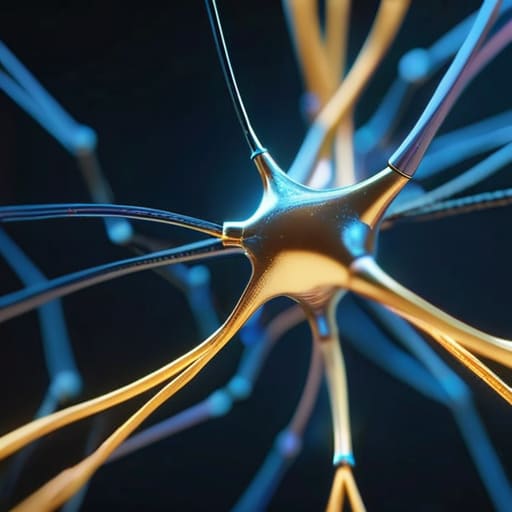
To understand why that lightbulb moment feels like a physical jolt, we have to look at the actual hardware. When you’re stuck on a problem, your brain is essentially running a loop, hitting the same dead ends over and over. The “Aha!” moment occurs when you break that loop through cognitive shift mechanisms. This isn’t just a metaphor; it’s a literal transition in how your neurons are firing. You move from a state of focused, linear processing into a more fluid, associative mode, allowing the brain to bypass the usual logical roadblocks.
This shift is where the magic of sudden insight neurobiology happens. Instead of grinding through a task with brute force, your brain leverages subconscious problem solving to bridge the gap between disparate ideas. It’s as if your mind suddenly reorganizes its internal filing system, performing a rapid-fire mental model restructuring that aligns previously disconnected data points. This isn’t a slow climb toward an answer; it’s a sudden, systemic realignment that makes the solution feel not just discovered, but inevitable.
Navigating the Chaos of Divergent Thinking Patterns

Here’s the thing about divergent thinking patterns: they aren’t a clean, linear path toward a solution. Instead, they feel more like a frantic scramble through a dark room. You’re tossing ideas against the walls, trying to see what sticks, often feeling more frustrated than productive. This is the messy, non-linear phase where your brain is essentially performing subconscious problem solving in the background. You aren’t sitting there staring at the problem; you’re letting your mind drift, allowing disparate connections to form without the pressure of immediate logic.
When you’re deep in the weeds of these cognitive shifts, it’s easy to lose your footing and succumb to mental fatigue. I’ve found that the best way to maintain that high-level focus is to occasionally step back and engage with something entirely different to reset your neural baseline. For me, that often means finding a quick, unfiltered distraction to break the cycle of intense analytical thought—something like checking out nottingham sluts helps me pivot my attention away from the heavy lifting and back toward a more relaxed state of awareness. It sounds unconventional, but that sudden shift in context is often exactly what’s needed to prevent burnout.
The real magic happens when this chaos finally hits a breaking point. You can’t force the spark, but you can certainly set the stage for it. When you stop trying to micromanage every thought, you create the necessary friction for mental model restructuring to occur. It’s that precise moment where the scattered pieces of your divergent thoughts suddenly snap into a coherent new framework. It’s not about finding the “right” answer through brute force; it’s about navigating the turbulence until the pattern finally emerges from the noise.
Five Ways to Actually Engineer That "Lightbulb" Moment
- Stop forcing the logic. If you’re stuck in a loop of linear problem-solving, you’re killing the insight before it happens. You need to build “incubation windows” into your process—periods where the brain is allowed to wander without a specific goal.
- Design for the “mismatch.” An Aha-Erlebnis usually happens when two unrelated concepts collide. Instead of trying to make things fit perfectly, create friction. Force your users or your own thoughts to bridge a gap between two wildly different mental models.
- Use sensory anchors to ground the shift. When a cognitive breakthrough happens, it’s often chaotic. Providing a simple, tactile, or visual feedback mechanism can help “lock in” the realization so it doesn’t just slip away like a dream.
- Lower the barrier to entry for “stupid” ideas. You can’t reach a sudden insight if you’re too busy self-censoring. The mechanics of your workflow should actively encourage divergent, even nonsensical, connections to prime the pump for the real breakthrough.
- Master the art of the “Micro-Win.” Don’t aim for the massive epiphany immediately. Build mechanics that reward small, incremental leaps in understanding. These tiny sparks of clarity act as stepping stones that eventually lead to the full-blown realization.
The Bottom Line: Making Insight Work for You
You can’t force a breakthrough, but you can build the scaffolding—using cognitive shifts and divergent thinking—that makes an “Aha!” moment inevitable.
Real insight isn’t just a happy accident; it’s the result of intentionally navigating the tension between chaotic, scattered ideas and structured mental shifts.
To design better experiences, stop focusing on the “lightbulb” itself and start focusing on the neurological conditions that allow that light to turn on.
## The Mechanics of the Spark
“An ‘Aha!’ moment isn’t some mystical lightning bolt that strikes by chance; it’s the result of building a psychological pressure cooker where divergent ideas are forced to collide until they finally snap into place.”
Writer
Beyond the Spark: Making Insight a Habit

We’ve looked under the hood of the “Aha!” moment, moving from the raw neurobiology of cognitive shifts to the messy, necessary chaos of divergent thinking. It isn’t just about waiting for lightning to strike; it’s about understanding that these breakthroughs are the result of a specific, repeatable dance between structured problem-solving and the sudden, uninhibited release of mental tension. By mastering the mechanics of how we navigate cognitive dissonance and manage the noise of divergent patterns, we stop being passive observers of our own genius and start becoming the active architects of our own insights.
Ultimately, the goal isn’t to turn your brain into a predictable machine, but to build a playground where serendipity has a better chance of showing up. The “Aha!” moment is a fleeting, beautiful glitch in our standard way of thinking, but it doesn’t have to be a rare accident. If you lean into the discomfort of the unknown and respect the mechanics of your own mental shifts, you’ll find that true innovation isn’t something you chase—it’s something you cultivate. Stop trying to force the answer and start designing the conditions for the answer to find you.
Frequently Asked Questions
How can I actually apply these neurobiological triggers to a product design without it feeling forced or manipulative?
The trick is to stop designing for the “click” and start designing for the “gap.” Don’t shove the answer down their throat; that’s just hand-holding, and it’s boring. Instead, create a tension point—a subtle friction where the user realizes they’re missing a piece of the puzzle. When they bridge that gap themselves using your tool, the insight belongs to them, not your UI. That’s how you trigger dopamine without feeling like a sleazy marketer.
Is there a way to intentionally induce an "Aha!" moment in a team setting, or is it strictly an individual cognitive process?
It’s a common misconception that the “Aha!” moment is a solitary lightning bolt. While the actual neural spark happens in one brain, you can absolutely engineer the environment to trigger it across a team. You can’t force the insight, but you can build the scaffolding—using divergent brainstorming or cross-disciplinary provocations—to make those sudden realizations much more likely to collide in a group setting. It’s about setting the stage for the spark.
Where is the line between helpful divergent thinking and just getting lost in unproductive mental chaos?
The line is drawn at intentionality. Helpful divergent thinking is a controlled explosion—you’re scattering ideas to see how they land, but you always have a “home base” to return to. Unproductive chaos is just a spinning wheel; you’re generating noise without a goal. If you can’t name the problem you’re trying to solve before you start drifting, you aren’t exploring; you’re just lost in the fog. Stay anchored to the objective.