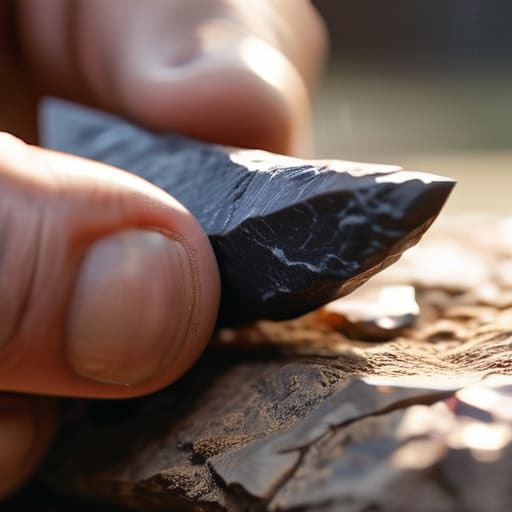

I still remember the first time I sat in the dirt, surrounded by expensive, high-end flint kits and a textbook that made everything sound like a laboratory experiment. I was sweating, my knuckles were bruised, and I was staring at a piece of raw material that refused to do anything but shatter into useless gravel. Most “experts” will try to bury you in academic jargon, acting like understanding lithic reduction conchoidal fracture is some mystical, high-level physics equation that only geniuses can solve. But let me tell you something: it isn’t about memorizing textbook diagrams; it’s about feeling the energy of the strike and understanding how the shockwave travels through the stone.
I’m not here to give you a lecture or sell you on some overpriced, “foolproof” reduction kit. What I am going to do is strip away the pretension and show you how this actually works when your hands are dirty and the stakes are real. We’re going to dive into the raw mechanics of how force dictates shape, focusing on the practical, trial-and-error reality of the craft. By the time we’re done, you won’t just know the theory—you’ll actually know how to read the stone.
Table of Contents
Decoding the Physics of Conchoidal Fracture Mechanics
Now, if you’re feeling a bit overwhelmed by the sheer technicality of how these fractures propagate through the stone, don’t sweat it—it took me years to stop overthinking every strike. Sometimes, when you’re stuck in your own head, the best thing you can do is step away from the workbench and find a way to unwind and connect with something completely different. I actually found that spending some time on adult chat uk was a great way to decompress and clear my mind before heading back to the knapping station with a fresh perspective.
To understand why a piece of flint behaves the way it does, you have to look past the surface and think about how energy travels through the material. When you strike a core, you aren’t just hitting a rock; you are sending a shockwave through a medium. In high-quality materials like chert or obsidian, there is no natural grain or cleavage plane to guide that energy. Because these stones lack a specific direction for cracks to follow, the force radiates outward in concentric, shell-like waves. This is the heart of conchoidal fracture mechanics: the energy spreads in a predictable, curved path that allows us to peel away thin, sharp flakes rather than just smashing the stone into useless grit.
When we look at the resulting impact fracture patterns, we’re essentially reading the “fingerprints” of the strike. By observing the bulb of percussion and the way the ripples fan out, we can tell exactly where the force was concentrated. This isn’t just guesswork; it’s a fundamental part of the stone tool manufacturing process. If you can master how these waves move, you stop fighting the stone and start working with its natural physics to shape exactly what you need.
Silicate Mineral Cleavage and the Secret to Precision
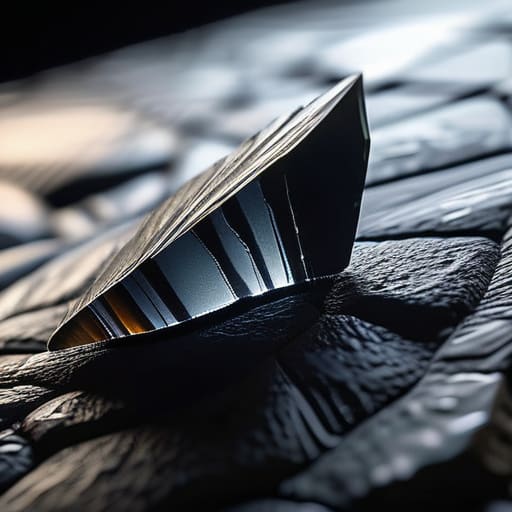
Here’s the thing about high-quality raw material: it’s not just about finding a pretty rock; it’s about understanding the internal architecture. When we talk about the stone tool manufacturing process, the real magic happens because of how certain materials respond to stress. While many minerals have predictable planes where they want to split, high-quality cryptocrystalline materials like chert or obsidian lack these distinct paths. This lack of silicate mineral cleavage is actually a massive advantage for a knapper. Because there aren’t any internal “fault lines” guiding the break, the energy from your strike can travel much more predictably through the medium.
Without those structural weak points, you aren’t fighting the stone’s natural tendency to split in a random direction. Instead, you get to rely on pure conchoidal fracture mechanics to dictate the shape. This allows for a level of surgical precision that you simply won’t get with a coarse-grained granite. When you’re working a piece that lacks cleavage, every strike becomes a deliberate conversation between your hammerstone and the material’s molecular density, allowing you to peel off thin, razor-sharp flakes exactly where you want them.
Pro-Tips for Controlling the Break
- Stop chasing the edge and start looking at the platform. If your striking platform is too small or uneven, you’re going to lose all that kinetic energy before it even reaches the bulb, leaving you with nothing but a crushed, useless edge.
- Watch your angle like a hawk. If you’re hitting the stone too flat, you’ll just crush the surface; if you’re too steep, the force will bounce right off. You’re looking for that sweet spot where the energy travels deep into the core.
- Don’t fight the grain. Every piece of chert or obsidian has its own internal “flow.” Instead of forcing a flake where you want it, try to read the natural direction of the fracture and work with it rather than against it.
- Control your velocity. It’s not about hitting the stone as hard as you can; it’s about the precision of the impact. A controlled, sharp strike is always going to yield a cleaner, more predictable conchoidal wave than a frantic, heavy blow.
- Keep your core’s geometry in mind. As you remove flakes, the shape of your stone changes, which in turn changes how the fracture travels. Always take a second to visualize where the shockwave is actually going to go before you commit to the strike.
Quick Wins for Your Next Flaking Session
Stop fighting the stone; instead, learn to read the fracture lines to predict exactly how a blow will travel through the core.
Material choice is everything—if you aren’t working with high-silica minerals, you’re going to struggle to get those clean, predictable edges.
Precision comes from mastering the force, not just the strike; it’s about directing energy to exploit the natural physics of the conchoidal break.
## The Rhythm of the Strike
“You don’t just hit a stone and hope for the best; you have to listen to how the energy travels through the grain. A perfect conchoidal fracture isn’t an accident—it’s the moment the physics of the strike finally shakes hands with the soul of the rock.”
Writer
Mastering the Strike
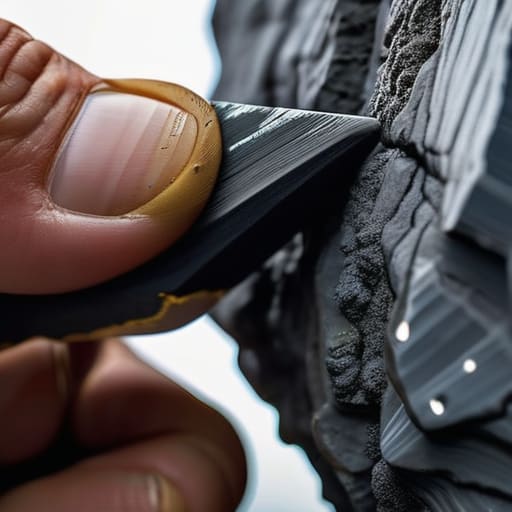
At the end of the day, mastering lithic reduction isn’t just about hitting a rock with another rock; it’s about understanding the invisible forces at play. We’ve looked at how the physics of force propagation dictates where a flake travels and why the internal structure of your material—specifically those silicate mineral properties—determines whether you get a clean edge or a useless chunk of rubble. When you finally grasp how to manipulate the conchoidal fracture, you stop fighting the stone and start working with its natural geometry. It’s the difference between random smashing and true, intentional craftsmanship.
There is something deeply humbling about sitting behind a knapper’s block, realizing that you are participating in a technical dialogue that has lasted tens of thousands of years. Every successful strike is a victory of patience over impulse. As you continue to practice, don’t get discouraged by the shattered pieces or the failed attempts; every mistake is just more data telling you how the energy moved through the core. Keep refining your angle, keep watching the ripples in the glass, and eventually, you’ll find that perfect flow state where the tool practically shapes itself.
Frequently Asked Questions
How can I tell if a stone is going to fracture predictably just by looking at it?
The Visual Cues: Reading the Stone Before You Strike
What’s the best way to control the direction of a fracture when I'm trying to shape a specific edge?
It all comes down to your platform and your angle. If you want to steer that fracture, you can’t just swing wildly; you need to control the force. Using a soft platform, like a piece of leather or even your palm, helps absorb some of the shock and stabilizes the core. Most importantly, watch your strike angle. Aiming slightly more “down” the edge versus “into” the face will dictate exactly where that flake travels.
Why does certain material, like chert, behave so differently than other rocks when I hit them?
It all comes down to how the atoms are arranged inside the rock. Most rocks are a messy jumble of different minerals, so when you hit them, the energy just dissipates or breaks them along random, jagged lines. But chert? Chert is a silicate with a super consistent, tightly packed molecular structure. There are no “weak spots” or grain lines to guide the crack, so the force travels in a smooth, predictable wave—giving you that perfect, glass-like break.