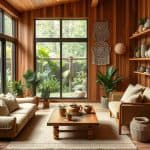

Once, I visited a friend’s apartment that perfectly showed off the minimalist style. The room was bright, with Scandinavian furniture and cozy textures that brought peace. It was more than a home; it was a peaceful place where everything had a purpose.
I was curious about how this “less is more” idea would change. With 2025 coming, I was excited to see how it would evolve. New tech, green choices, and different cultures would surely shape it.
Exploring further, I found that minimalist design is getting even more interesting. It’s now blending warmth with new ideas. Trends include using eco-friendly stuff and furniture that does more than one thing.
This new look also brings back zen ideas, focusing on being clear and mindful. Seeing nature-inspired design mixed with minimalism made me appreciate this journey. It’s a path to a simpler, yet fulfilling life.
Key Takeaways
- The minimalist aesthetic thrives on neutral colors and clean spaces, stressing less clutter.
- Sustainable minimalism uses green materials for responsible design.
- Functional innovation includes designs like modular furniture that saves space.
- Technology makes homes smarter with hidden devices for better efficiency.
- Zen-inspired designs come from Japanese minimalism, encouraging calm and balance.
- Future designs will include nature-inspired elements and AI for a new minimalist living.
- Decluttering and being mindful of what we buy are key to living minimally.
A Brief History of Minimalist Design
Minimalism’s roots are in many philosophical and artistic movements. It started as a reaction against the fancy styles of the past. It focuses on simplicity, usefulness, and beauty.
This change began with the transcendentalist philosophy of the 19th century. Ralph Waldo Emerson and Henry David Thoreau were key figures. They believed in the value of being alone and simple.
The Roots of Minimalism
The Bauhaus School was important in the early 20th century. It combined art and practical design, focusing on simplicity. This school helped shape minimalist design.
In the 1960s, the art world changed a lot. Artists like Donald Judd and Dan Flavin used industrial materials and shapes. They showed how minimalism could be expressed in art.
Key Figures and Philosophies
Thought leaders kept pushing the minimalist movement forward. Ludwig Mies van der Rohe was famous for his “less is more” idea. This idea is at the heart of minimalist design.
Dieter Rams built on these ideas in the 1970s. He focused on design that is functional, simple, and sustainable. So, minimalism has always been about finding elegance and usefulness in all areas of life.
Current Trends in Minimalist Aesthetic
Looking at minimalist design in 2025, we see some big changes. These changes make spaces more welcoming and useful. Warm minimalism, functional design, and eco-friendly choices are key in these updates.
Warm Minimalism
Minimalism has become warmer in recent years. Gone are the cold, stark looks of the past. Now, we see earthy tones and soft textures.
Neutral colors like beige, taupe, and cream make spaces cozy but simple. Wood and stone add warmth, making us feel at home without feeling too much.
Functional Innovation
In today’s cities, we value functional design more than ever. Minimalist spaces now aim to be multi-use, making the most of small areas. Built-in storage and modular furniture help keep things tidy and calm.
This mix of practicality and beauty shows that simplicity can be stunning. It makes our daily lives better by combining usefulness with style.
Sustainable Minimalism
Sustainable choices are also big in minimalist trends now. Designers are choosing eco-friendly materials and methods. This not only helps the planet but also fits with what conscious consumers want.
By focusing on sustainability, minimalist design can be both beautiful and good for the environment. It shows that we can have both function and beauty without harming the planet.
Conclusion
Minimalist design is more than a trend; it’s a deep change in how we think. It shows us a way to live more intentionally. This approach is about finding simplicity in a world that’s getting more complex.
Adding warmth and comfort to minimalist spaces is a big step forward. Using natural materials and earthy colors makes our homes feel welcoming. This change helps us appreciate our surroundings more, leading to a life that’s both beautiful and practical.
As we look to 2025 and beyond, minimalism will keep growing. It will mix different cultures and new designs, but its core will stay the same. Embracing minimalism makes our homes better and helps us find balance. It’s about combining simplicity with personal touch.