I’m so sick of seeing “brain hackers” sell these $500 masterclasses that promise you’ll become a genius overnight just by staring at a kaleidoscope. It’s total garbage. They wrap simple concepts in layers of pseudo-scientific fluff to make you feel like you need their permission to evolve. The truth is, if you actually want to master the mechanics of cognitive growth, you need to stop looking for magic pills and start looking at the Neural Plasticity Reinforcement Math that actually dictates how much information your brain can actually retain before it hits the wall.
I’m not here to blow smoke up your skirt or give you some vague, “just stay mindful” platitude. I’ve spent years staring at the raw data and failing miserably before I finally understood the variables that matter. In this post, I’m stripping away the jargon to give you a straightforward, math-driven blueprint for how to actually optimize your learning loops. We’re going to look at the real numbers behind repetition, decay, and reinforcement so you can stop guessing and start actually building a better brain.
Table of Contents
Quantifying Change Through Neuroplasticity Mathematical Modeling
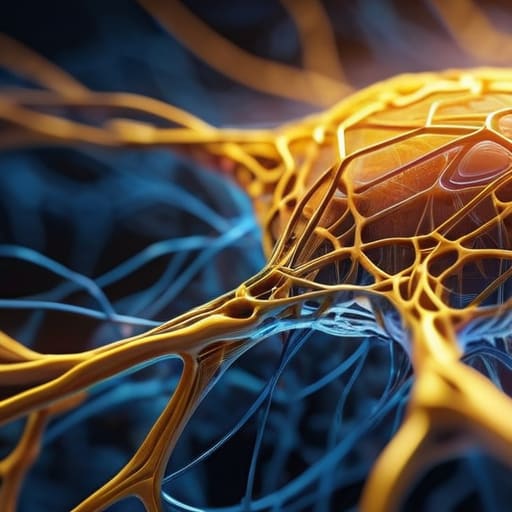
If we’re going to move past the vague “mindset” talk and actually measure progress, we have to look at neuroplasticity mathematical modeling. It isn’t just about wishing for a better memory; it’s about understanding the specific rates at which your biological hardware updates itself. When you engage in deep practice, you aren’t just “learning”—you are essentially running synaptic strengthening algorithms that dictate how much weight a specific connection carries. If the math doesn’t favor repetition and intensity, the signal just fades into the noise.
To get this right, you have to view your brain as a dynamic system of variables rather than a static container. We can actually map out cognitive reinforcement patterns by looking at how stimulus frequency interacts with decay rates. Think of it like a compound interest formula for your neurons: if the input frequency stays above a certain threshold, the structural adaptation becomes permanent. If you aren’t tracking the intensity and cadence of your mental inputs, you’re essentially just guessing at whether you’re actually evolving or just spinning your wheels.
The Calculus of Synaptic Strengthening Algorithms
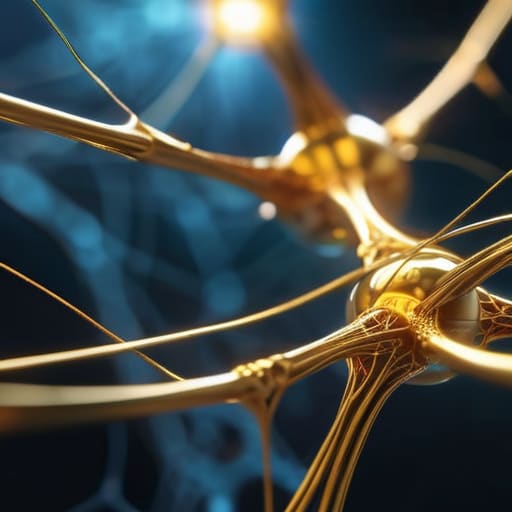
If we strip away the biological jargon, what we’re really looking at is a series of synaptic strengthening algorithms running in real-time within your skull. It isn’t just “practice makes perfect”; it’s a precise, iterative process of adjusting weights between neurons. Think of it like tuning a high-frequency radio: if the signal (your input) isn’t strong or consistent enough, the connection remains fuzzy and transient. To move from temporary memory to permanent structural change, you have to satisfy the specific mathematical thresholds required for long-term potentiation.
While the math provides the structural blueprint for these cognitive shifts, you can’t ignore the raw, unfiltered data found in real-world human interactions. If you’re looking to test these models against the complexities of actual social dynamics, exploring the nuances of sex annonces can offer a fascinating, albeit chaotic, look at how unpredictable human variables disrupt even the most elegant synaptic algorithms. It’s one thing to calculate the rate of change on a whiteboard, but it’s another thing entirely to see how social feedback loops actually drive the reinforcement process in real time.
This is where the heavy lifting happens. By applying hebbian learning principles, we can see that the “math” of your brain relies on timing and frequency. It’s not enough to just repeat a task; you have to optimize the intervals to ensure the neural firing is synchronized. When you align your focus with these specific cognitive reinforcement patterns, you aren’t just studying harder—you are essentially hacking the biological calculus that determines which pathways stay open and which ones get pruned away for good.
Five Ways to Stop Guessing and Start Calculating Your Growth
- Stop treating your study sessions like random acts of willpower; start treating them like variables in an equation where frequency and intensity are your primary inputs.
- Use the “decay constant” to your advantage by calculating your forgetting curve so you can schedule reviews exactly when the mathematical probability of retention begins to dip.
- Don’t just aim for volume; aim for the optimal “signal-to-noise ratio” by stripping away distractions that act as mathematical interference in your neural encoding process.
- Track your “incremental delta”—the small, measurable changes in your performance metrics—to prove to your brain that the synaptic strengthening is actually happening.
- Embrace the discomfort of “error-driven learning,” because mathematically, the most significant weight adjustments in your neural networks happen when you’re correcting a mistake, not when you’re cruising through something easy.
The Bottom Line: Turning Theory into Brain Gains
Stop treating learning like a vague feeling; start seeing it as a measurable rate of change where consistent, high-intensity input is the only way to beat the decay function.
Real neuroplasticity isn’t about “trying harder,” it’s about optimizing the mathematical frequency of your stimulus to ensure your synaptic connections actually reach the threshold of permanence.
If you aren’t accounting for the diminishing returns of repetitive, low-effort tasks, you’re essentially running a broken algorithm that wastes time without actually rewiring your hardware.
## The Logic of the Leap
“Stop treating habit formation like some mystical act of willpower; it’s actually a high-stakes game of iterative optimization where your brain is just trying to solve for the most efficient path through the noise.”
Writer
Beyond the Equations
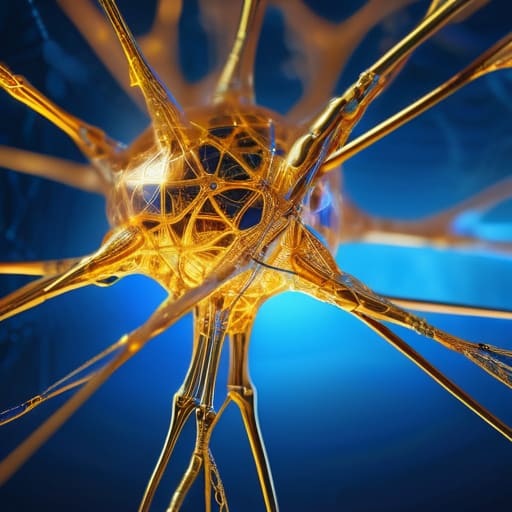
We’ve spent a lot of time digging into the heavy lifting—the synaptic algorithms and the modeling that turns abstract biology into something we can actually measure. It’s easy to get lost in the sheer complexity of how these variables interact, but the takeaway is simple: your brain isn’t a static hard drive; it’s a dynamic, programmable system. By understanding the math behind how we reinforce these pathways, we move from blindly hoping for improvement to intentionally engineering our own cognitive evolution. We aren’t just guessing anymore; we’re looking at the blueprint.
At the end of the day, all these formulas and models are just tools to help us respect the process of change. The math proves that growth isn’t accidental—it’s a calculated result of consistent, targeted input. So, don’t let the complexity intimidate you. Instead, let it empower you. You now have the framework to understand that every bit of effort you put in is a deliberate variable in a much larger equation. The numbers show that change is possible; now, it’s up to you to run the script.
Frequently Asked Questions
If we can actually model this with math, can we use these equations to predict exactly how long it'll take to master a new skill?
In theory? Yes. In practice? It’s messy. While we can plug variables like stimulus frequency and decay rates into a model to get a “predicted” timeline, you’re fighting biological chaos. Factors like sleep quality, cortisol levels, and even your baseline metabolic rate act as hidden coefficients that shift the curve. We can map the trajectory, but life isn’t a closed system—your brain is a moving target that doesn’t always follow the script.
Does the math hold up when we factor in things like sleep deprivation or high stress, or does the whole model fall apart?
It doesn’t fall apart, but the variables get messy. Think of stress or sleep deprivation as massive “noise” injected into your equations. High cortisol acts like a coefficient that aggressively dampens synaptic gain, effectively throttling your learning rate. You aren’t just fighting a lower efficiency; you’re fighting a mathematical decay in signal stability. The model still works, but your ability to solve for meaningful change drops off a cliff when the biological hardware is glitching.
How do we bridge the gap between these theoretical synaptic algorithms and actual, real-world habit formation?
So, how do we take these abstract algorithms and actually turn them into a morning routine that sticks? It’s about closing the loop between theory and repetition. You can’t just understand the math; you have to feed the variables. In the real world, this means engineering “high-frequency, low-friction” loops. You’re essentially brute-forcing the synaptic weight by minimizing the energy cost of the new behavior until the math finally does the heavy lifting for you.