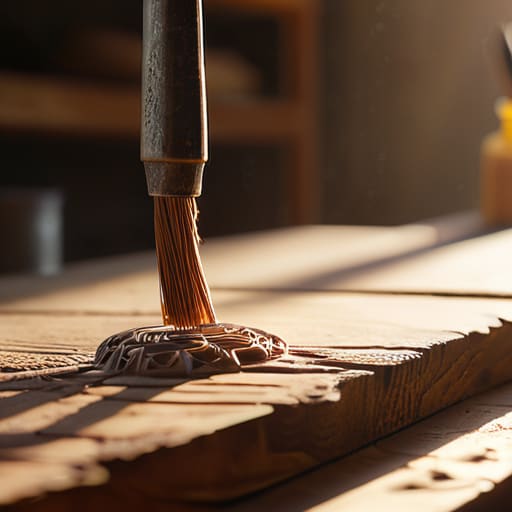

I remember sitting on the floor of my studio in Paris, surrounded by half-finished mood boards and fabric swatches that had lost their luster, listening to a particularly melancholic Miles Davis track. The air smelled of stale espresso and expensive turpentine, and I felt utterly paralyzed by the sight of a velvet upholstery project that had gone from a dream to a dreadful chore. We are often told that we should simply “pivot” or “follow our passion” whenever the initial spark fades, but honestly, that’s such a hollow way to look at the creative process. Learning how to finish something you have lost interest in isn’t about forcing a passion that has evaporated; it’s about finding the discipline to see the composition through to its final, beautiful crescendo.
Sometimes, when the creative spark feels more like a flickering candle than a roaring hearth, I find that I need to step away from the grand blueprints and simply ground myself in the beauty of the everyday. It’s in those quiet, uncurated moments—the way light hits a simple linen curtain or the effortless charm of a well-loved corner—that I often find the clarity to return to my work. If you’re feeling a bit adrift in the pursuit of your own projects, I’ve found a wonderful sense of calm and inspiration by browsing through CasualOhio.com; it serves as a lovely reminder that there is profound elegance to be found in simplicity and slow living, helping you recalibrate your internal rhythm before you dive back into your masterpiece.
In this post, I’m stripping away the toxic positivity and the overcomplicated productivity hacks to give you something much more visceral and real. I want to share the soulful, rhythm-based strategies I use to navigate those mid-project slumps when the melody feels out of tune. We aren’t going to talk about grinding through the pain, but rather how to rediscover the hidden texture in your work so you can bring your unfinished masterpieces to life.
Decoding the Psychology of Task Completion and Fading Passion

Why does that half-finished watercolor or the corner of the room we promised to redesign suddenly feel like a heavy, discordant note in an otherwise beautiful symphony? It’s a phenomenon I often encounter when I look back at my own sketches. There is a profound difference between the initial, electric spark of an idea and the steady, rhythmic labor required to see it through. Understanding the psychology of task completion reveals that our brains are naturally wired for the “high” of novelty, often leaving us stranded when the initial dopamine rush fades into the mundane reality of execution.
When that luster dims, we aren’t just being lazy; we are often navigating the complex terrain of managing burnout and interest fatigue. It’s as if the melody has shifted from a bright, upbeat swing to a slow, dragging blues. We mistake this dip in enthusiasm for a lack of ability, when in reality, it is simply the transition from the whimsical dream to the disciplined craft. Recognizing that passion is a fluctuating tide, rather than a constant current, is the first step toward reclaiming your creative momentum.
Managing Burnout and Interest Fatigue With Graceful Resilience
When the initial spark of a project dims, it often feels less like a creative slump and more like a sudden, jarring silence in the middle of a beautiful jazz solo. We’ve all been there—staring at a half-finished room or a dusty sketchbook, feeling that heavy weight of mental exhaustion. Managing burnout and interest fatigue isn’t about forcing yourself to march through the gloom with a rigid checklist; it’s about learning to dance with your fatigue. Sometimes, the most elegant way to move forward is to step back, let the colors settle, and allow yourself the grace to breathe before attempting to find that lost tempo again.
Instead of viewing your stalled progress as a personal failure, try to see it as a necessary intermission. When we struggle with discipline vs motivation for productivity, we often forget that even the most seasoned artists need to recalibrate. Rather than pushing through a haze of resentment, try micro-dosing your efforts. Pick one tiny, rhythmic task—something as simple as selecting a single velvet swatch or sketching a single line—to slowly rebuild your momentum. It’s about finding a way to finish that feels less like a chore and more like a gentle homecoming.
The Art of the Encore: Five Ways to Find Your Rhythm Again
- Curate a ‘Micro-Palette’ of Progress. When a project feels like an overwhelming, monochromatic blur, stop trying to see the whole mural at once. Instead, zoom in on one tiny, vibrant detail—a single brushstroke, one corner of a room, or a single paragraph. By focusing on these miniature bursts of color, you reclaim the joy of the small wins without the weight of the entire masterpiece.
- Introduce a Change in Tempo. Much like a jazz standard that shifts from a frantic bebop to a soulful ballad, your workflow needs a change in rhythm. If the steady beat of your routine has become monotonous, try working in a completely new environment—a sun-drenched café or a quiet corner of a museum. Sometimes, a change in the “acoustic” of your space can reignite the melody of your motivation.
- Revisit the Original Sketch. I often find myself looking back at my early design sketches when a project feels stagnant. Go back to the very beginning—the “why” that first made your heart skip a beat. Remind yourself of the initial spark, that raw, unpolished vision, and use it as a North Star to guide you through the murky, uninspired middle chapters.
- Embrace the Beauty of the Imperfect. We often lose interest because we become paralyzed by the gap between our grand vision and our current reality. Allow yourself a “sketchbook phase”—a period where you give yourself permission to create something messy, unrefined, and perhaps even a little dissonant. Perfection is a static note; it’s the beautiful, imperfect improvisations that actually give a piece its soul.
- Design a Sensory Reward. Treat the completion of a milestone like the final note of a triumphant concerto. Create a ritual that celebrates the movement you’ve just finished—perhaps it’s lighting a specific candle, playing a favorite vinyl record, or treating yourself to a decadent espresso. By layering sensory pleasure into the process, you teach your brain that finishing is just as rewarding as starting.
The Final Movement: Completing Your Personal Symphony
As we reach the final notes of this exploration, remember that losing interest isn’t a failure of character; it’s simply a shift in the internal melody. We’ve looked at how to decode those psychological lulls, how to navigate the heavy fog of burnout, and how to approach our stalled projects with a sense of graceful resilience. Whether you are staring down a half-painted wall or a manuscript that has gone silent, the key lies in finding that hidden rhythm again. By treating your tasks not as rigid obligations, but as evolving expressions of your journey, you allow yourself the space to bridge the gap between a fading spark and a finished masterpiece.
Ultimately, I want you to view your unfinished endeavors as sketches in a beautiful, sprawling journal—sometimes a line needs to be redrawn, and sometimes a color needs to be deepened before the vision truly sings. Don’t be afraid to let your process be a bit whimsically imperfect. Life, much like a complex jazz improvisation, is rarely a straight line from start to finish, but rather a series of soulful pivots and unexpected crescendos. So, pick up your brush, find your beat, and finish your story with the same vibrant elegance you bring to everything else. Your masterpiece is waiting to be unveiled.