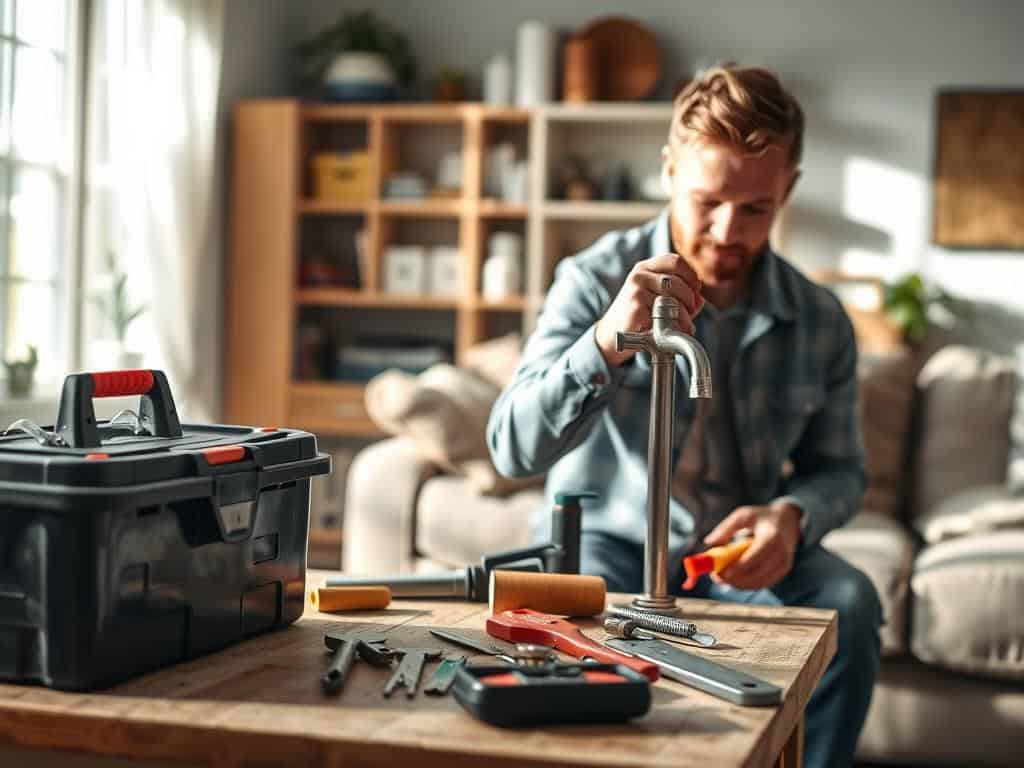

At one point, I felt like my household expenses were getting out of hand. It seemed like no matter how hard I tried to save, new bills and unexpected repairs kept popping up. One rainy afternoon, I found a leak under my kitchen sink. It threatened my cabinets and my wallet.
Instead of calling a plumber, I decided to fix it myself. This led me to discover many DIY Home Repairs and money-saving tips. With a few simple fixes, I not only fixed the leak but also made big changes around my home. This helped me save a lot of money.
My journey shows how important it is to tackle these household issues. I’m here to share how you can do the same.
Key Takeaways
- Fixing leaky faucets can significantly lower water bills by preventing waste.
- Patching wall holes yourself saves on costly labor fees from professionals.
- Weatherstripping can minimize energy loss, ultimately lowering utility costs.
- Regularly cleaning gutters prevents water damage and costly repairs down the line.
- Replacing air filters not only saves energy costs but extends the lifespan of HVAC systems.
- Many common issues, like clogged drains and noisy toilets, can easily be fixed by homeowners themselves.
Understanding Common Household Financial Pitfalls
Managing household finances can be tough, with high housing costs and more pressure on spending. I’ve seen how these issues can eat into my savings and slow down my financial goals. It’s key to know the common money traps homeowners face to improve budgeting.
The Impact of High Housing Costs
High housing costs can really squeeze my monthly budget. When my mortgage eats up more than 30% of my income, saving becomes hard. Homeowners often overlook extra costs like property taxes, insurance, and maintenance fees.
Creating a budget helps me set aside 10-20% for unexpected expenses. These costs can add up fast and catch me off guard.
Consumer Spending Habits That Drain Savings
My spending habits are a big part of my financial life. Eating out too much or buying on impulse can quickly use up my savings. A solid budget helps me tell the difference between needs and wants.
By carefully looking at my spending, I make better choices. This helps me avoid unnecessary expenses and keeps me on track financially.
DIY Home Repairs: Simple Solutions to Save Big
Every homeowner faces maintenance issues over time. Fixing these problems quickly can save a lot of money. Knowing when to act is key. Small problems can turn into big expenses if not fixed.
By doing DIY repairs, I keep my home in top shape. It also saves me money.
Identifying Home Maintenance Neglect
Home maintenance problems often hide until they’re obvious. A leaky faucet is a common issue. It’s usually caused by a worn-out washer and can raise your water bill.
I always turn off the water before fixing it. You’ll need a wrench, plumber’s tape, and a new washer. Cleaning gutters is also important to avoid water damage. Regularly removing debris and checking downspouts can save on repairs.
Cost-Saving Repair Tips from Handyman Pros
Adding handyman tips to my routine helps a lot. Simple tasks like replacing washers and fixing faucets can cut down on water costs. I’ve also fixed water stains on ceilings with a bleach solution or mildew remover.
Fixing caulking around bathtubs and doors improves energy efficiency. Even fixing toilet clogs with dish soap and a plunger can save on plumbing bills.
I’ve also learned to patch wall holes and paint walls myself. Using a spackle knife, drywall mud, and sandpaper helps achieve a smooth finish. Silencing squeaky door hinges with petroleum jelly or bar soap also improves comfort.
Restoring a deck with a fresh coat of stain is manageable with online tutorials.
Lastly, I like to touch up old appliances with spray paint or liquid stainless steel paint. This gives them a new look. DIY repairs not only save money but also make me feel accomplished. With a bit of effort, you can make big improvements and save a lot.
Changing Your Financial Mindset for Better Savings
Changing how you think about money is key to saving better. Seeing money as a source of abundance, not just a resource, changes everything. It turns financial hurdles into chances to grow, making you more confident in your choices.
Being thankful for what you have shifts your focus to abundance. This mindset is a game-changer for your financial health.
Shifting from Scarcity to Abundance
Choosing to see money as abundant means making smarter spending choices. It’s vital to avoid buying on impulse, even with deals. Coupons and cashback should only add to what you’ve already planned to buy.
Using cashback apps for everyday needs like food and gas boosts your savings. It helps you stay on track with your financial goals.
Setting Clear Financial Goals for Saving
Having clear savings goals is essential. Aim to save 20% of your income, following the 50/30/20 rule. Tracking your spending helps you see where you can cut back and stay focused on your goals.
Building an emergency fund of $500 to $1,000 is also important. It acts as a safety net for unexpected costs. Keeping this fund separate from your daily money helps you avoid spending it impulsively.
Looking back at how you’ve spent money, like during holidays, helps set better budgets. Good credit habits, like paying bills on time and keeping credit use low, also reduce stress and improve your score. Improving your financial mindset takes time and effort, but it’s worth it.
Conclusion
Getting financially empowered as a homeowner means knowing common money traps. High housing costs and spending too much can hurt your savings. By spotting these issues, I can make better choices and avoid wasting money.
DIY home fixes seem appealing because they can save a lot of money. Jobs like putting in kitchen cabinets or painting can cut down on labor costs. But, I need to be careful. Bad DIY jobs can cause big problems, like insurance issues if they damage my home’s value.
Being financially savvy means I can control my money journey. With some research and careful planning, I can save money and improve my home’s value and safety. Using smart money strategies, I aim for a secure and prosperous future.