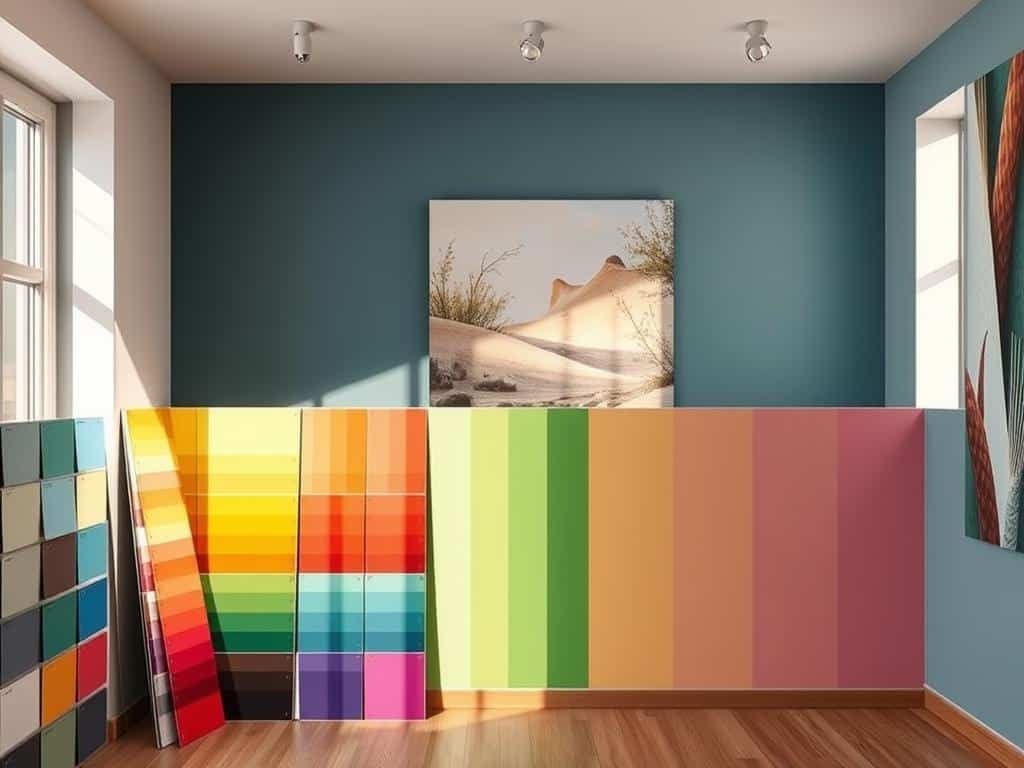

Have you ever walked into a room and felt a change in your mood? I once painted my living room red, hoping it would add life. But it felt chaotic and too much. This shows how wall colors can really affect our feelings and mood.
Colors can make us feel different. Warm colors like red make us more energetic but can also make our heart race. Cool colors like blue help us relax and focus better. Famous artist Pablo Picasso knew how colors make us feel, showing how our surroundings shape our emotions.
As I picked colors for my space, I learned how important it is to choose wisely. The right colors can make us feel better, not worse.
Key Takeaways
- Colors can significantly influence our emotions and mood.
- Warm colors stimulate energy and social interactions.
- Choosing the right wall colors creates inviting and comfortable spaces.
- Neutral colors offer versatility and sophistication.
- Understanding color associations helps in designing personal environments.
Understanding the Emotional Impact of Colors
Colors have a big impact on our feelings. Each color has its own set of associations that can change our mood. Studies show that colors can make us feel certain ways, and this is true for people all over the world.
Knowing how colors affect us helps us create spaces that make us feel good. This is important for our well-being.
The Science Behind Color Associations
A big study in 2020 looked at color associations with over 4,500 people from many countries. It found interesting things. For example, 68% of people linked red with love, and 52% said yellow made them feel joyful.
Green was seen as calming by 39%, and 25% said purple brought them happiness. On the other hand, black made 51% feel sad, and white brought relief to 43%.
This study shows how colors can affect us, even though we come from different places. It shows we all share some common feelings when it comes to colors.
Warm Colors vs. Cool Colors
Colors can be warm or cool. Warm colors like red, yellow, and orange make us feel energetic and excited. Red, in particular, can make our heart beat faster and our adrenaline rise.
Cool colors, like blue, green, and purple, make us feel calm and relaxed. Blue is often used in work places because it makes people feel confident and trustworthy.
The way colors make us feel can change how we interact with our surroundings. It’s important to think about this when designing spaces.
Color Psychology in Interior Design
Choosing wall colors can greatly affect the mood of our spaces. Interior design is more than looks; it shapes our feelings and well-being. By picking the right colors, I can make areas that boost happiness, spark creativity, or bring peace.
Choosing the Right Wall Colors for Different Spaces
Every room has its own role in our lives. So, picking colors that match those roles is key. Red, for example, sparks passion and ambition, making it great for kitchens and creative spots. On the other hand, blue promotes calmness, fitting well in bedrooms and bathrooms.
Knowing how colors make us feel helps me choose the best ones. This way, I can create spaces that meet our needs.
Effects of Color Schemes on Well-Being
A well-chosen color scheme can improve our mood and health. Soft yellows brighten up living rooms, adding warmth. Green, linked to balance and growth, is perfect for shared spaces and offices, helping us stay calm and focused.
Using colors we love can really change how we feel in a room. Whether I want to energize or relax, the right colors can make a big difference. They help create a more uplifting environment at home or work.
Conclusion
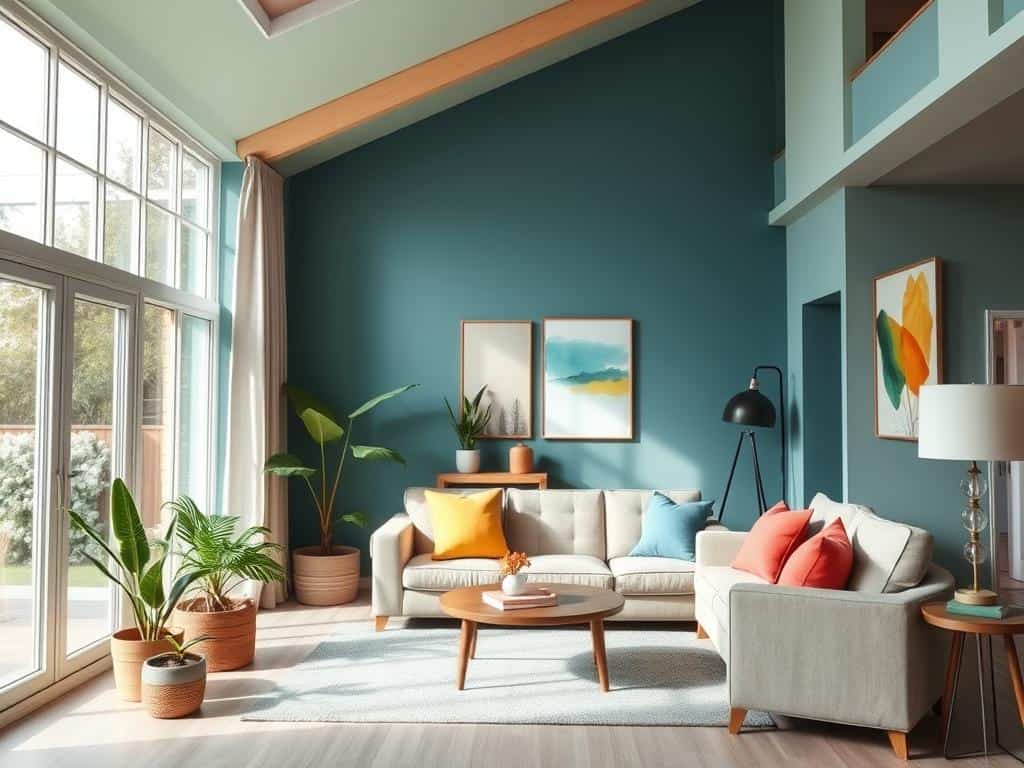
Looking back at this article, we see how colors deeply affect our emotional health. Colors like red can make us feel energetic, while blue brings calmness. Knowing this helps us choose colors that improve our mood and how we interact with others.
Culture also plays a big role in how we see colors. What excites one person might not affect another the same way. For example, white means purity in the West but mourning in some Eastern cultures. So, picking colors wisely is key, like in interior design, to make spaces that relax or bring people together.
Color psychology is more than just making things look good. It helps create spaces that make us feel better and work better. As we learn more about color psychology, we’ll find new ways to use colors to improve our lives. This knowledge will help us make our surroundings better and our lives happier.