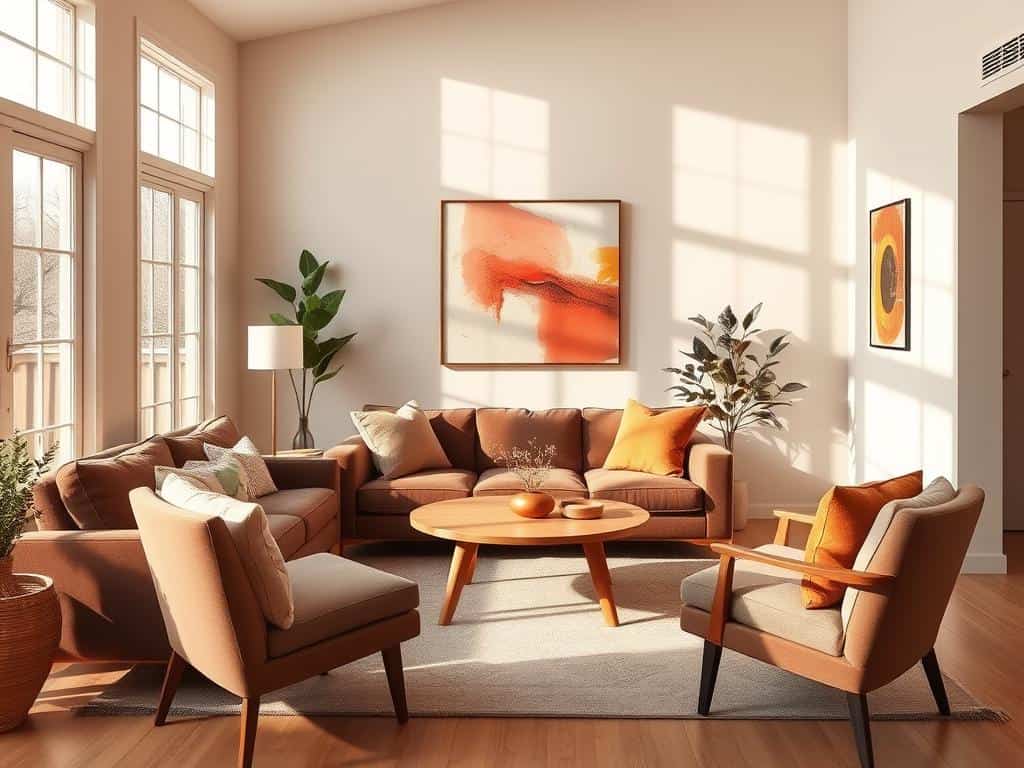

When I enter my home, I seek warmth and comfort. The colors around me are key in creating this feeling. They are more than just wall shades; they reflect my mood.
Exploring Color Psychology, I found that certain hues change my day. Soft blues in my bedroom bring calm, while yellows and oranges in the living room boost energy. The right colors can deeply affect my mood.
Each of us reacts differently to colors, making our homes unique. Let’s explore how the right colors can turn our homes into inviting spaces that boost our mood and emotional wellbeing.
Key Takeaways
- Bright colors like blue or green promote a spa-like feel in bathrooms.
- Soft, muted blues and warm neutrals create a relaxing bedroom atmosphere.
- Cheerful shades are best for lively living rooms, while calm colors evoke serenity.
- Warm tones enhance coziness in kitchens, while sleek modern shades offer sophistication.
- Utilizing a color mood chart helps categorize colors by their emotional impact.
Understanding Color Psychology and Its Effects on Mood
Color psychology studies how colors impact our emotions and actions. It shows that different colors can make us feel different ways. Knowing this helps me design spaces that match the mood I want.
What is Color Psychology?
Color psychology looks at how colors connect with our minds. It shows that colors can change how we feel and act. For instance, red makes us feel passionate and excited, raising our heart rate.
On the other hand, blue helps us relax and feel calm. It’s great for places where we want to unwind. By understanding color psychology, I can choose colors that improve my surroundings.
The Emotional Impact of Warm vs. Cool Colors
Warm and cool colors shape the mood of a space. Warm colors like red, yellow, and orange energize us. They make us feel happy and encourage us to be social.
Yellow, for example, brings joy and creativity. It’s perfect for lively areas like kitchens and living rooms. Cool colors, like green and blue, bring calm and comfort. Green connects us to nature, while blue helps us relax, ideal for bedrooms.
Knowing how colors affect our mood helps me design better spaces. Each color has its own power, whether it’s the soothing effect of blue or the energizing vibe of orange. By choosing colors wisely, I create a space that meets my emotional needs and boosts my well-being.
The Best Colors for Different Rooms in Your Home
Choosing the right colors for each room is key. It shapes the mood and purpose of the space. For example, I pick calming colors for the bedroom, lively ones for the living room, and focused colors for the home office. Each room has its own role, and the right color can make all the difference.
Colors for the Bedroom: Creating Calm and Serenity
In the bedroom, I go for soft blues and greens. These colors help you relax and sleep better. Lavender adds to the calm, making it perfect for unwinding. Muted tones and crisp whites also help create a peaceful space.
Colors for the Living Room: Fostering Energy and Connection
In the living room, I choose vibrant colors to boost energy and connection. Bright yellows and oranges bring joy and make the room lively. Earthy tones and soft greens add warmth and make it welcoming for everyone.
Colors for the Home Office: Encouraging Focus and Productivity
In the home office, I pick colors that help me stay focused and productive. Calming blues and muted greens keep me concentrated. Light yellows add a boost of energy and inspiration, making the space lively and motivating.
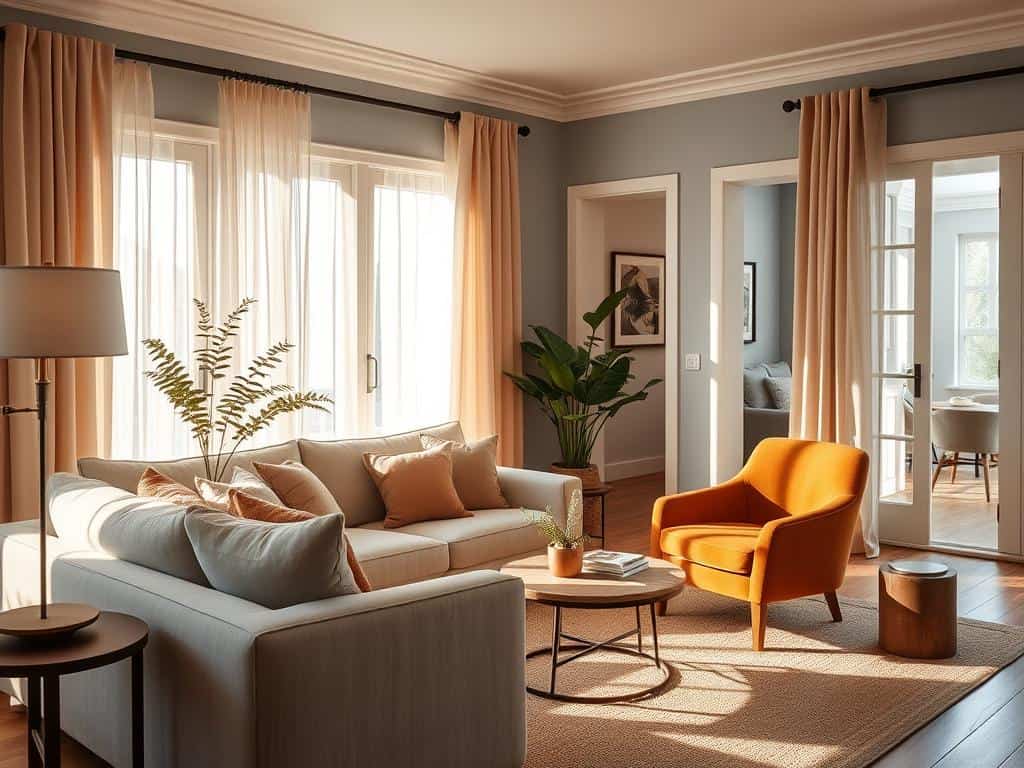
How to Choose the Right Paint Colors for Emotional Design
Choosing the right paint colors is key for emotional design. Knowing the room’s purpose is essential. For example, kitchens do well with warm colors to boost appetite and family bonding. Bedrooms, on the other hand, need calming colors for rest.
Assessing the Purpose of Each Room
Reflecting on each room’s purpose helps me choose colors wisely. Neutral colors like white or cream are great for adding vibrancy with accent walls. Warm colors like red and yellow bring joy, perfect for lively areas. Cool colors, such as blue and green, promote relaxation.
I think about how colors make me feel and the mood I want to create.
Using a Color Mood Chart
A color mood chart helps me see how colors affect emotions. I love using bold colors like orange and deep blues for a pop of energy. The color wheel guides me in balancing colors, creating harmony or excitement.
I find inspiration in nature, like pairing tan with light blue for a calming effect. This approach ensures my colors match my home’s emotional design.
Conclusion
Color Psychology is a powerful tool for changing my home’s atmosphere. By picking colors that match my mood goals, I create a space that boosts my happiness. For example, red energizes social areas, while blue and green calm bedrooms and offices.
Knowing how color affects mood helps me choose better colors for my home. Yellow brightens up spaces, making them feel happy and optimistic. Oranges add warmth and excitement to areas meant for socializing. This way, my home truly reflects my personality and meets my emotional needs.
Using Color Psychology, I can transform my home’s mood. As I design each room, I use color to make spaces that are both functional and emotionally supportive. This approach helps me create a home that nurtures my well-being.