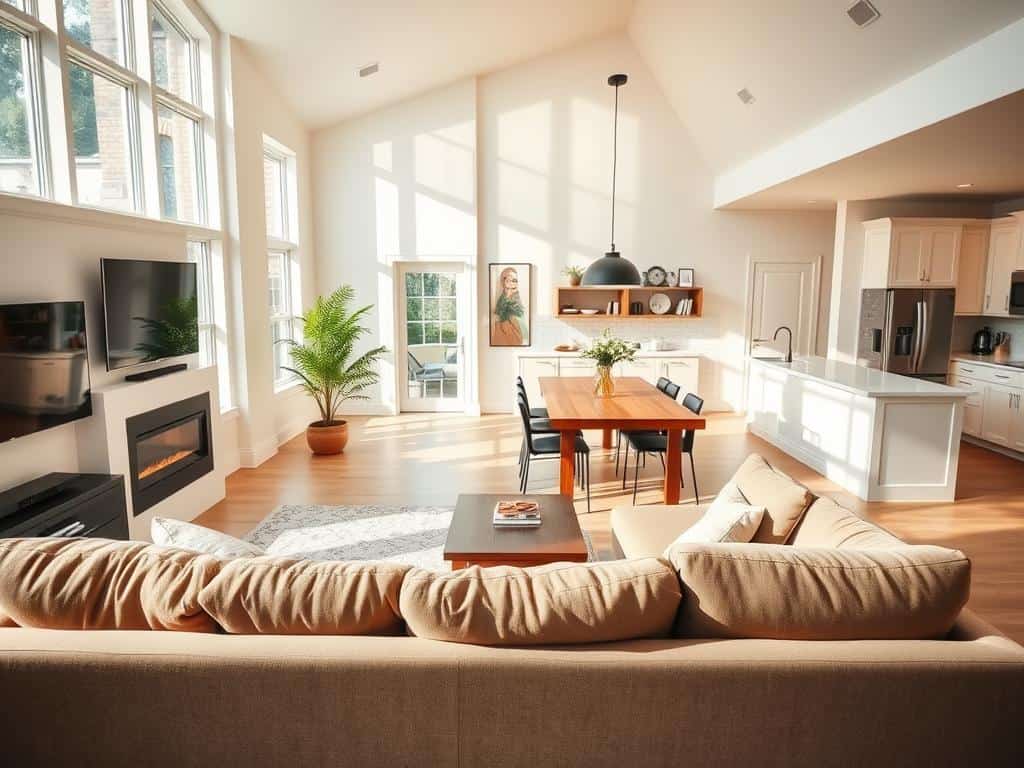

When I visited my friend’s new home, I was amazed by the open concept living area. The walls that once divided the kitchen, dining room, and living space were gone. Now, the space was filled with light and laughter, making it easy to talk to everyone.
But as the night went on, the lack of walls became a problem. Kids were playing and the TV was loud. I wondered if the bright, open spaces would lose their charm with the noise and need for privacy. It made me think: is an open floor plan really the best choice for everyone?
Key Takeaways
- Open concept kitchens foster communication and a more spacious atmosphere.
- Traditional kitchens allow for privacy and better organization.
- Great rooms in open layouts provide natural light and an inviting feel.
- Traditional layouts promote coziness, ideal for quiet family moments.
- Open floor plans offer flexible furniture arrangement and design.
- Traditional designs enable unique aesthetics for individual rooms.
Understanding Open Concept Living
Open concept living has changed how we design homes today. It creates spaces that are connected, functional, and stylish. Unlike old designs, these spaces flow together smoothly. This style fits well with today’s homeowners who want to use space wisely and enjoy living together.
Origins and Popularity of Open Floor Plans
The idea of open floor plans started in mid-20th century America. It was a response to the need for more space and creativity. Architects saw how families needed these designs, leading to a focus on community and space.
By 2016, 84% of builders were using open-concept designs. This shows how popular it has become. People love the natural light and better flow these designs offer.
Key Features of Open Floor Plans
Open concept living has unique features that stand out. One key thing is the use of natural light, making spaces brighter and welcoming. It also helps families talk and spend time together, making it great for parties and work.
These spaces can also be used for more than one thing. For example, a dining room can also be a home office. This flexibility is a big plus.
But, open floor plans have their downsides. Without walls, there can be noise problems. This can make it hard to work or relax at home. Heating and cooling can also be harder, leading to higher energy bills.
Designing these spaces well is important. It’s about finding a balance between looks and function. With the right design, open concept living can be both useful and beautiful.
Advantages and Disadvantages of Open Floor Plans
Open floor plans have changed modern homes, bringing both good points and downsides. They encourage family bonding and creativity. But, it’s key to weigh the pros and cons to see if they fit your lifestyle.
Pros of Open Floor Plans
Open floor plans make homes feel bigger and brighter. They let natural light spread everywhere, making spaces welcoming. This design also helps families talk and play together more easily.
For those who love to host, open designs are perfect. They make it easy to move around and talk while entertaining. Plus, keeping an eye on kids is simpler, and homes with open plans often sell for more.
Cons of Open Floor Plans
Open floor plans have their downsides too. One big issue is controlling noise. Without walls, sounds can travel far, disrupting peace. This can make daily life harder.
Privacy is another problem. With everyone in one area, finding quiet time is tough. Cleaning and keeping things tidy can be hard too. And, heating and cooling big spaces can raise energy costs.
Conclusion
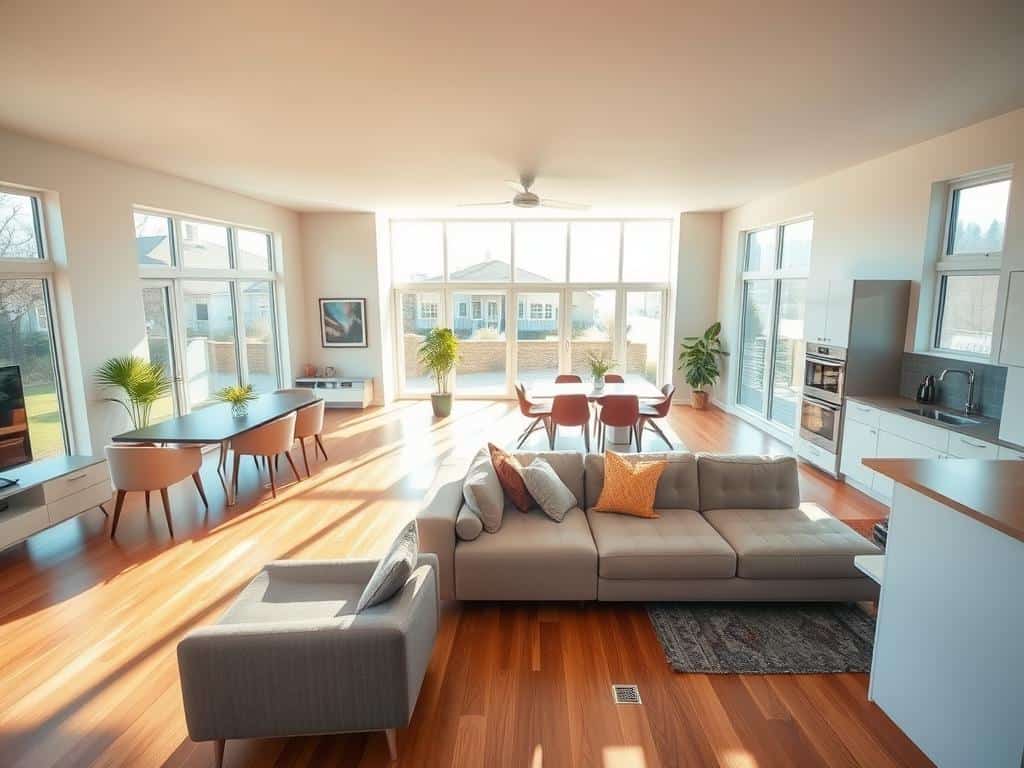
Reflecting on open concept living, it’s clear that my home should match my lifestyle. Open floor plans offer many benefits like more space and better light. They also make homes feel welcoming for family and friends.
But, open designs come with challenges too. Privacy and noise can be issues. It’s key to weigh these against my needs. Using room dividers or smart furniture can help solve these problems.
Choosing between open concept and traditional layouts depends on my lifestyle. Talking to design experts can help. They can make sure my home looks great and meets my daily needs.