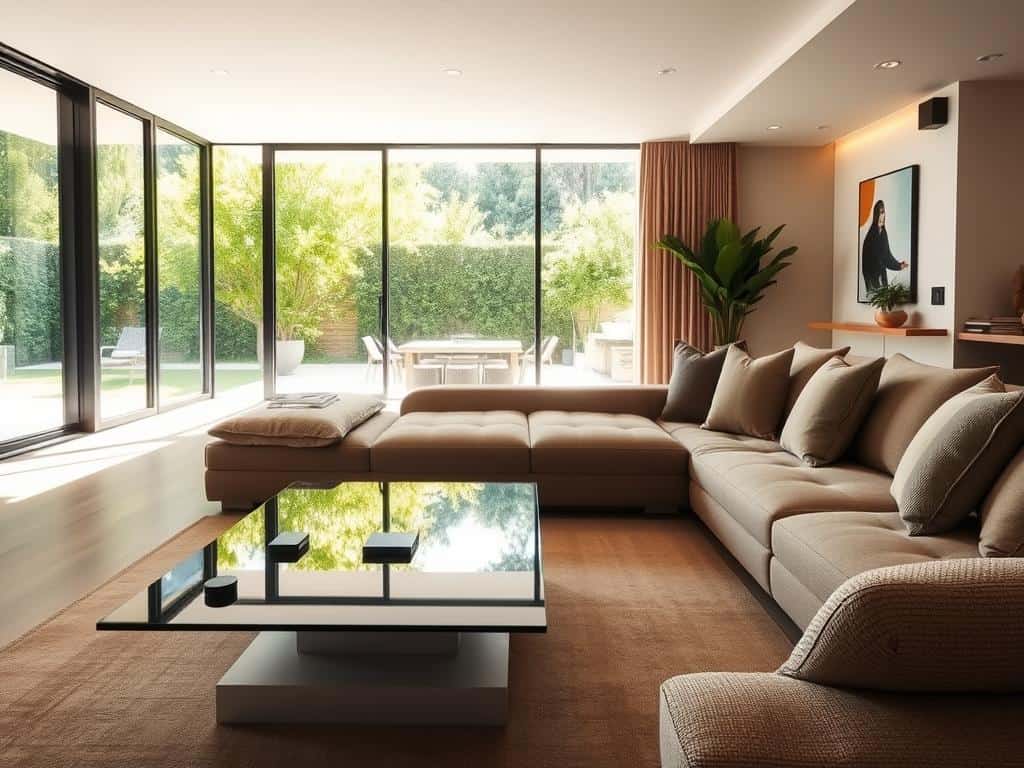

One evening, I noticed something amazing. My friends and family were drawn to the lively atmosphere in my living room. The room’s emerald and sapphire colors, paired with reclaimed wood and metallic accents, made it warm and inviting.
I had combined technology with design perfectly. My smart home features, like voice-controlled lights and hidden speakers, added to the ambiance without taking over. It was a seamless blend.
2025 is going to change home design in big ways. I looked into the latest smart home trends and was impressed. These technologies work well with sustainable materials and focus on wellness.
The future of design is about creating spaces that are both luxurious and caring. These spaces will make bold statements while also improving our well-being. Let’s explore the trends that will shape home design in 2025, from furniture that does it all to the beauty of natural stone.
Key Takeaways
- Bold, saturated colors like emerald and sapphire are trending for vibrant interiors.
- Sustainable materials such as reclaimed wood and vegan leather are gaining traction.
- Multifunctional furniture with tech integration is essential for modern living.
- Discreet technology, including hidden speakers, enhances aesthetic appeal.
- Wellness-focused spaces like yoga studios are becoming integral in home design.
Innovative Smart Home Trends for 2025
Smart homes are evolving fast, thanks to new Smart Technology and Automation. By 2025, these technologies will be a must-have for homeowners. They want homes that are easy to use and save energy. Smart appliances are key, making our homes more efficient.
Integration of Smart Technology
Smart tech makes our lives better in many ways. For example, LG’s AI laundry machines adjust cycles based on fabric and size. This saves energy. Smart thermostats, like Google Nest, learn our habits and work with other devices to save energy too. This shows how smart homes are becoming a norm.
Multi-Functional Spaces
More homes are becoming multi-functional. This means spaces that do more than one thing, like a guest room and office. It’s all about making the most of our space and being flexible. This meets the changing needs of families.
Discreet Technology Features
Now, we want tech that doesn’t ruin our home’s look. Products like Feather River Doors Smart Glass change from clear to opaque as needed. Smart locks keep us safe without being obvious. As we move into 2025, these tech solutions will fit right in with our decor.
Emphasis on Sustainable and Wellness-Focused Designs
The future of home design is all about being green and healthy. It’s moving towards Eco-Friendly Designs and Sustainable Materials. This shows how society is changing towards living better and caring for the planet.
Use of Eco-Friendly Materials
Designers are now using materials like reclaimed wood and non-toxic finishes. These choices are good for the environment and make homes look great. Materials like vegan leather and low-impact finishes are becoming popular.
Using these products shows we care about the planet. It also helps create beautiful, lasting interiors.
Creating Wellness Spaces
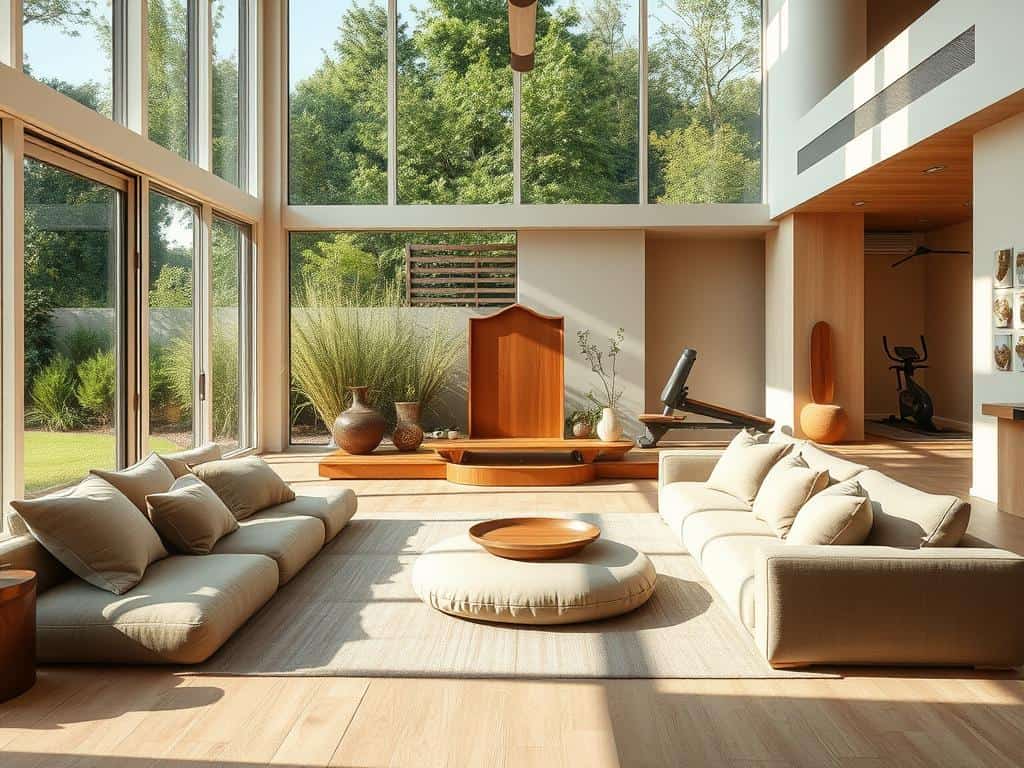
There’s a big push for Wellness Spaces in homes. Areas for yoga or meditation help improve well-being. Spaces with lots of natural light and calming colors help us relax.
Adding things like indoor plants or water features makes homes peaceful. Homes that focus on wellness show we value living a healthy life.
Smart Home Trends to Enhance Aesthetics
In 2025, smart technology and design will merge in new ways. We’ll see unique textures and bright colors that show off personality. These designs will make homes look great and work smartly, blending beauty with function.
Textured Surfaces and Statement Lighting
Decorative plaster and wallpapered ceilings are big in interior design now. They add depth and make spaces stand out. Lighting will also become a key feature, turning into art that lights up and tells a story.
Bold Colors and Biophilic Design
2025’s color trends are all about bold and bright hues. Expect to see lots of primary colors and vivid shades. Biophilic design will also be popular, bringing nature indoors with big windows and plants.
Conclusion
Looking ahead, the future of home design is filled with excitement and innovation. By 2025, smart homes will use AI and machine learning to meet our needs and improve our health. These homes will be both functional and connected, making our daily lives easier.
There’s a big push for homes that are good for the planet. Using eco-friendly materials and smart tech, we can save money and help the environment. It’s predicted that 30% of new homes will be smart by 2025, showing the importance of green design.
As we move towards more advanced homes, I’ll focus on design that’s both beautiful and useful. The future of home design will bring us spaces that are not just pretty but also healthy and connected. It’s a thrilling time for home design.