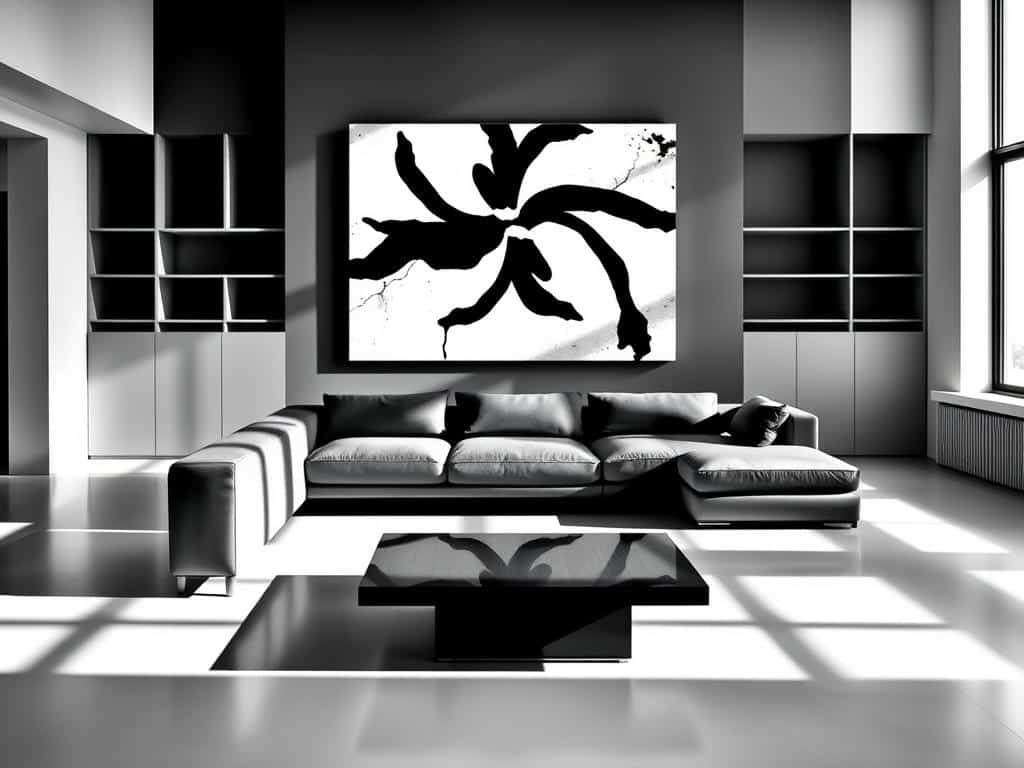

When I walked into my friend’s new apartment, I was hit by the bold colors and light play. A black sofa against white walls was electrifying. Art pieces popped, and wood accents added warmth. It felt like the room was buzzing with life.
High contrast design grabs your attention and turns simple spaces into something special. It’s a trend that lets homeowners show off their creativity. My friend mixed patterns and textures, like wallpaper with wood floors, to add depth.
Choosing black and white with bold colors can make a room come alive. It’s a bold and dramatic way to design a home.
Key Takeaways
- High contrast design uses a mix of light and dark colors for a post-modern feel.
- Incorporating diverse textures adds visual interest to any space.
- Contrasting finishes and materials can create striking elements in designs.
- Bold accents in complementary colors enhance a room’s overall atmosphere.
- High contrast interiors are gaining popularity for their ability to add depth.
- Successful designs balance vibrant colors with warm neutrals for sophistication.
The Power of High Contrast Design
High contrast design is key to making interiors stand out. It uses opposing colors to make a space visually striking. This design choice can also change how we feel in a room, making it more engaging.
Understanding High Contrast Design
Using high contrast design, I can make spaces that look good and work well. Dark and light colors add depth and encourage us to explore. Mixing bright colors with neutral ones creates balance.
With over a billion people worldwide with disabilities, making spaces accessible is vital. High contrast designs help people see better, even in bright light.
Psychological Effects of Contrasting Colors
Contrasting colors deeply affect our mood and actions. Dark colors can feel cozy, while light ones make us feel open. Using tools like Google Chrome’s CSS overview helps me create high contrast designs.
This makes my designs welcoming to more people. Adding textures and soft lighting can also make a space feel luxurious. Unique accent pieces take the design to the next level.
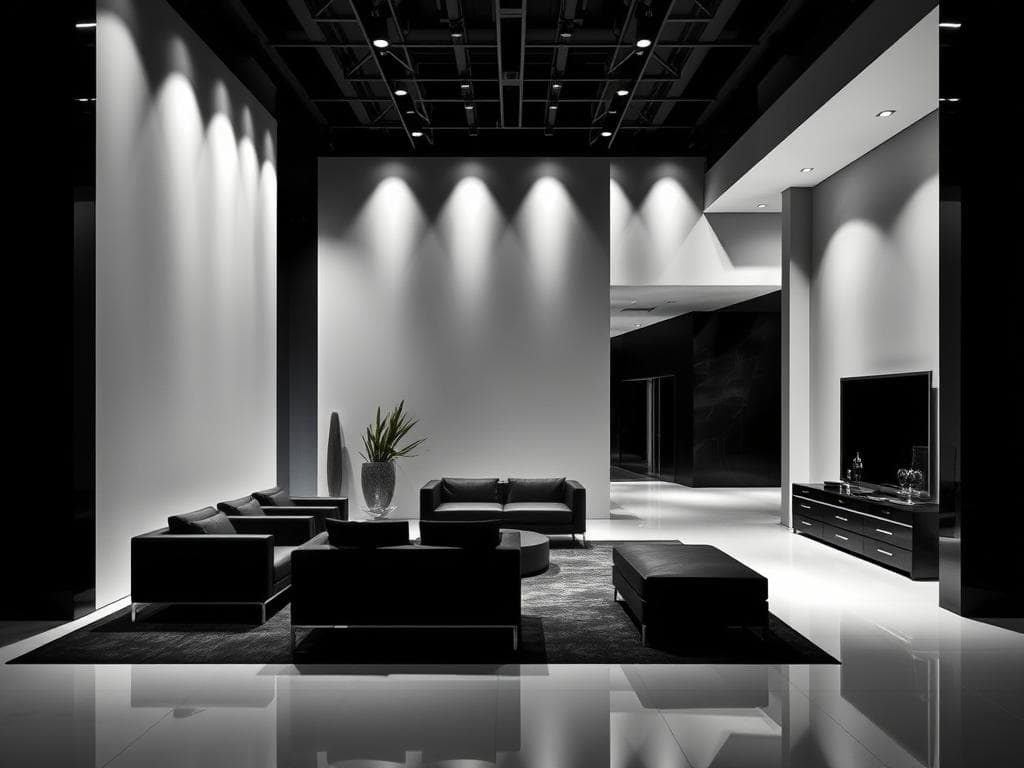
Implementing High Contrast Design in Your Space
Using a high contrast design can make your living space more appealing. Choosing the right colors, textures, and accessories creates a lively atmosphere. Knowing how to use these elements can turn any area into a beautiful display.
Choosing Your Color Palette
Start with a dark main color and pair it with a lighter shade. For example, Tribecca Corner (GR-B10) and Antique Petal (GR-Y05) look great together. Other good pairs include Zaire Junction (GR-N03) with White (EPL30) or Black Beard (B7-1-1) with Salt Pebble (4).
This mix of dark and light makes the space welcoming. It also follows design rules for easy access.
Utilizing Textures for Depth
Adding different textures adds depth to your design. I like mixing glossy with matte to make things more interesting. Velvet and wood together add a nice touch and visual appeal.
Adding metallics and bold art makes the space lively and elegant.
Accessorizing With Intent
Choosing the right accessories is key to a cohesive look. I pick bold art, unique rugs, and greenery to boost the design. Each piece adds to the color scheme and tells a story in the room.
Good lighting is also important. It makes contrasts pop and keeps the space balanced.
Conclusion
High contrast design is a powerful tool in interior design. It makes spaces visually stunning and personal. By using color, texture, and shape contrasts, homeowners can create dramatic effects.
This approach balances creativity with practicality. It guides the eye to the most important parts of the room. This makes the space more engaging and functional.
High contrast also boosts a room’s visual appeal and makes it easier to see. It’s great for people with vision problems. By carefully choosing contrasts, I highlight key features without overwhelming the viewer.
Every detail, from colors to where things are placed, helps create a focal point. This ensures attention is focused where it matters most.
High contrast design can turn ordinary rooms into amazing places. It adds depth and emotion while keeping things practical. My exploration of high contrast design shows its power to captivate and engage everyone who enters.