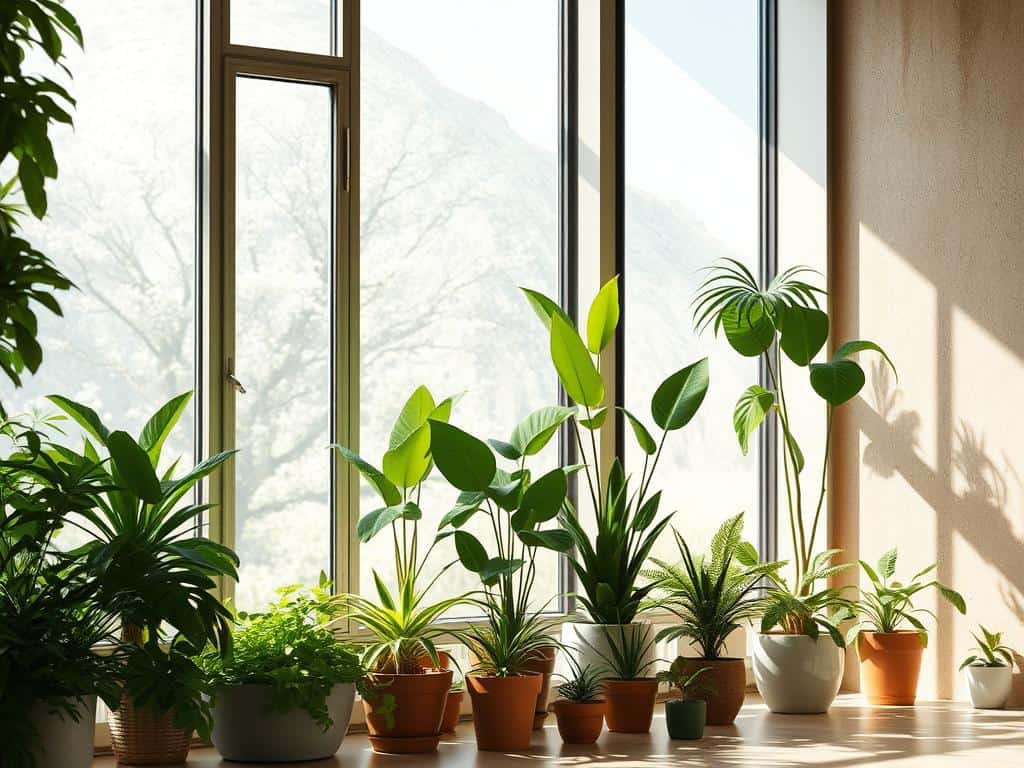

Standing in my living room, I felt disconnected from nature. The white walls and cold surfaces felt off. So, I brought in plants, a wooden coffee table, and a water feature.
My space quickly became a peaceful haven. This experience made me dive into biophilic design. It’s not just a trend; it’s the future of our indoor spaces.
By adding nature to our homes, we create healthier, happier places. This shows how important it is to connect our interiors with the outdoors.
Key Takeaways
- Biophilic design boosts well-being by lowering stress and blood pressure.
- Natural lighting positively influences mood and mental health.
- Incorporating indoor plants enhances air quality and aesthetic appeal.
- Water features contribute to a calming and tranquil atmosphere.
- Long-term savings on operational costs can offset upfront expenses of biophilic elements.
- Integrating biophilic design improves indoor environments where we spend 90% of our time.
The Significance of Biophilic Design in Modern Interiors
In today’s homes, biophilic design is very important. It connects us to nature through design elements that look good and work well. This approach makes spaces that focus on health and happiness.
Harmonizing Nature and Human Spaces
Blending indoor and outdoor areas is key in biophilic design. Adding plants, natural materials, and sunlight creates calm. Natural light boosts the look of a room and helps our bodies stay in sync with day and night.
People are now more interested in living spaces that are close to nature. This shows a move towards living in a more sustainable way.
Health Benefits of Natural Elements in Design
Biophilic design is good for our health. Being around greenery and natural elements lowers stress and anxiety. It also makes the air cleaner, which is better for our health.
Adding water features can make spaces even more calming. This makes our homes feel welcoming and healing.
Creating a Serene Environment with Greenery
Greenery is essential for a peaceful space. Living walls and lots of plants make a room feel fresh and relaxing. These spaces are not just pretty but also help our mental health by easing stress.
With more indoor gardens and calm areas, we’re focusing on creating peaceful places. These spaces help us feel at peace and well.
Key Principles of Biophilic Design
The principles of biophilic design aim to make indoor spaces better. They focus on adding natural elements, engaging our senses, and planning spaces well. This approach helps create healthier and more inspiring places.
Incorporating Natural Elements
Adding natural elements is key in biophilic design. Features like plants, water, and materials like wood and stone bring the outdoors in. For example, big windows let sunlight in, making a room feel warm and welcoming.
Adding plants or living walls not only looks good but also improves air quality. These elements connect us to nature, boosting our well-being.
Engaging the Senses through Multi-Sensory Experiences
Multi-sensory experiences are another important part of biophilic design. They make us feel more connected to our surroundings. Things like calming water sounds and natural textures invite us to touch and explore.
By mixing these sensory elements, we create a space that deeply resonates with those who use it.
Balancing Prospect and Refuge in Space Planning
Good space planning balances openness and shelter, key in biophilic design. Spaces should have wide views and cozy spots. This mix makes us feel safe and inspired.
By designing for both openness and closeness, we make spaces that boost productivity and calmness.
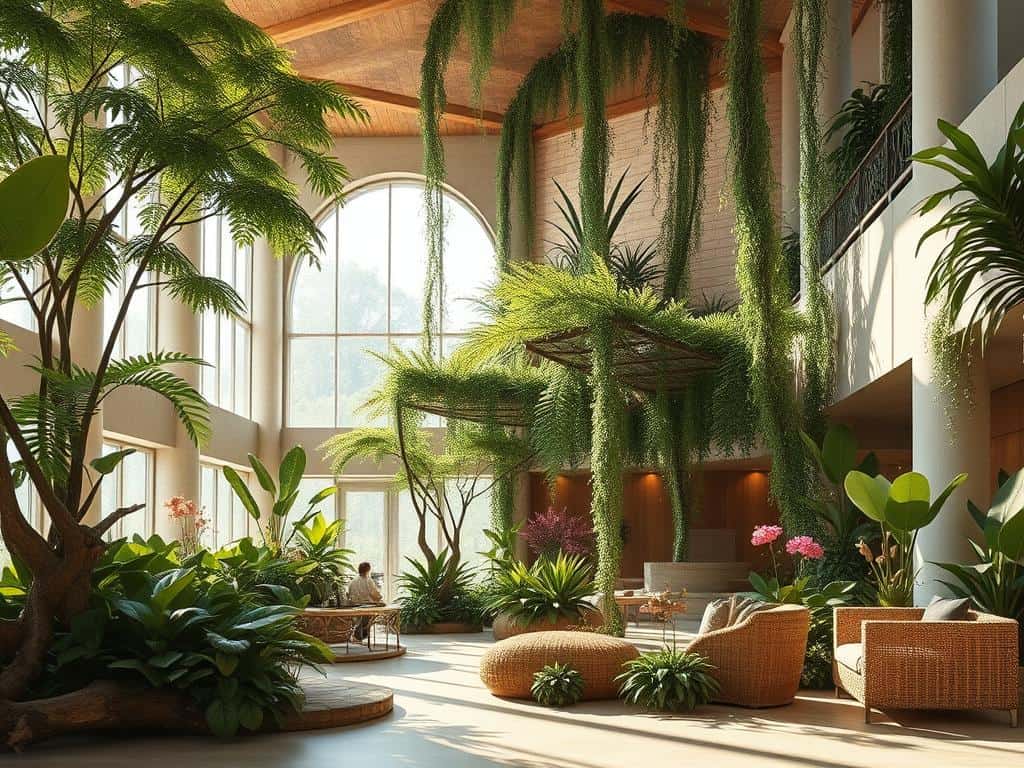
Biophilic Design: Transforming Interior Spaces
Biophilic design has changed how we design our homes and offices. It brings nature into our spaces, showing many benefits. By looking at examples and learning how to use biophilic design at home, we see it boosts our well-being and productivity.
Real-Life Examples of Successful Biophilic Projects
The Bosco Verticale in Milan is a stunning example. It has trees and plants in a high-rise building. This not only cuts down pollution but also makes life better for those who live there.
St. John’s Terminal in New York is another great example. It combines green design with modern workspaces. This shows how plants can make commercial spaces better.
Strategies for Implementing Biophilic Design at Home
Starting a biophilic design at home is easy. I can use big windows, skylights, and glass doors to let in more natural light. This improves mood and cuts down on the need for artificial light.
Using natural materials like wood and stone brings the outdoors in. It makes spaces more sustainable.
Adding indoor plants makes spaces look better and air cleaner. Choosing the right plants can really lift our mood. Living walls are a cool way to bring nature inside, making spaces healthier.
Water features add calming sounds and visuals. They create a peaceful vibe. Atriums with plants are great for socializing and improving air quality, showing the heart of biophilic design.
Conclusion
Exploring biophilic design has shown me it’s more than a trend. It’s a big change in how we see interior spaces. This design philosophy shows how important it is to bring nature into our buildings. It aims to find a balance that makes us healthier and happier.
Studies have found that being in nature-rich spaces can make us 15% happier and 6% more productive. This shows how important these ideas are.
Looking ahead, biophilic design will lead to more eco-friendly practices. It promotes both our health and the environment. For example, the Biotope in Lille shows how art and nature can come together beautifully.
My goal is to make spaces that focus on wellness and connect us with nature. By using these ideas, I can help create places that are good for us and the planet. This is how we move forward together.