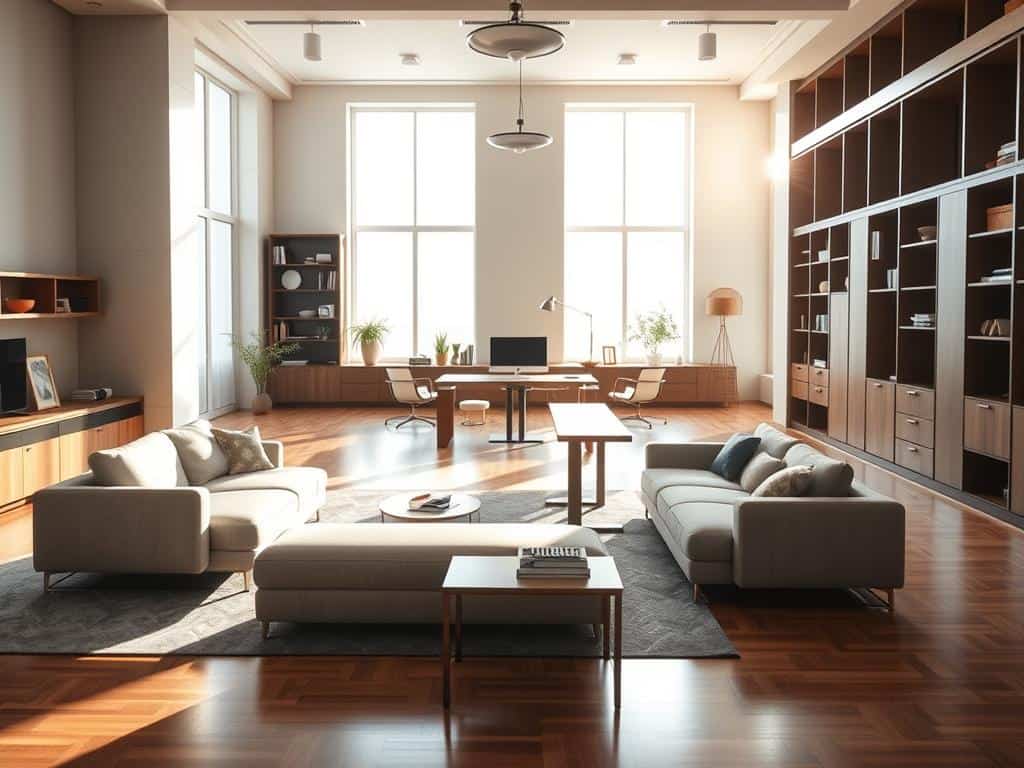

Walking through a local co-working space last month, I saw something special. People moved from busy conference rooms to cozy lounges with art. It showed how work and play spaces are blending together.
This mix of work and social areas made me think about our homes. Today, homes are not just places to live. They are spaces that can change to meet our needs. Smart design in buildings is helping cities adapt to growing populations.
Thinking about mixed-use developments, I saw a big change. These spaces are more than a trend. They are a key part of our lives, shaped by global events. It’s time to see how we can live, work, and interact in new ways.

Key Takeaways
- Multifunctional spaces cater to diverse guest needs in hotels.
- Modular furniture allows for easy reconfiguration of spaces.
- Integration of technology enhances user experience.
- Sustainability is key, with eco-friendly designs becoming the norm.
- These spaces can serve multiple purposes, adapting to family needs.
- Investment options like construction-linked payment plans promote transparency.
Understanding Multifunctional Spaces
Multifunctional spaces are key in today’s cities. They are designed to be useful and look good. Urban planners focus on making these spaces lively, meeting different needs and activities.
Defining Multifunctional Spaces
Multifunctional spaces are made to change with our needs. They are both stylish and practical. For instance, a room can be a home office by day and a cozy spot at night.
The Rise of Mixed-Use Developments
Mixed-use developments are becoming more common, mainly in busy cities. They combine living, working, and play areas. This trend shows over 50% of new U.S. apartments are mid-rise, with many being high-rise.
Places like The Hub on Causeway in Boston show how design can improve neighborhoods. It brings together different functions, boosting community spirit and making the most of space.
Flexible Living Spaces: A Smart Design Solution
Flexible living spaces are a smart choice for modern homes. They let people change their homes as their lives do. With more people living in cities, homes between 1,400 to 2,500 square feet are key. Making the most of space is a must.
Benefits of Flexible Living Spaces
Flexible living spaces are very versatile. They can be in-law suites, home offices, music rooms, craft areas, or even dining rooms that turn into workspaces. For example, a dining room can easily become a playroom with French doors for privacy.
Bonus rooms can add 200 to 400 square feet, making your home more valuable. They offer flexibility for the future.
Adapting to Changing Needs
With more people working from home, homes need to serve both work and personal life. Modern homes have shared spaces like fitness rooms and kitchens. This makes living better.
Designs that can be changed and moved are key to adaptability. Using spaces in a neutral way means they can be used by different generations. This makes homes last longer.
This approach fits with the trend of more people living in cities. By 2050, 70% of the world’s population will live in cities. Turning old buildings into new homes, like a clinic into a dorm, shows smart design in action.
Conclusion
The trend toward multifunctional spaces is changing how we build cities and plan communities. With the need for flexible living spaces growing, making the most of our space is key. This is even more important with rising real estate costs.
These adaptable areas do more than just meet our basic needs. They can change from a home office to a guest room. This shows how they are both versatile and cost-effective.
Remote work and online learning are making these spaces even more important. By using flexible furniture and smart storage, we can create spaces that are both comfortable and useful. Whether it’s a modern apartment or a traditional house, adaptable rooms help us connect with our community better.
In short, using new design ideas and working with expert builders can change our homes. Multifunctional spaces are not just about looks. They are about making our homes sustainable and practical for the future.