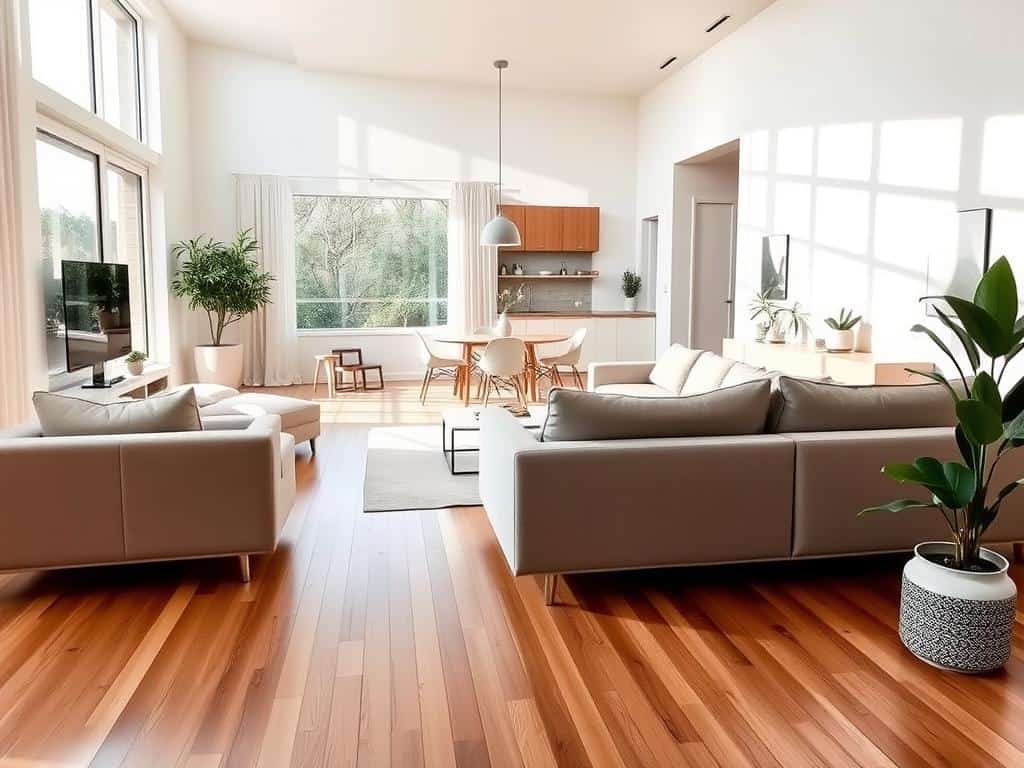

Have you ever felt the joy of laughter, the smell of dinner, and the sound of rain all mixing together in one space? Open concept living spaces are a favorite in modern homes. They remove walls, creating a space where everyone can connect and move freely. This trend brings families closer and inspires creativity.
But, it’s important to think about the good and bad sides of this trend before we decide to have it in our homes.
Thinking about my own home’s open concept design, I see how it changes our daily life. It makes talking and seeing each other easy, but it can also make it hard to find quiet or deal with loud noises. So, whether this style fits your life depends on weighing its pros and cons carefully.
Let’s dive into this exciting design choice together.
Key Takeaways
- Open layouts foster a sense of togetherness.
- Enhanced communication and visibility across different zones.
- Potential for noise challenges, particular during high-concentration tasks.
- Versatile space for multifunctional uses and social interactions.
- Can support improved traffic flow and supervision of children.
- May lead to cluttered spaces if not organized properly.
- Incorporating open concepts can increase the real estate value of a home.
Understanding Open Concept Living Spaces
Open concept living spaces are all the rage in modern homes. They show a big change in how we live. By removing walls, these spaces become open and connected, perfect for family and friends to hang out.
What is Open Concept Design?
Open concept design merges different parts of a home into one big space. It gets rid of walls between rooms like the kitchen and living area. This makes homes feel bigger and brighter, thanks to more natural light.
History of Open Concept Layouts
The idea of open layouts started gaining popularity in the 20th century. It was first seen in modernist architecture. By 2016, 84% of builders were using this design, showing it’s a big hit with homeowners.
Modern Trends in Home Layouts
Today, open concept designs keep getting better, focusing on being flexible and useful. People love these spaces because they’re good for hanging out and look great too. But, keeping noise down and privacy in mind is a big challenge.
Pros of Open Concept Living Spaces
Open concept living spaces have many benefits that draw in homeowners. They create a smooth flow between rooms, boosting both function and beauty. These designs change how I live in my home, bringing unique perks not seen in traditional layouts.
Illusion of More Space
Open concept plans make my home feel bigger. By removing walls, I use more space in smaller areas. This space illusion makes my home more welcoming and increases its value.
Increased Natural Light
Open concept designs also let natural light flow freely. With fewer walls, sunlight enters through big windows, lighting up every room. Walking through my home, I feel the bright, airy atmosphere it creates.
Enhanced Social Interaction and Communication
These layouts also improve social interactions. Hosting gatherings is easier with a communal space, allowing guests to move around while I cook. Open settings make communication better, bringing everyone together in a fun, functional space.
Cons of Open Concept Living Spaces
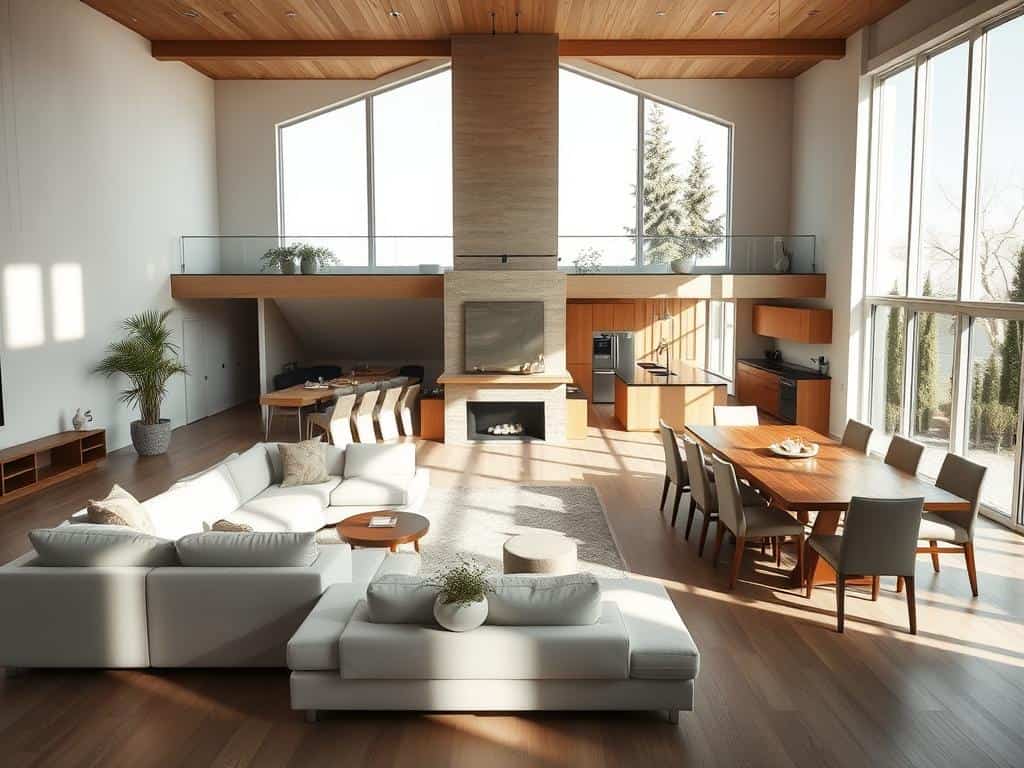
Open concept living spaces are stylish but have downsides. They often lead to higher heating and cooling costs. This is because they are larger than regular rooms, needing more energy to stay warm or cool.
Many homeowners struggle with higher utility bills. They try to control the climate in these big areas.
Higher Heating and Cooling Costs
The size of open spaces means more energy is needed for heating and cooling. They often need better insulation and bigger systems to keep the temperature right. This can be a challenge, as cold drafts or sunlight can affect the whole area.
Lack of Privacy
Open spaces can be noisy and lack privacy. It’s hard to focus or relax without walls. Even simple tasks like meditation can be tough because of the distractions.
The layout also lets noise from other rooms spread easily. To deal with this, using rugs and heavy furniture can help. But, seeing messes in one area can be a constant problem, making cleaning more frequent.
Conclusion
Open concept living spaces offer both good and bad sides. They are great for feeling open, getting lots of natural light, and being social. But, they can also raise issues like higher heating costs, privacy concerns, and noise.
When choosing a design, it’s key to think about how it fits with your life and family’s needs. Open concept designs are great for small homes because they make spaces feel bigger. Yet, finding ways to keep privacy and separate areas is important.
Getting advice from architects or interior designers can help a lot. They can offer ideas that match what you want. By carefully considering the pros and cons, you can decide if an open concept is right for you.