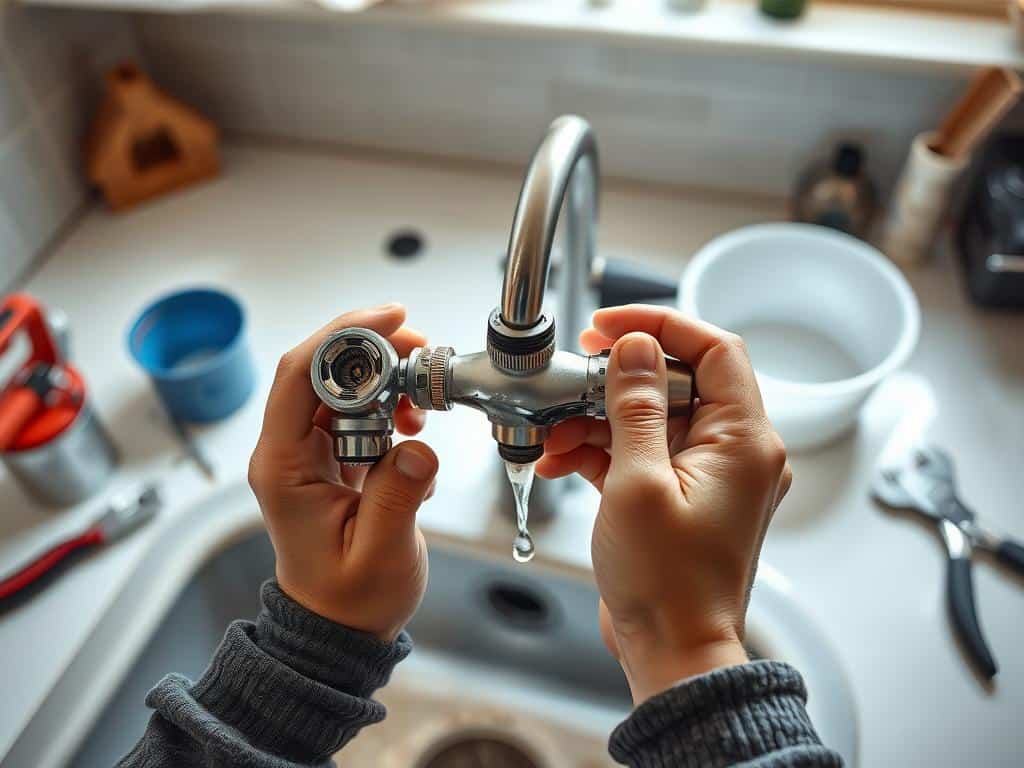

Recently, I was frustrated by my kitchen faucet’s drip. Each drop seemed to tick away, reminding me of wasted water and higher bills. As a homeowner, I knew ignoring it would cause more problems. After some research, I found I could fix it in under ten minutes.
DIY plumbing isn’t just for pros. Anyone can handle a simple leaky faucet repair. With basic tools and steps, I saved money and stopped the drip.
If you’re facing a similar issue, don’t worry! This guide will help you fix your plumbing problems. We’ll explore common causes of leaks and how to fix your sink easily and affordably.
Key Takeaways
- Identify your faucet type for the right repair approach.
- Shut off the water supply to prevent leaks when repairing.
- Common culprits include worn out washers and O-rings.
- Gather essential tools like an adjustable wrench and screwdriver set.
- Simple repairs can be done in less than ten minutes.
- Testing your faucet after the repair is key to ensuring it works right.
Understanding the Common Causes of a Leaky Faucet
A leaky faucet can be frustrating, wasting water and raising your bills. Knowing why faucets leak helps fix them quickly. We’ll look at how worn parts, corroded seats, and loose connections cause leaks. Fixing these problems can save you time and money.
Worn Washers and O-rings
Worn washers and O-rings are common leak causes. They lose their seal over time. This lets water drip. Checking them often can stop bigger problems.
Corroded Valve Seats
Corroded valve seats also cause leaks. Mineral buildup makes the seal less effective. Fixing corrosion early can avoid bigger repairs.
Loose Parts and Connections
Loose connections and parts are another leak source. If not tight, water leaks out. Make sure all parts are secure. Also, check for wear in internal parts to prevent leaks.
Essential Tools for DIY Plumbing Fixes
Fixing a leaky faucet is easier with the right tools. These tools help me work efficiently and effectively. Knowing how each tool works saves time and makes the job simpler.
Adjustable Wrench
The adjustable wrench is a must-have in any DIY kit. It lets me grip and turn nuts and bolts easily. Its flexibility means it fits different sizes, making it perfect for faucet repairs.
It’s available at places like Amazon or Home Depot. Prices range from $10 to $40, making it a budget-friendly option.
Screwdriver Set
A screwdriver set is key for taking apart my faucet. It helps me handle screws of all types and sizes. This set keeps me from getting stuck during repairs.
Replacement Parts
Getting the right faucet parts is vital for a good fix. I can find washers, O-rings, and cartridges at local hardware stores. Having these parts ready helps me fix leaks quickly and keeps my faucets working well.
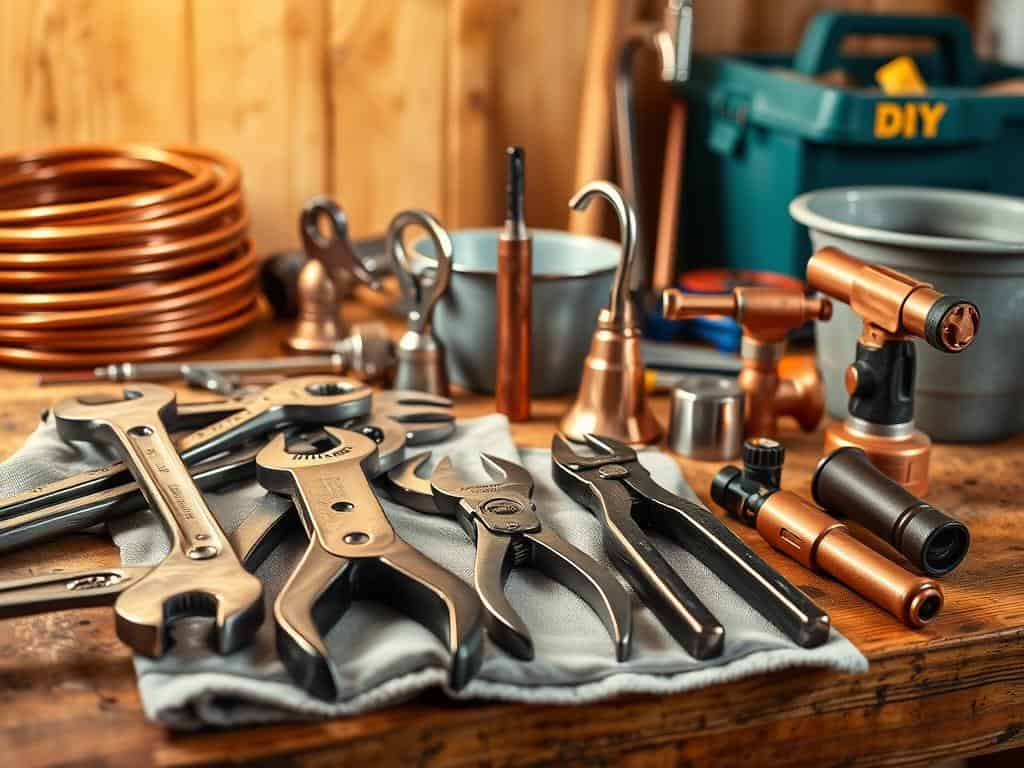
Step-by-Step Guide to Fixing a Leaky Faucet
Fixing a leaky faucet might seem hard, but it’s doable with the right tools and steps. I’ll show you how to fix it yourself. Start by turning off the water supply to avoid any mess.
Shut Off the Water Supply
The first thing to do is shut off the water supply. Find the shut-off valve under the sink and turn it clockwise until it’s closed. This step is key to stop more leaks while you work.
Remove the Faucet Handle
Next, remove the faucet handle. You might need to unscrew a cap to get to the screw. Use a screwdriver to remove the handle and keep the screw safe for later.
Inspect and Replace the Cartridge or Valve Stem
Now, inspect and replace the cartridge or valve stem. Look for worn-out washers or O-rings, which often cause leaks. If it’s a cartridge faucet, just pull out the cartridge and replace it with new O-rings. For compression faucets, check the O-rings and washers for damage. Replace them if needed. This step is key to fixing the leak.
Reassemble and Test the Faucet
After replacing everything, reassemble the faucet. Put the handle back on and tighten the screws. Turn the water supply back on and let it run for a bit. Then, check for leaks to make sure it’s fixed.
Conclusion
Fixing leaks at home, like a leaky faucet, is something anyone can do with a bit of help. Knowing why leaks happen, like worn-out washers or corroded parts, helps me fix them. This skill not only makes DIY repairs easier but also saves money.
Fixing a leaky faucet does more than just stop the leak. It also saves on water bills and prevents bigger plumbing problems. With simple tools like an adjustable wrench and new parts, the job takes about 10-15 minutes. This can save up to 20 gallons of water daily, making my home more efficient.
Learning basic plumbing skills and doing regular maintenance helps me tackle small problems. But, I know when to call a plumber for bigger issues. Being proactive with my plumbing keeps my system working well for years.