

I was staring at a coffee stain on my desk last Tuesday—the kind that looks more like a Rorschach test than a mess—when it hit me. Most “creativity gurus” will try to sell you some expensive, high-tech masterclass on how to unlock your subconscious, but honestly? That’s a load of garbage. You don’t need a $500 seminar to find magic in the mundane. You just need to realize that Pareidolia (Visual Inspiration) isn’t some mystical gift reserved for the elite; it’s a glitch in your brain that you can actually exploit to break through a creative block.
I’m not here to give you fluff or pseudo-spiritual nonsense about “aligning your chakras” to see shapes in the clouds. Instead, I’m going to show you how I actually use these visual hallucinations to fuel my workflow. We’re going to talk about practical, boots-on-the-ground ways to hunt for patterns in the chaos of everyday life. By the end of this, you’ll know exactly how to turn a random crack in the sidewalk into a blueprint for your next big idea.
Table of Contents
Decoding the Brains Pattern Recognition System
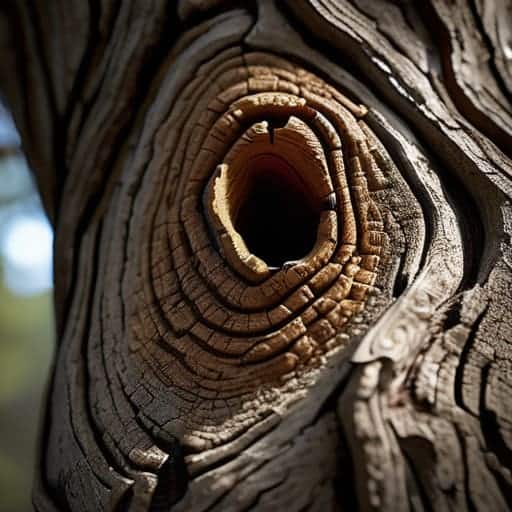
So, why does our brain do this? It isn’t just a glitch; it’s actually a survival mechanism baked into our DNA. Deep down, the brain’s pattern recognition system is hardwired to scan the environment for familiar shapes—specifically faces—to help us navigate social cues and potential threats. This is why you can’t help but see a grumpy expression in a toasted bagel or a wide-eyed stare in a knot of wood. We are essentially evolutionary detectives constantly scanning the noise for a signal.
This tendency falls under the umbrella of the psychology of facial recognition, where our neurons are so primed for human features that they’ll grab onto almost anything to make a connection. While this can sometimes lead to a bit of a cognitive bias in how we perceive the world, it’s a goldmine for anyone trying to break out of a creative rut. Instead of seeing a blank canvas or a messy landscape, you start finding meaning in random shapes that others might just walk right past. It’s that split-second bridge between chaos and order that turns a simple observation into a spark of genius.
The Psychology of Facial Recognition and Meaning
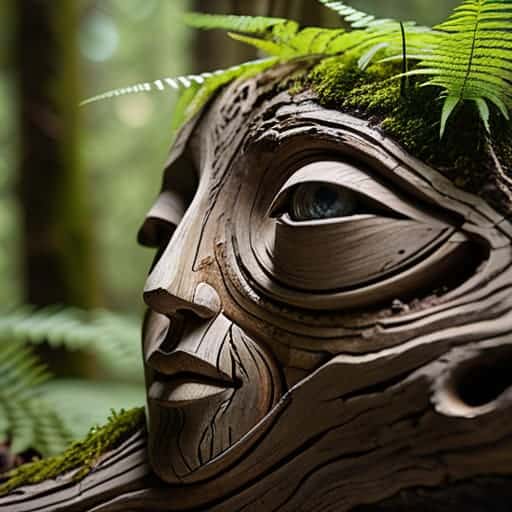
Why are we so obsessed with finding eyes in a piece of toast or a nose in a knot of wood? It isn’t just a quirk; it’s baked into our survival kit. The psychology of facial recognition is incredibly aggressive. From an evolutionary standpoint, it was much safer for our ancestors to mistake a rock for a predator than to mistake a predator for a rock. This hyper-vigilance means our brains are essentially hardwired to project social meaning onto everything we see, even when there’s absolutely nothing there.
If you’re finding that your brain is constantly hunting for these hidden shapes, you might want to try a bit of intentional observation to sharpen that instinct. I’ve found that stepping away from the digital screen and into more unpredictable, raw environments—like a busy street or even just a messy room—can really kickstart that pattern-seeking muscle. Sometimes, even exploring the unexpected connections found in casual sex east england can provide that same kind of unfiltered human spontaneity that helps break a creative block and forces you to see the world through a much more visceral, unscripted lens.
This constant tug-of-war between what is actually present and what we think we see creates a fascinating bridge between perception and imagination. When we engage in finding meaning in random shapes, we aren’t just seeing illusions; we are witnessing our subconscious trying to make sense of chaos. For an artist, this is where the magic happens. Instead of fighting that impulse to categorize, you can lean into it, using that split-second mental leap to bridge the gap between a blank canvas and a fully realized character.
How to Turn Random Patterns Into Creative Gold
- Stop looking for things and start looking at things. Instead of hunting for a specific shape, just stare at a messy texture—like peeling paint or marble veins—and let your eyes wander until a shape fights its way to the surface.
- Change your perspective physically. If you’re stuck, don’t just tilt your head; lie on the floor or look at your subject through a glass of water. Distorting the geometry makes it way easier for your brain to trip over a new pattern.
- Carry a “nonsense” sketchbook. Use it specifically for scribbling chaotic, meaningless lines or ink blots. It removes the pressure of “making art” and turns the page into a playground for your subconscious to find hidden figures.
- Use the “Reverse Pareidolia” trick. Once you find a shape (like a face in a rock), don’t just draw the face—draw the rock around the face. Let the accidental shape dictate the structure of the actual piece.
- Lean into the weirdness of low light. Shadows and heavy grain are your best friends. When the visual data is messy and incomplete, your brain has to work harder to fill in the gaps, which is exactly where the most unique, surreal inspiration lives.
The Cheat Sheet for Creative Pattern-Hunting
Stop fighting the “glitches”—when your brain sees a face in a coffee stain, lean into it rather than dismissing it as a distraction.
Use pareidolia as a low-stakes brainstorming tool to bypass creative blocks and find shapes you never would have intentionally drawn.
Train your eyes to look for the “in-between” spaces in textures and shadows to unlock a constant stream of subconscious visual prompts.
The Creative Glitch
“Pareidolia isn’t a malfunction of the brain; it’s a backdoor into the subconscious, where the chaos of the world finally starts to whisper shapes and stories worth telling.”
Writer
Stop Looking, Start Seeing

At the end of the day, pareidolia isn’t just some glitch in our evolutionary hardwiring or a weird trick our brains play on us; it’s a bridge between the mundane and the extraordinary. We’ve explored how our brains are essentially pattern-seeking machines, constantly scanning the static of the world to find faces, shapes, and familiar stories. By understanding the psychology behind why we see a dragon in a cloud or a grin in a piece of driftwood, we stop being passive observers and start becoming active participants in the visual landscape. It’s about recognizing that your brain is constantly offering you free creative fuel if you only know how to listen.
So, my challenge to you is this: the next time you feel stuck or find your creative well running dry, don’t stare at a blank canvas. Instead, go outside and look at the chaos. Look at the cracks in the sidewalk, the shadows on the wall, or the way the light hits a crumpled piece of paper. Stop trying to force an idea and start hunting for the patterns that are already there. The world is shouting its secrets at you every single day—you just have to decide to see them.
Frequently Asked Questions
Can I actually train my brain to see more patterns, or is it just random luck?
It’s definitely not just luck. Think of it like learning a new language; your brain is already wired for it, but you have to sharpen the focus. You can “train” your perception by practicing active observation—forcing yourself to look at textures, shadows, or even static on a TV screen with a specific intent. It’s about moving from passive seeing to active hunting. The more you hunt for shapes, the faster your brain flags them.
Is there a fine line between using pareidolia for art and actually losing touch with reality?
That’s the million-dollar question, isn’t it? Honestly, the line is thinner than we like to admit. For an artist, pareidolia is a controlled hallucination—you’re seeing a shape, then consciously deciding to paint it. It’s a dialogue between your eyes and your imagination. It only becomes a problem when the “dialogue” turns into a monologue where you stop questioning what’s actually there. As long as you’re the one steering the vision, you’re fine.
How can I document these "accidental" visions so I don't forget them by the time I get to my sketchbook?
Don’t let that spark die just because you aren’t near a pencil. Keep a “chaos folder” on your phone—a dedicated album where you dump quick, unedited snaps of the clouds, shadows, or wood grain that hit you. If you’re feeling extra inspired, record a quick voice memo describing the feeling of the shape, not just the visual. It’s much easier to reconstruct a vision from a messy photo and a frantic note than from memory alone.