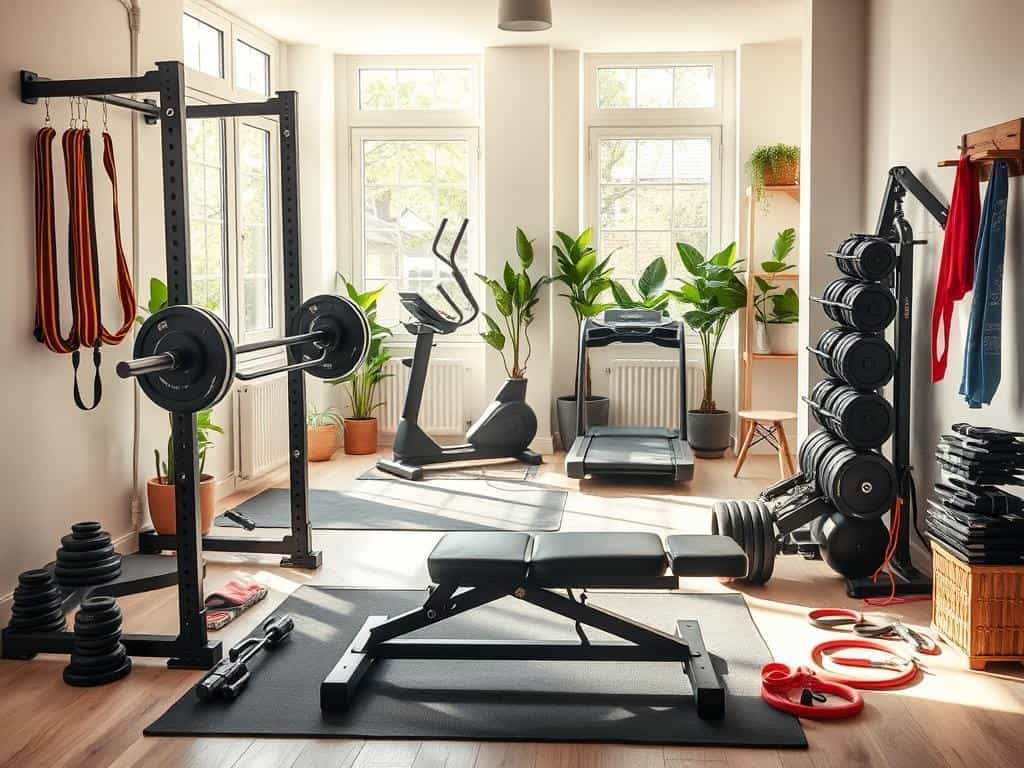

It was another Monday morning, and I was staring at my yoga mat in my small apartment. Going to a crowded gym seemed overwhelming. I thought about turning a corner into a workout room.
With some creativity and inspiration, I could make a gym without taking up too much space. I found out that DIY solutions can make a space both beautiful and functional for workouts.
Creating a welcoming space for workouts is possible. Even in a small area, smart design can make every inch count. Let’s find out how to make a cozy workout spot together.
Key Takeaways
- Utilize corners for equipment and create a compact workout area.
- Incorporate storage solutions to keep your gym space tidy and organized.
- Maximize vertical space for storage and decor.
- Add mirrors to enhance the space and support proper form.
- Incorporate motivational elements and a cohesive color palette.
Why You Should Consider a Home Gym Setup
Having a home gym offers many benefits for your fitness journey. It’s perfect for those who value convenience and accessibility. Home gyms provide advantages that traditional gyms can’t match.
Convenience and Accessibility
Home gyms are incredibly convenient. I can work out whenever I want, without the hassle of traveling or waiting for equipment. This makes my workouts more efficient and focused.
In public gyms, many people feel judged. Over 65% of women and 36% of men are worried about being judged. But a home gym is a judgment-free space where I can exercise in comfort and privacy.
Cost-Effective Solution
Investing in a home gym is a smart financial move. The initial cost is around $517.93 to $550.93, which is much less than the average gym membership of $600 per year. Saving money on memberships means I can also save on childcare costs.
By exercising at home, I avoid transportation and waiting for equipment costs. This makes my home gym a long-term cost-effective option.
Personalization and Comfort
Creating a personalized fitness space is exciting. I can choose the equipment that fits my style, like rowing machines or adjustable dumbbells. This tailored environment boosts my motivation and enjoyment in workouts.
With a home gym, I have control over the temperature, music, and even my clothes. This comfort and control inspire me to stay consistent with my fitness goals.
Smart Home Gym Setup for Small Spaces
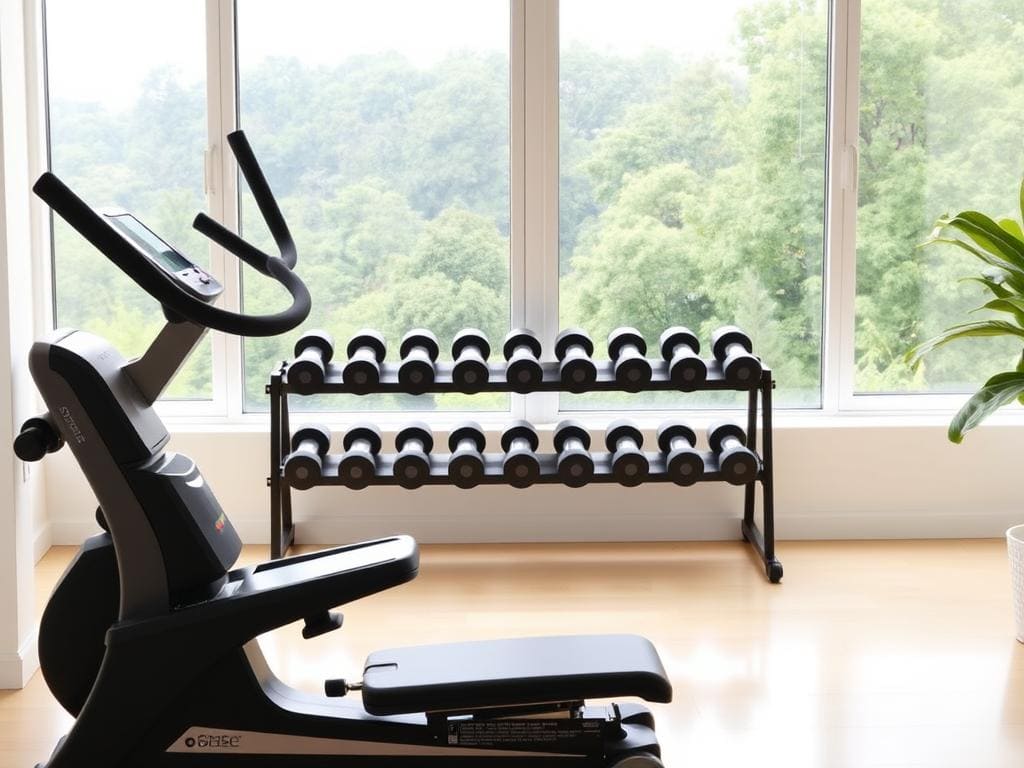
A smart home gym setup is perfect for small spaces. Choosing the right equipment is key. Items like adjustable dumbbells or wall-mounted squat racks save space and are very useful.
Multi-purpose gear is a game-changer. The Tonal 2 Smart Home Gym, for example, is small but offers lots of features. It has virtual classes and tracks your workouts. The NordicTrack Commercial 1750 is another great choice because it folds up, saving space.
Choosing the Right Equipment
Choosing versatile equipment is smart. The Speediance Gym Monster is a great example. It’s small, free-standing, and has digital resistance with many attachments. It supports up to 220 lbs, making it perfect for many workouts.
The Beyond Power Voltra I is also a must-have. It gives real-time feedback and tracks your reps. These tools are essential for keeping your space organized and your workouts on track.
Efficient Layout Design
Designing your space efficiently is important. It helps you use every inch without feeling cramped. Place big items against walls and keep small tools within reach.
This setup makes your space feel open and inviting. It also keeps your gym looking neat and tidy. A clean space motivates you to stay active and healthy.
Incorporating Storage Solutions
Good storage is a must for any home gym. Pegboards and wall-mounted racks help keep things organized. Baskets for small items add to the look and keep things tidy.
Having a place for everything makes your gym look good and helps you stay consistent. It’s all about keeping your space organized and your workouts on track.
Conclusion
Setting up a home gym in small spaces is possible. It’s all about making it convenient and personal. Even the smallest areas can become a place for fitness.
Using adjustable dumbbells and resistance bands lets me do many exercises. This shows that space limits don’t have to stop my workouts.
Adding rubber mats for flooring is key for safety and comfort. Also, smart storage and using vertical space keep things tidy. This helps me stay focused and motivated.
Creating a home gym can cost from $200 to $15,000. But the real value is in the health benefits it brings. No matter the size, having a dedicated space for fitness is a big plus.