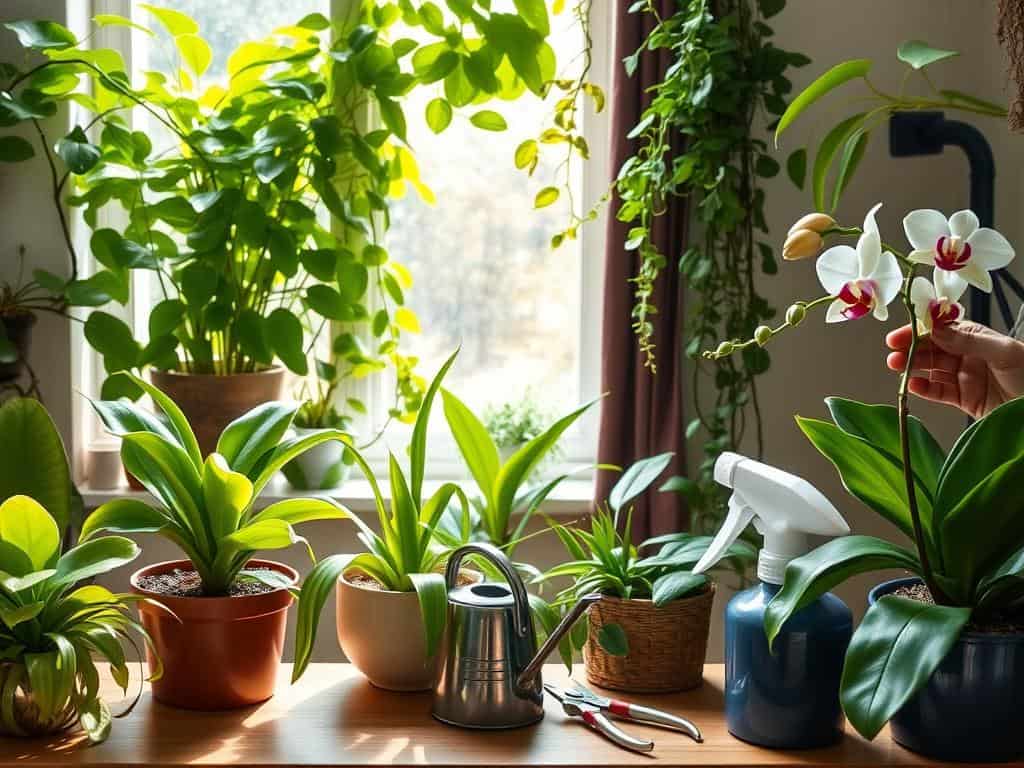

Watching your houseplants turn from green to wilted is heartbreaking. With over 40 years of experience in indoor gardening, I’ve felt this pain many times. The joy of caring for plants is often mixed with worry about their health.
Don’t give up! With the right care, you can revive your plants. Spotting problems early is key to saving them. Let’s explore how to keep your plants thriving.
Key Takeaways
- Use pruning shears to remove scorched or dead leaves.
- Add vermiculite to improve soil drainage and prevent overwatering.
- Utilize a water mister or humidifier to increase humidity for your plants.
- Ensure plants receive the right amount of light for optimal growth.
- Set watering reminders; most plants need water weekly, based on soil dryness.
- Feed plants in spring and summer using a balanced NPK ratio of 3-1-2.
- Choose plants suited to your home’s lighting conditions for better care.
Identify the Symptoms of Dying Plants
Spotting early signs of plant distress is key to saving them. As a plant lover, I’ve learned to recognize the signs of trouble. Knowing these signs helps me act fast, boosting my plants’ chances of recovery.
Common Symptoms to Look For
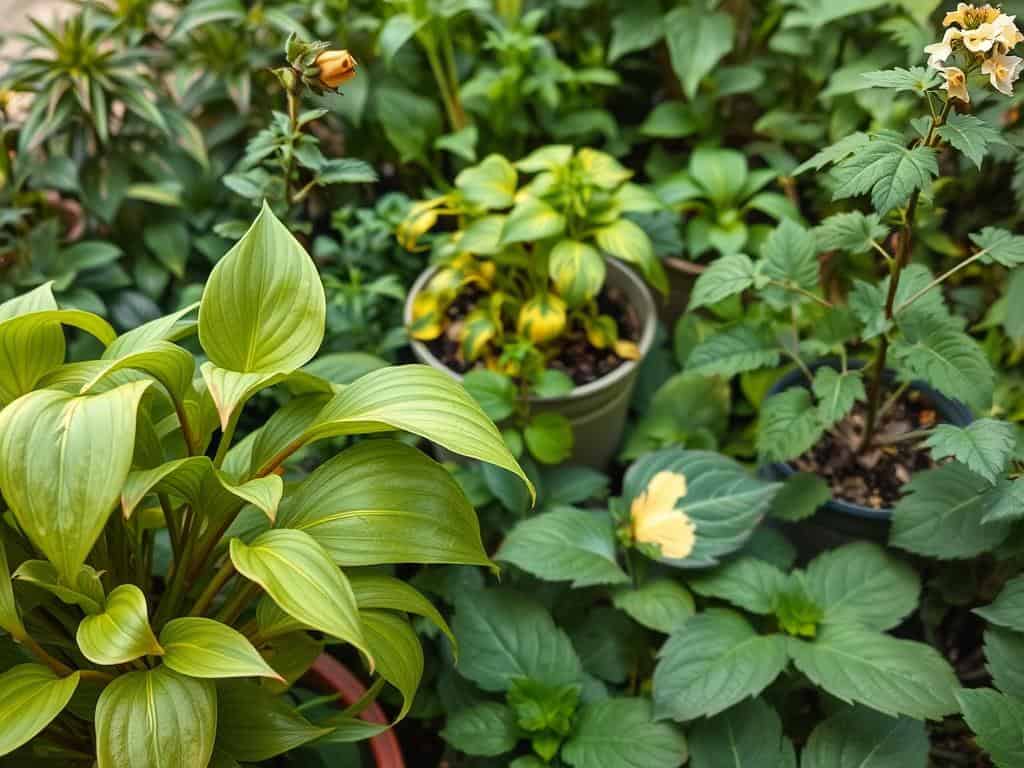
Yellow leaves often mean too much or too little water. Brown leaves can point to pests or not enough water. Soft leaves might be stressed by temperature, so checking the environment is important.
Wilting can be due to many reasons, like root rot or bad watering. Broken roots need trimming to help the plant heal. Brown leaf tips can mean uneven watering or low humidity. Spots on leaves might signal diseases like powdery mildew.
Diagnosing the Issue
Figuring out what’s wrong with a plant means looking at its symptoms. Yellow leaves might mean the soil is too wet or not enough light. Wilting could be about root health or if the plant is thirsty.
Spotting pests takes careful watching to know the problem’s size and type. By understanding these plant health indicators, I can fix the issues quickly. With this knowledge, I’m ready to help my plants get better.
Houseplant Care: Tips for Reviving Your Greens
Reviving indoor plants needs a careful plan. I focus on the right watering, light, and soil care. These tips can help your plants come back to life.
Watering Solutions
Knowing how to water is key. I check the soil moisture to see if my plants need more or less water. If they’re too wet, I let the soil dry before watering again to avoid root rot.
For plants that are too dry, I slowly increase the water. This helps the soil get moist without shocking the plant.
Light and Location Considerations
Getting the right light is important. If leaves are pale or yellow, they might not get enough sunlight. Moving them to brighter spots can help.
But, too much direct sunlight can burn leaves. So, I filter the light for plants that are sensitive. Checking the light regularly helps my plants stay healthy.
Repotting and Soil Care
Repotting is needed when plants outgrow their pots. Signs like roots growing over the pot’s edge mean it’s time. Fresh, well-draining soil helps them recover.
I prune dead roots during repotting and fertilize with a balanced liquid fertilizer. This promotes strong roots and healthy growth.
Conclusion
Keeping houseplants healthy is a mix of watching them and adjusting care. Spotting signs like yellow leaves or droopy stems helps solve problems. Light, water, and humidity are key for indoor plants to do well.
By following care tips, like repotting and using the right soil, I make a good home for my plants. This lets them grow and thrive.
Indoor gardening adds life and beauty to our homes. Watching my plants closely helps me meet their needs. Adjusting care, like light or humidity, makes a big difference.
Even tough plants might need expert help sometimes. But caring for plants makes our homes better. Seeing them grow and flourish brings happiness and peace.