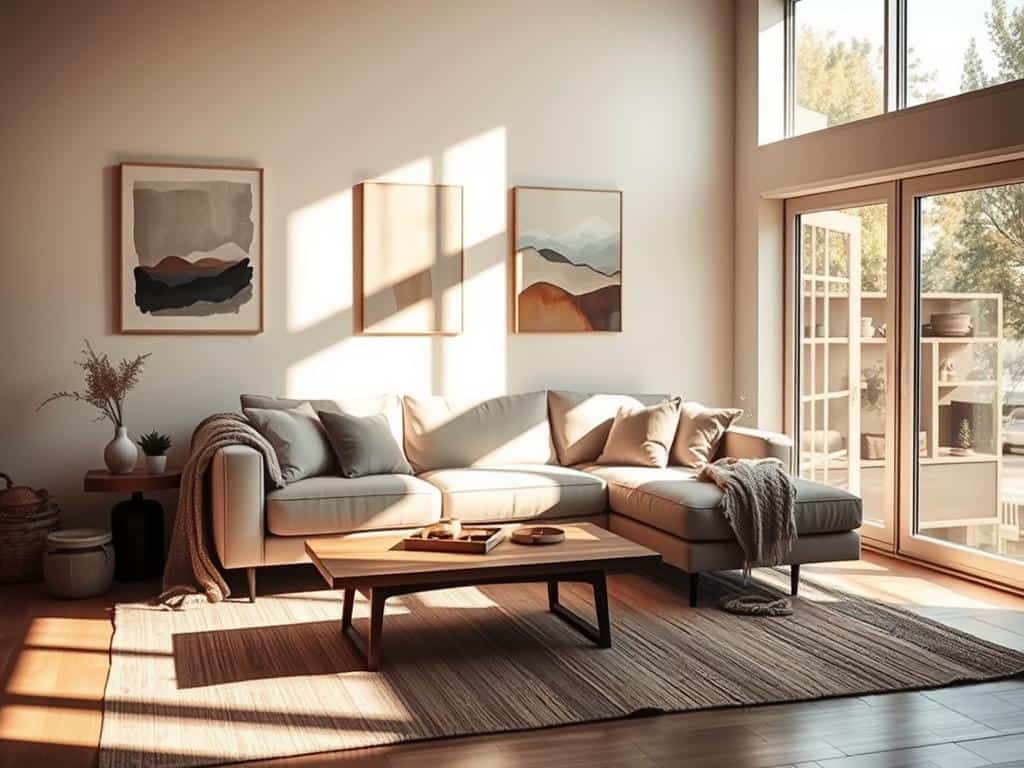

Have you ever felt overwhelmed by all the stuff in your home? I have too. It seemed like everything was taking up every inch of space, making it hard to live simply. I wanted a stress-free life, but it seemed far away.
But, minimalism is more than just getting rid of clutter. It’s about finding what truly adds value to our lives. Let’s explore this journey together. We’ll move from chaos to clarity, and make living intentionally easier.
First, we need to understand the emotional barriers that stop us. Like not knowing where to start or feeling unsure about change. Once we overcome these, we can start our minimalist journey.
Let’s make a plan for minimalist living. We’ll make decluttering easy and rewarding.
In this article, I’ll share tips that have changed my life. We can live simply, one step at a time. Ready to start this journey?
Key Takeaways
- Minimalism is about keeping what’s important and letting go of the rest.
- Ask yourself: “Do I need it?”, “Why do I have it?”, and “What would I use if I didn’t have it?”
- Consider the 4-box method for decluttering: donate/sell, garbage, recycling, and bring home.
- Avoid duplicates; the average American home contains around 300,000 items.
- Put items in a “penalty box” for a designated time to help with tough decisions.
- For quick sales, consider pricing items at 20% of their original value.
The Benefits of Minimalism in Daily Life
Living a minimalist life has many benefits that change how we experience each day. It helps reduce stress and brings clarity. By clearing out clutter, we create a space that supports organized living and improves our well-being. These advantages can encourage us to live a simpler, more satisfying life.
Reducing Stress and Anxiety
Studies show that minimalism lowers stress by reducing cortisol levels. Clutter can increase stress hormones, causing anxiety. I felt my mood and mental state improve as I adopted a minimalist lifestyle. Removing items made me feel lighter and more relaxed, allowing my mind to rest.
Creating a More Organized Space
Minimalism brings the joy of organized living. A clean home boosts productivity and creates a calm environment. With fewer items, cleaning is easier, and distractions are less. This freedom from clutter is incredibly liberating.
Improving Mental Clarity
One key benefit of minimalism is the boost to mental clarity. It helps us focus on what’s important, letting us set clear goals and values. Without clutter, we have more mental space to live in the moment. This clarity improves our decision-making and daily happiness.
Strategies for Achieving Minimalist Living
Starting a minimalist lifestyle means knowing what’s truly important to me. It’s about figuring out what I really need and why I have each item. Thinking about my reasons for simplifying helps me live better.
Questions like “Why do I want to simplify my life?” guide me. They help me understand what I hope to gain from minimalism.
Assessing What You Truly Need
Understanding essentialism helps me see what adds value to my life. I learn to know what’s truly necessary. This leads to deep insights.
Embracing minimalism means not filling every space. Empty areas bring calm and peace. Trusting my instincts is essential, as this journey is personal.
Starting Small: The Power of One Area at a Time
Starting small is very effective. I focus on one area, like a drawer or room, at a time. This makes the task feel doable.
Small wins build momentum toward minimalism. I try living without certain items for 30 days. This shows how important they are.
Keeping a gratitude journal helps me appreciate what I have. It stops me from always wanting more. This journey is about more than just stuff; it’s about how I spend my time and energy too.
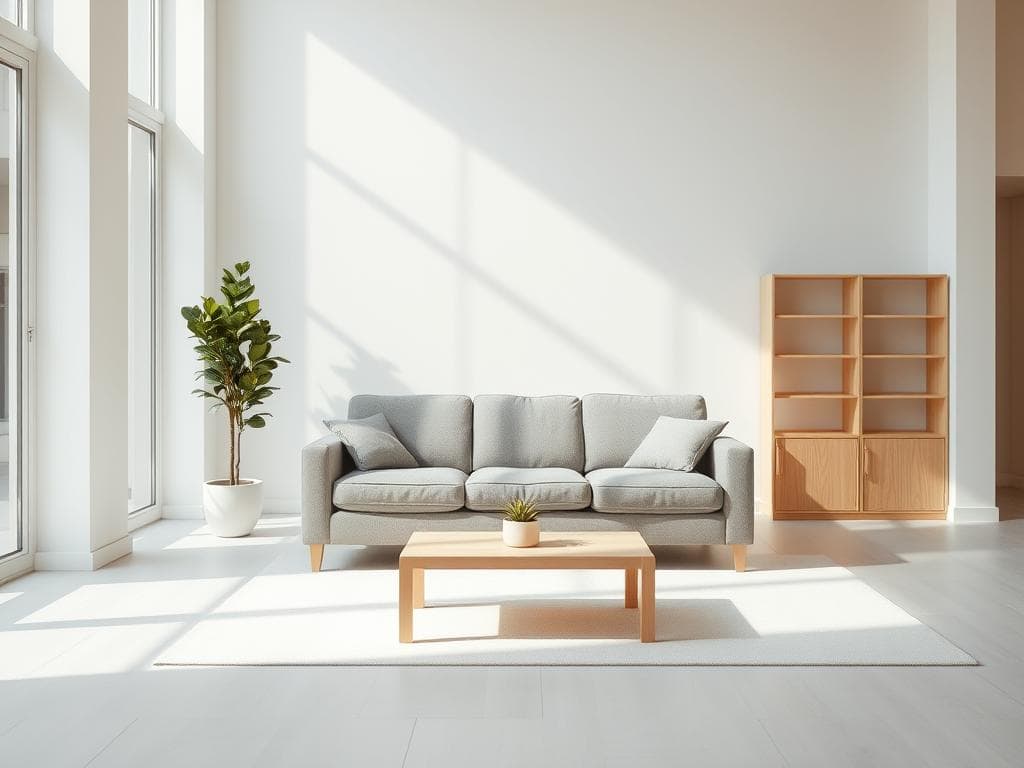
Embracing Simple Living for Long-term Change
Living simply can change my daily life and well-being a lot. It’s key to think carefully about buying things. This helps me keep my space peaceful and clear.
Developing Mindful Consumption Habits
Choosing quality over quantity is important. Decluttering has made my life and mind bigger. Instead of buying stuff, I prefer to have new experiences.
This shows the value of minimalism. It’s about enjoying life’s moments, not just things. A Swedish saying reminds me to think about what I really need.
The “One In, One Out” Rule
The “One In, One Out” rule helps keep my space tidy. It means I always have to let go of something new. This keeps my things in check.
I also use the KonMari method to keep only what brings me joy. Cleaning up digital clutter helps too. It makes my life simpler and clearer.
Conclusion
Embracing a minimalist lifestyle has changed me a lot. It’s not just about cleaning up my home. It’s about choosing what brings me joy and makes life simpler.
The journey of decluttering has freed me from the endless cycle of buying more. I’ve learned to value simplicity, as “Your Money or Your Life” teaches. It shows that a fulfilling life is more important than endless buying.
By getting rid of things I don’t need, I’ve made room for what’s truly important. This includes relationships, experiences, and growing as a person. It’s made me feel more content and focused on what truly matters.
Minimalism is not just about cutting back. It’s a way to live with purpose, as seen in the lives of Socrates and Thoreau. It helps me focus on what’s truly important in life.
I hope you’ll think about your own habits and how minimalism can change your life. It’s not just about cleaning up. It’s about living a more meaningful life.