
When I first moved into my cozy apartment, I felt claustrophobic. The walls seemed to close in on me. I knew I had to find ways to make my small space feel bigger.
Maximizing space can be tough, but clever design hacks can help. I learned that light colors and simple furniture can make a big difference. These choices can change how we see a room.
Let’s explore some practical tips for saving space. These tricks not only make a room feel bigger but also make it more inviting. Join me as we discover how to make the most of our small spaces.
Key Takeaways
- Embrace bright, airy paint colors to reflect light.
- Use appropriately sized furniture to avoid clutter.
- Decor accents should be minimal to maintain openness.
- Utilize mirrors strategically to create illusions of space.
- Enhance lighting to brighten the room and make it feel larger.
Declutter for a Spacious Feel
Decluttering is key to making a small room feel bigger. I’ve learned that clutter can make any room feel tight. But, when everything is organized, the space feels open and inviting.
Getting rid of things we don’t need lets our homes breathe. This makes them feel more spacious and relaxed.
Understanding the Clutter Impact
Clutter can sneak up on us, making our homes feel cramped. I’ve started getting rid of things I don’t use by donating or selling them. This not only clears my space but also helps others.
Keeping surfaces clean is important for a tidy home. It’s about creating a space that feels good for our well-being.
Organizing Your Belongings
Organizing my stuff has really changed my living area. I use things like the IKEA RASKOG for easy storage. Vertical shelves also help use wall space well, keeping important items visible.
I also set up different zones in my room for different activities. This makes everything more organized and functional.
I choose furniture that does more than one thing, like a secretary desk. Closet systems, like IKEA ALGOT/BOAXEL, help me store more. Turning small areas, like closets, into useful spaces is part of my strategy.
Decluttering is easier when I do it a little bit each day. I start with 15 minutes a day to tackle clutter. The “one in, one out” rule helps me keep things balanced, making my space feel clear and organized.
Small Space Solutions
Maximizing a small space needs careful choices in color, accessories, and where to place furniture. Each decision can change how a room looks. Understanding color theory can make a small area seem bigger.
Color Choices for Expansion
Light colors make a space feel open. Using pale whites or soft pastels makes it airy and welcoming. Painting the ceiling the same color as the walls helps too, making it look seamless.
Staying away from contrasting colors keeps the look cohesive. This avoids breaking the room’s visual flow. Using color theory in this way greatly affects space perception.
Using Mirrors Wisely
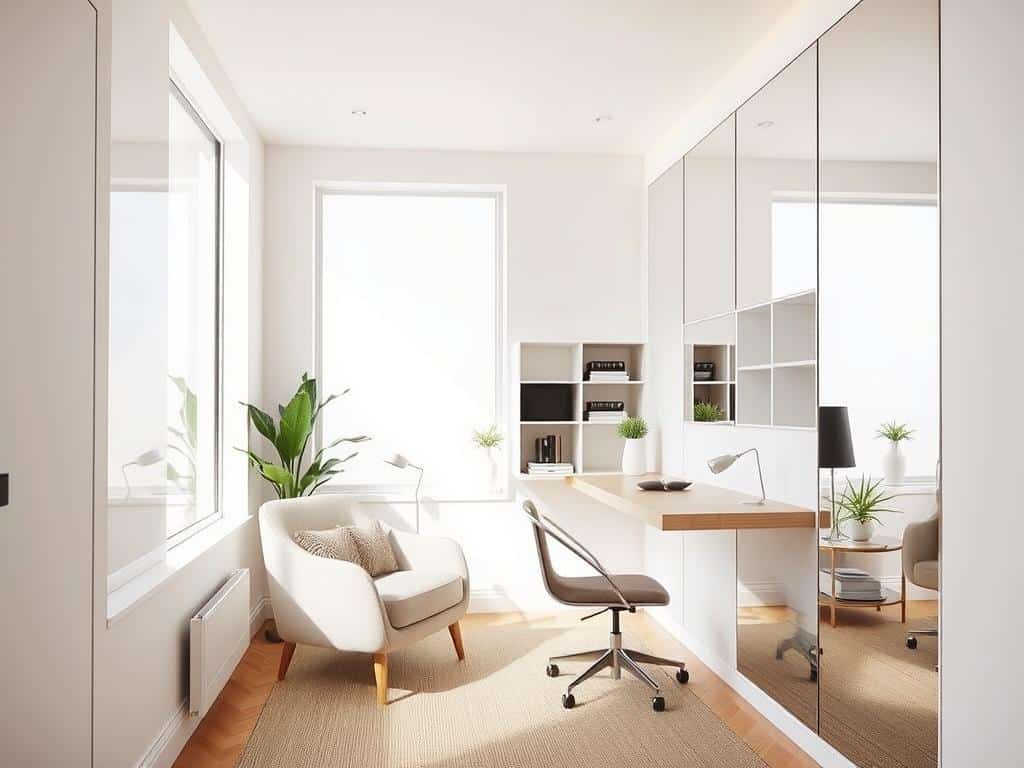
Mirrors are great for making small spaces look better. Placing mirrors right can reflect light and create optical illusions. This makes the area seem bigger than it is.
I often use large wall mirrors or mirrored furniture. This lets light bounce around the room, adding depth. It also brightens the space.
Furniture Selection and Arrangement
Choosing the right furniture is key for small areas. I like slim, leggy furniture that doesn’t block the floor. This keeps the space feeling open.
Using pieces that do more than one thing, like Murphy beds, is smart. They save space without cluttering it. I also use high shelves and wall-mounted cabinets to keep things tidy. Thinking about furniture arrangement helps make the most of each room.
Lighting and Transparency Techniques
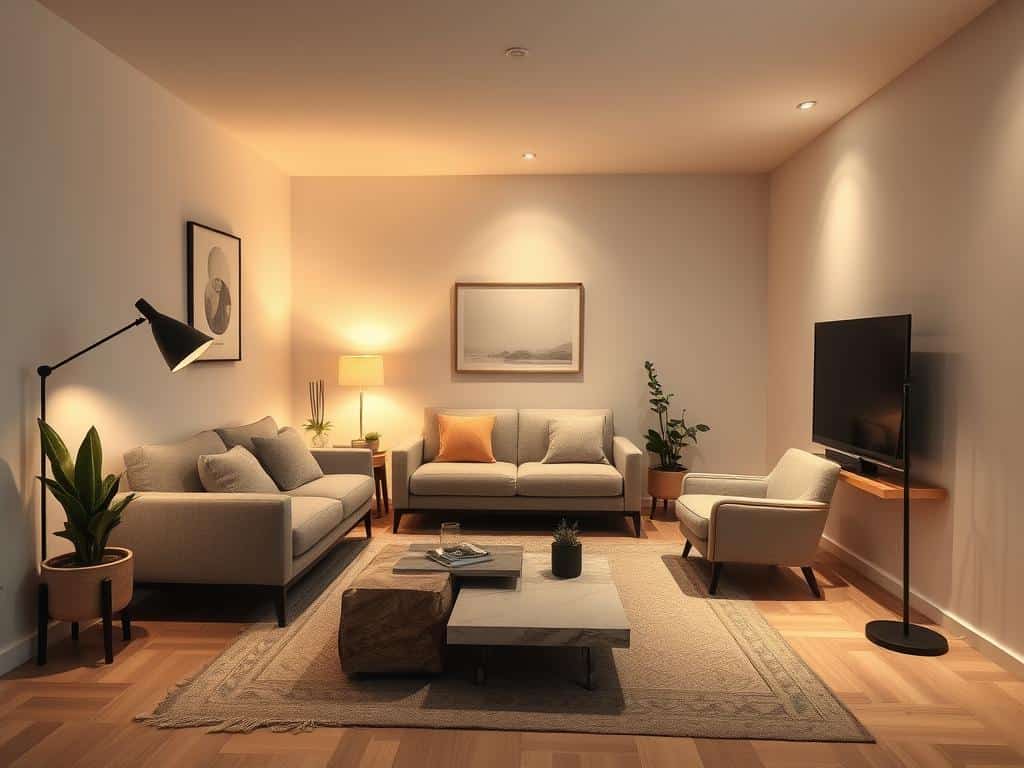
To make small spaces feel airy, focus on lighting and transparency. Using natural light is key. I choose light colors like whites, creams, and soft grays. These colors reflect light, making rooms feel bigger and welcoming.
Maximize Natural Light
Removing heavy window coverings is a simple yet effective trick. I switch to sheer or transparent curtains to let sunlight in. This makes rooms feel open and lively.
I also use mirrors to reflect light. A big mirror opposite a window doubles the room’s brightness. It makes the space feel larger.
Opt for Transparent Materials
Transparent furniture, like glass or lucite, makes spaces feel bigger. I use pieces like the Hovet Mirror to reflect light and expand the area. Transparent furniture keeps the space open and clutter-free.
The Noguchi Akari 1A lamp adds natural, warm light and beauty. It’s a sculptural piece that improves the room’s feel. For tight spaces, I choose plug-in wall sconces. They provide light without taking up floor space.
Conclusion
Living in small spaces has taught me a lot. I’ve found that good design can make a tiny area feel cozy. It’s all about keeping things simple, choosing the right colors, and arranging furniture smartly.
By keeping things tidy and using space-saving furniture, I’ve made my home feel bigger. For example, a built-in shoe rack or a Murphy table can help a lot. These ideas make my home both useful and welcoming.
Choosing light colors and using natural light is key to a lively space. These strategies help me enjoy my small areas fully. They show that even the smallest rooms can be both comfortable and stylish.