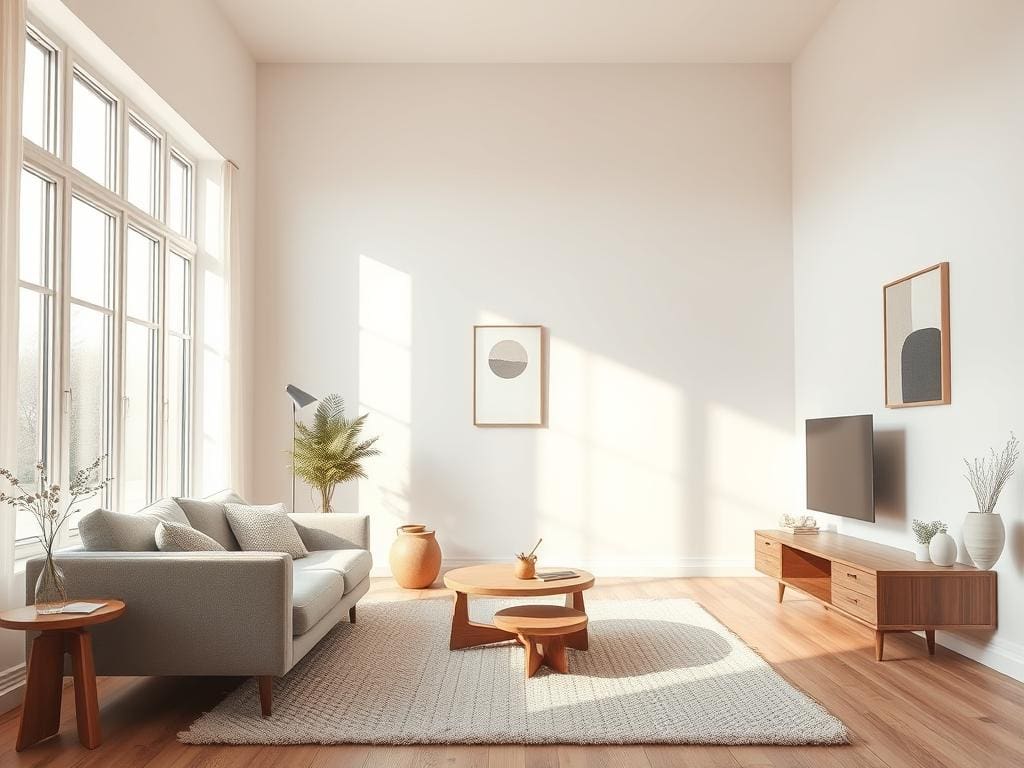

As I settled into my cozy living space, a light breeze wafted through the open window. It carried the earthy scent of wood and fresh linens. My morning ritual of sipping coffee on an Ole Wanscher armchair reminded me of the Nordic lands.
The smooth, natural textures of the chair showcased Scandinavian Simplicity at its best. The clean lines of my decor told a story of practicality, functionality, and beauty without excess. My choices, rooted in minimalism and a need for coziness, highlighted how Scandinavian design remains a staple in 2025.
In the simplicity of my surroundings, I found the essence of Nordic style. This approach fosters tranquility with a light and neutral palette. It bathes rooms in soft light, essential during the region’s long winters.
From the furniture I chose to the textiles I adorned it with, every element serves a purpose. It echoes the historical roots of Scandinavian design shaped by the harsh climate and practical living. It’s clear why this trend persists; it’s not just decoration, but a lifestyle and philosophy that values quality and thoughtful curation of space.
Key Takeaways
- Scandinavian design emphasizes clean lines and minimalistic approach.
- Natural materials like wood and textures create a warm atmosphere.
- A light, neutral color palette enhances brightness and calmness.
- Functionality and practicality are core principles in contemporary design.
- The style’s historical roots reflect the cultural values of cooperation and egalitarianism.
Understanding Scandinavian Design and Its Origins
Scandinavian design has a rich history, shaped by culture and tradition. It started in the early 20th century. The Bauhaus movement brought a focus on function and modernism, laying the groundwork for Nordic style.
This philosophy mixed industrial traits with traditional craftsmanship. It emphasized practicality and ease of use.
Historical Background of Scandinavian Design
After World War II, there was a need for practical and accessible design. Governments and designers worked together to create beautiful, everyday pieces. Arne Jacobsen and Hans Wegner were key figures in this movement.
They introduced designs with simplicity and clean lines. These designs used natural materials like wood and leather. They aimed to create spaces filled with natural light and comfort.
The Evolution of Nordic Style
Scandinavian design keeps evolving, staying true to its core values. It combines multi-functional pieces with nature-inspired elements. This appeals to many styles, from minimalist to maximalist.
The focus on sustainability is also a key part of its history. Brands like Marimekko show how Scandinavian design remains popular and timeless.
Key Elements of Scandinavian Simplicity
Scandinavian simplicity is all about certain key elements. These include neutral colors, natural materials, and functional furniture. Together, they create a space that feels modern yet cozy.
Neutral Color Palettes
Neutral colors are at the heart of Scandinavian design. You’ll see lots of white, gray, and soft pastels. These colors make spaces feel open and calm.
They also let you add decor without overwhelming the space. This makes for a peaceful atmosphere.
Natural Materials and Textures
Natural materials are vital in Scandinavian design. Think light woods, stone, and leather. These add warmth and texture to rooms.
Using raw wood and wool shows a love for nature. These materials make spaces feel cozy and inviting.
Functional Design
Functional furniture is key in Scandinavian decor. It looks good and works well. Look for pieces that do more than one thing, like tables with storage or sofa beds.
This focus on function keeps spaces tidy and stylish. It’s all about simplicity and ease in Scandinavian design.
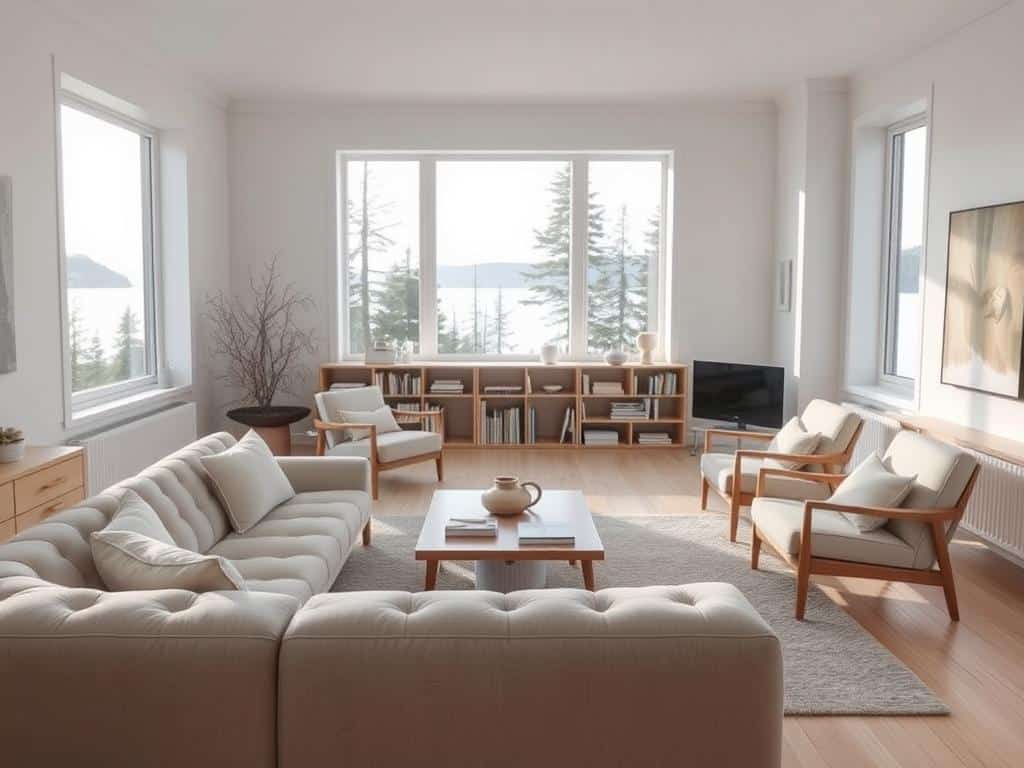
Current Trends in Scandinavian Design for 2025
Looking into 2025 Scandinavian trends, I see a big change: a focus on sustainable design. People want eco-friendly choices more than ever. Vintage and handmade items are becoming popular, showing off authenticity and skill.
These items add a special look and encourage buying less. It’s all about being responsible with what we buy.
The Rise of Sustainable Shopping
The circular economy design is key now. It’s all about using recycled stuff and making furniture that lasts. Outdoor furniture that looks like art is really cool, made from green materials like metal and concrete.
This change in how we get materials is big. It’s changing how we see and use our homes.
Multifunctional Furniture Innovations
Another big trend is furniture that does more than one thing. With smaller living spaces, we need furniture that saves space. Modular sofas and tables that grow are great examples.
Brands like IKEA make these affordable. They help us add practicality to our homes without losing style. Low-profile furniture also makes rooms feel bigger and look cleaner.
Details like woven accents and soft lighting add warmth. Muted colors and textures make spaces cozy. This matches the idea of hygge perfectly.
The push for sustainability and usefulness creates homes that are both beautiful and practical. This shows the heart of Scandinavian design in 2025.
Conclusion
Reflecting on Scandinavian design, its lasting charm is clear. It shapes our interior spaces in 2025. This design focuses on minimalism and function, fitting modern tastes while keeping comfort and warmth.
It encourages us to value simplicity in our homes. Yet, it doesn’t ask us to give up the need for a cozy space.
The concept of hygge shows how Scandinavian design is loved worldwide. It uses natural materials, open spaces, and simple colors. Each part adds to the room’s feel.
This design also promotes living green. It inspires furniture that’s good for our planet. It makes us think about how our choices affect the world around us.
Scandinavian design will keep attracting those who want beauty and usefulness in their homes. By using these ideas, we can make our homes peaceful places. They help us relax and feel close to nature.
Choosing Scandinavian design means creating spaces that are not just pretty. They are also meaningful and serve a purpose.