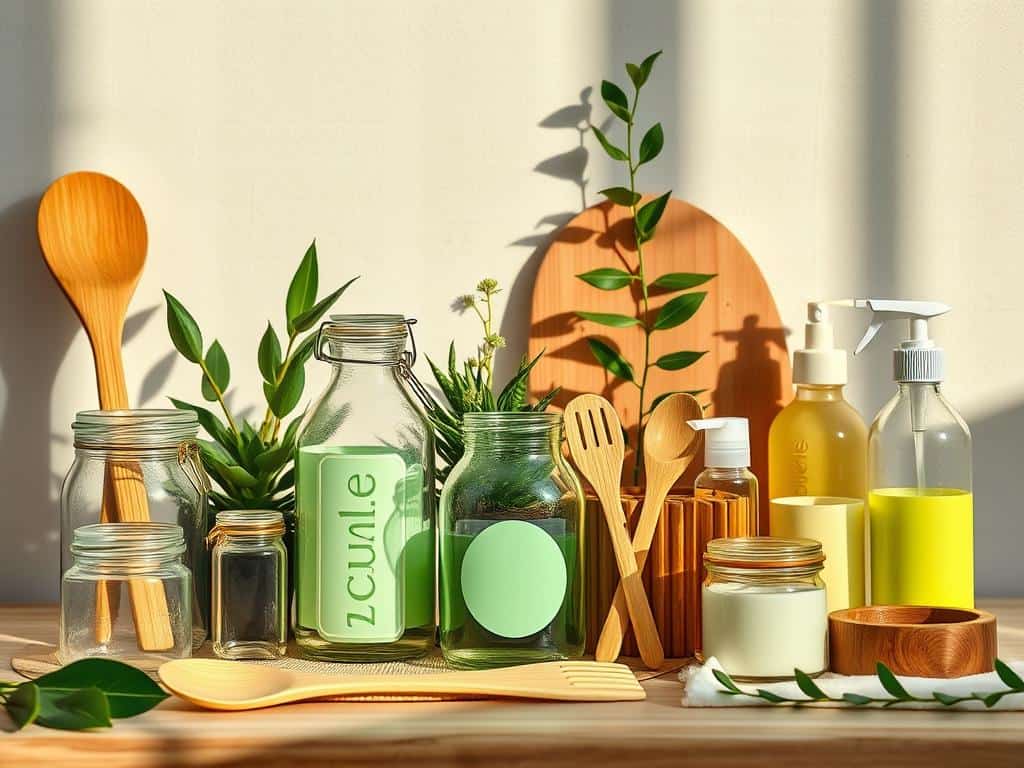

Living sustainably once seemed too big for me. I felt lost in the environmental crisis and wondered if I could make a difference. But, as I started making eco-friendly swaps, I found it wasn’t hard.
Small changes in my daily life helped me live greener. Every time I chose a reusable item over a disposable one, I felt hopeful. It showed me that even small choices can help our planet.
These changes, like using stainless steel instead of plastic, add up. They show how our choices can make a big difference. It’s amazing to see how each small action can help our world.
Key Takeaways
- Single-use paper towels can be replaced with natural loofah sponges and Swedish dish cloths.
- Stainless steel lunch containers and travel mugs help cut down on plastic waste.
- Opt for wool dryer balls to reduce waste and energy bills.
- Refill cleaning products in bulk to minimize packaging waste.
- Swapping to cloth napkins can save trees and water significantly.
- Choose eco-friendly self-care products like shampoo bars and bamboo toothbrushes.
- Making these small swaps can save an average household hundreds of dollars annually.
Easy Eco-Friendly Swaps for Sustainable Living
Starting a sustainable lifestyle is easy with small changes. These changes help the planet and improve our health. Using reusable produce bags cuts down plastic use.
Choosing local produce supports nearby farmers and reduces carbon emissions. It’s a win-win for everyone.
Food, Cooking, and Shopping
Turning food scraps into broth is a great way to reduce waste. It makes food taste better and saves resources. Glass containers are perfect for storing food because they’re compostable and affordable.
When cooking, I use ingredients that can be regrown or reused. For example, vegetable scraps can make tasty meals again.
Shopping sustainably means knowing what we buy. Reusable totes and linen bento bags make grocery shopping easier. Cotton net bags are great for zero-waste shopping.
Using glass jars for bulk items avoids packaging waste. It’s a simple way to shop sustainably.
I’ve switched to shampoo bars and refillable products for toiletries. Brands like Plaine Products help me stay low-waste. Bamboo toothbrushes and compostable floss from Dental Lace also reduce plastic.
Even cleaning products are now eco-friendly. I use Dropps plastic-free laundry pods and DIY solutions to reduce waste.
Small changes in shopping and composting make a big difference. Every effort helps the environment and our health. It’s a win-win for everyone.
Simple Changes to Embrace Zero Waste in Everyday Life
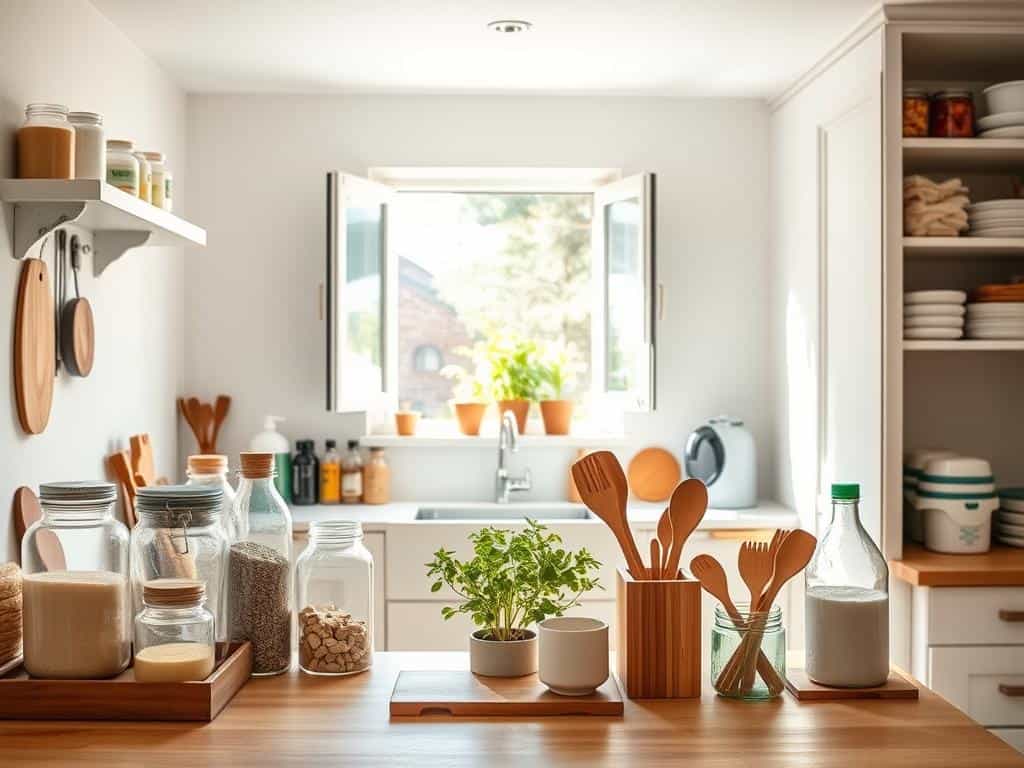
Starting a zero waste lifestyle is easy with small changes at home. Simple steps can make a big difference over time. Using reusable containers and buying in bulk are key to a zero waste kitchen.
These actions help reduce waste and support a green home. Cooking with fresh ingredients and avoiding packaged foods also helps the planet.
Replacing paper towels with washable cloths is a great habit. It cuts down on waste and promotes green cleaning. Natural loofah sponges are another good choice.
Choosing eco-friendly cleaning products has changed my cleaning routine. Many commercial cleaners harm health and the environment. I prefer natural cleaners that keep my home clean and eco-friendly.
Composting and Reducing Waste for a Greener Planet
Composting is a key part of my effort to reduce waste and help the planet. I enjoy collecting kitchen scraps and other organic stuff in my compost bin. This not only makes my garden soil better but also helps deal with food waste.
Did you know that about 1.3 billion tonnes of food gets wasted every year? That’s a lot, and most of it comes from homes like mine. By composting, I help reduce this huge amount, making a real difference for our planet.
Food waste has big environmental effects. It’s responsible for 8-10% of global greenhouse gas emissions. By composting, I cut down methane emissions, which are bad for the climate. This helps keep carbon dioxide levels lower.
Composting also keeps organic waste out of landfills. This stops methane from being made and reduces pollution. It’s a win-win for the environment.
I also love using recycled gardening tools and materials. For example, I use yogurt pots for planting. It’s a fun way to be sustainable and support my gardening. Plus, composting saves energy compared to other waste management methods.
Conclusion
Working towards a sustainable lifestyle starts with small steps in our daily lives. Simple changes, like using reusable bags and bottles, can greatly reduce plastic waste. These actions help ensure a healthier planet for future generations.
Choosing eco-friendly products and supporting sustainable brands is also key. It not only cuts down on waste but also promotes fairness and economic stability. By doing this, we help build a stronger, more sustainable world.
Every day, we can make choices that help the environment. Switching to clean energy or using public transport are just a few examples. Together, these actions can make a big difference. They show us that living sustainably is not just possible, but essential for our future.