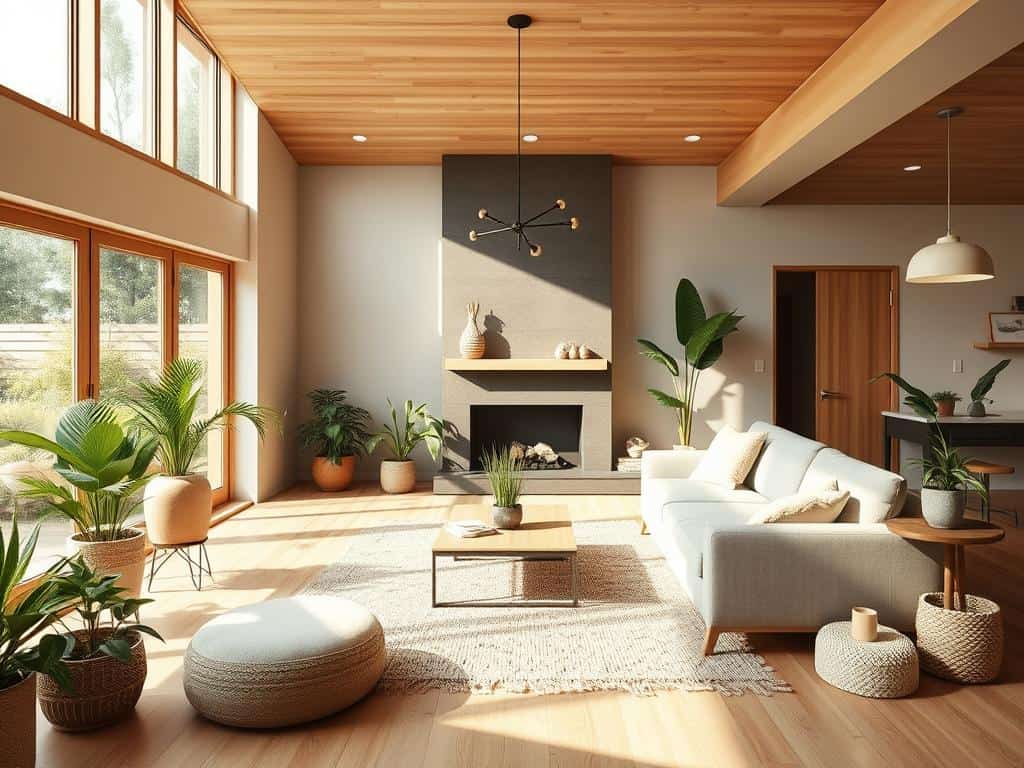

As I sat in my sunlit living room, I enjoyed my favorite organic tea. I admired the soft walls and the unique wood furniture. This led me to love eco-friendly interior design, seeing how it brings beauty and care for our planet.
Choosing low-VOC paints and handmade textiles became more than decoration. It showed my commitment to living sustainably and caring for our planet. This is what many environmentally-conscious homeowners feel today.
Switching to a green home showed me that style and sustainability can go together. Every piece in my home tells a story of making smart choices. From the wood to the plants, it all supports a healthier environment.
Let’s explore ways to make our homes both stylish and eco-friendly. This way, our spaces can show off our personal style while also caring for our planet.
Key Takeaways
- Eco-friendly interior design harmonizes aesthetics with environmental responsibility.
- Sustainable design practices can significantly reduce your home’s carbon footprint.
- Choosing responsibly sourced materials enhances durability and support local economies.
- Utilizing low-VOC products improves indoor air quality.
- Incorporating greenery not only beautifies but also promotes a healthier living space.
- Implementing energy-efficient technologies can lead to long-term cost savings.
Understanding Sustainable Design and Its Importance
Sustainable design is a way to make spaces better for the planet and people. It’s more than just being eco-friendly. It looks at long-term effects and how to use resources wisely. This approach helps solve today’s problems and prepares for tomorrow’s.
Defining Sustainable Design
Sustainable design focuses on making spaces efficient and green. It uses the site’s best features and cuts down on energy use. Every small step, like saving water or improving air, makes a big difference.
It’s about creating spaces that are not only good for the planet but also for people. As rules get stricter, the need for sustainable design becomes even more important.
Benefits of Sustainable Design
Using sustainable practices makes spaces healthier. It improves air quality, which is good for everyone. It also saves money by using less energy and needing less upkeep.
Buildings that aim for green certifications, like LEED® Gold, are more valuable and make tenants happier. This shows why sustainable design is key for strong communities.
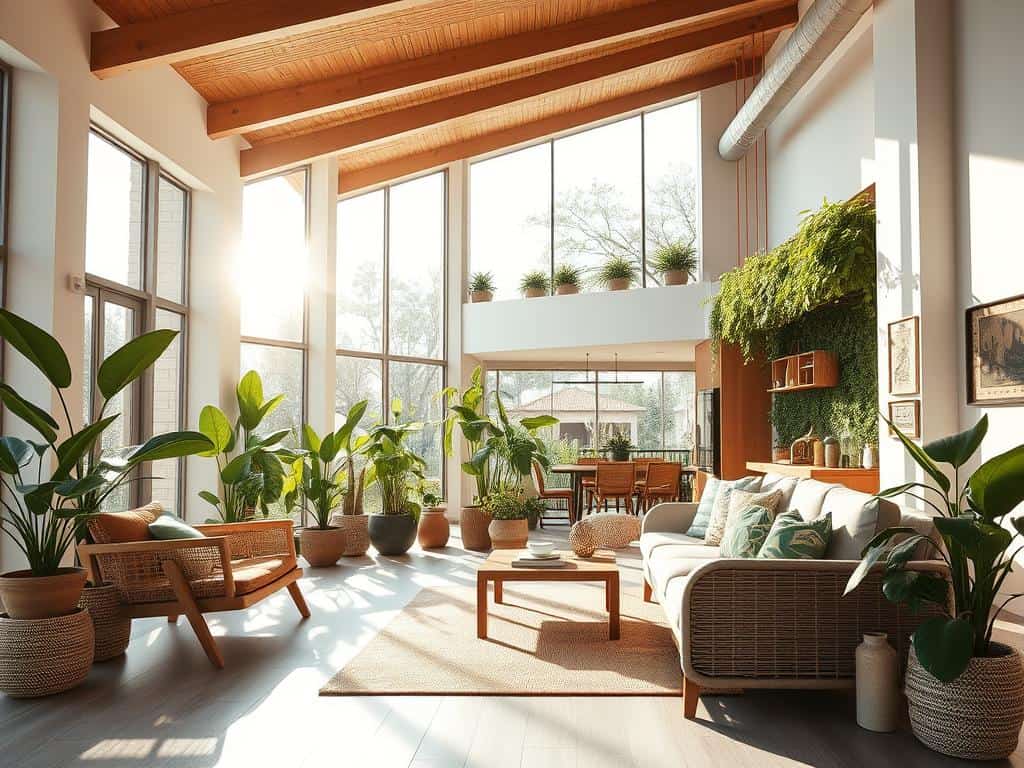
10 Ways to Implement Eco-Friendly Interior Design
Turning your home into an eco-friendly space means making smart choices. Here are ten ways to make your home greener.
Choose Responsibly Sourced Wood
Choosing wood that’s good for the planet is key. Go for reclaimed wood to help forests and support local makers. It’s a win-win for our planet.
Shop with Climate-Conscious Brands
I love buying from brands that care about the planet. They use materials that are better for our environment. It feels good to support them.
Opt for Low-VOC Paints
Low-VOC paints are better for your home’s air. They’re a healthier choice that doesn’t sacrifice style. Your home will look great and feel fresh.
Incorporate Natural Textiles
Using natural fibers like organic cotton and linen makes your home more sustainable. They’re durable, comfy, and better for the earth than synthetic fabrics.
Install Energy-Efficient Lighting
LED bulbs are a game-changer for saving energy. They use less power and last longer than old bulbs. It’s a smart, green choice.
Utilize Recycled Materials
Decorating with recycled items adds charm and supports the planet. It’s a way to reduce waste and pollution.
Consider Bamboo Flooring
Bamboo flooring is a top pick for eco-friendly homes. It’s fast-growing, durable, and looks great. It’s a smart choice for a green home.
Upcycle Old Furniture
Upcycling furniture is creative and eco-friendly. It keeps old items out of landfills and lets you show off your style.
Install Water-Efficient Fixtures
Using water-saving fixtures is a big step towards sustainability. Low-flow faucets and dual-flush toilets save water without sacrificing comfort.
Add Greenery
Adding plants to your home makes it feel better. They clean the air and connect you to nature. It’s good for your health and mood.
Conclusion
Thinking about eco-friendly interior design shows us how living sustainably can change our homes and help the planet. By picking durable materials and energy-saving designs, we can cut down on pollution. This makes our homes healthier and helps the environment.
Even small steps can make a big difference. They lead us to a future where design and nature go hand in hand.
Green homes offer more than just a cozy place to live. They also mean cleaner air, less waste, and lower bills. Using materials that are kind to the earth and letting in natural light makes our homes better for us and the planet.
Our path to eco-friendly design is always evolving. Places like the Green School in Bali and the California Academy of Sciences show us what’s possible. By choosing to live sustainably, we make our lives better and help the planet for generations to come.