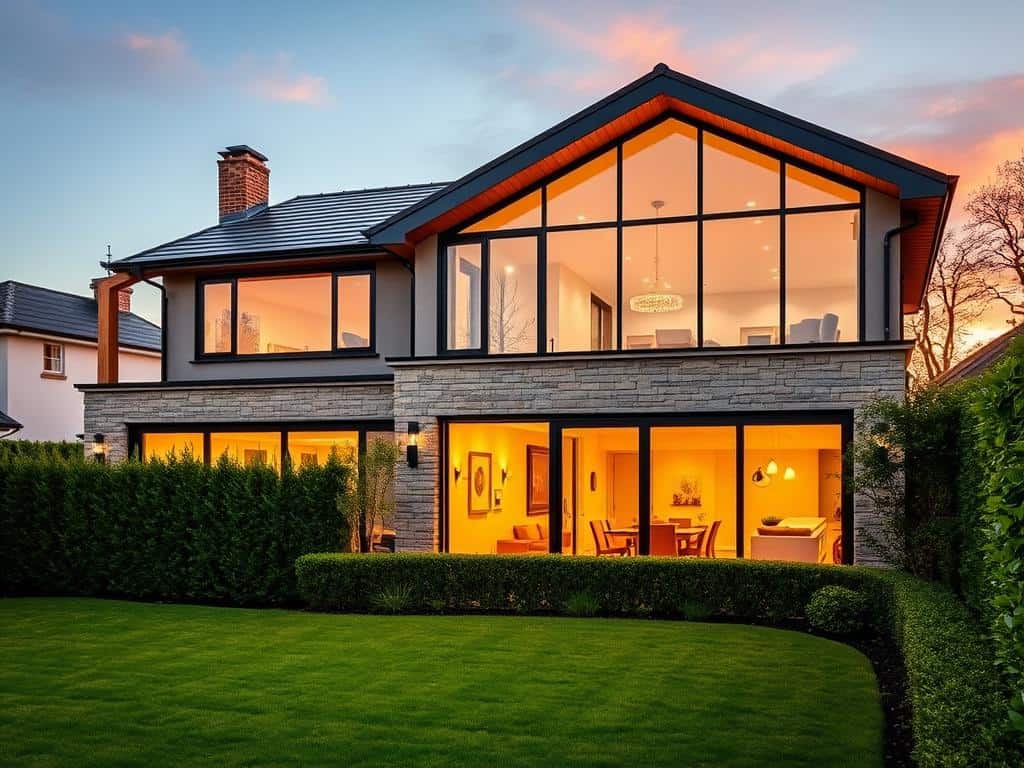

As I sat in my small living room, surrounded by toys and books, I dreamed of more space. My friend had just added a big extension to her house, making it light and open. Inspired, I started looking into home extensions.
I wanted to turn unused areas into useful spaces, like an attic office or a sunroom for family. The idea of making my dream space without moving was exciting. I realized that renovations could also boost my home’s value, benefiting my family.
Starting my home extension journey seemed like the best choice. I could extend the kitchen or add a guest house. There were many ways to make my home happier and more organized.
Let’s explore the different types of home extensions. We’ll see how they can give us the extra space we desire.
Key Takeaways
- Home extensions provide a solution for adding more space without moving.
- Converting unused areas like attics or basements can create functional living spaces.
- Extensions can significantly increase the value of your home.
- Sunrooms and bump-outs are popular choices for expanding living areas.
- Average costs for home extensions range from $21,000 to $65,000.
- Planning and budgeting are essential for a successful home extension project.
Understanding Home Extensions
Home extensions are a great way to add more space without moving. They can boost your home’s value and let you stay in your favorite neighborhood. Knowing about the different types of extensions helps me create a home that fits my needs perfectly.
What Are Home Extensions?
Home extensions include many renovation options to grow your living area. They can be simple, like adding a bit more to a room, or more complex, like adding a second floor. Each option brings benefits like more space, better looks, and the chance to design your dream home without leaving.
Types of Home Extensions
There are many types of home extensions, each with its own perks. Outward extensions add more room, while second-storey additions use up vertical space. Garage conversions are also popular, turning unused garages into living areas. These options are great for those who want to improve their home without the cost of moving.
Evaluating the Cost of Expanding Your Space
Thinking about a home extension means looking at many factors that affect costs. It’s important to think about more than just the upfront costs. I need to consider how it will affect my budget in the long run. Choosing the right size and type of addition is key, making sure it fits my family’s needs now and in the future.
Factors Affecting Addition Costs
The cost of adding to my home changes a lot based on several things. The type of addition, like a kitchen or bathroom, can be more expensive because of plumbing and electrical needs. The materials I choose also matter, as better materials can increase costs a lot. Labor costs, which can be 10% to 20% of the total cost, are another factor.
Where I live also affects the cost. Cities usually cost more than rural areas. Getting permits and dealing with zoning laws can add $200 to $3,000 to the bill. So, it’s smart to have a backup fund for unexpected expenses.
Average Cost Estimates
Studies show that home additions in the U.S. typically cost about $50,335. Costs can vary from $22,144 to $82,000. For example, adding a guest bedroom might cost between $8,000 and $21,000. A full bathroom can cost from $8,400 to $30,000. The cost per square foot can range from $80 to $210, which is important for budgeting.
To save money, I look at different ways to cut costs. Using standard materials and doing some tasks myself, like painting, can help. Also, using existing parts of the house, like an attic, can save a lot. Keeping these tips in mind helps me stay within my budget when expanding my home.

Popular Home Extension Options
Homeowners are looking to improve their living spaces without moving. They have many options to choose from. Sunrooms and garage conversions are among the most popular, adding both function and beauty.
Building a Sunroom: A Bright Addition
Sunrooms merge indoor and outdoor living. They feature big windows and green materials. This makes them cozy spots or places for fun.
Choosing sustainable materials makes the space beautiful and eco-friendly. Sunrooms add value and more living space to your home.
Choosing Garage Conversion
Turning a garage into living space is practical and flexible. You can make it a home office, gym, or guest room. It’s a smart way to use unused space.
Garage conversions are often cheaper than big additions. Adding smart home tech makes it even better. It brings more convenience and value to your home.
Conclusion
Thinking about home extensions, it’s obvious they offer many benefits. They let me add more space, like extra rooms or bigger areas. This not only makes my home more valuable but also a wise investment.
Looking into different options and their costs helps me find the perfect fit. Whether it’s a modern sunroom or a garage turned into a living area, the choices are vast. Plus, adding rental units can bring in extra money over time.
Working with experts, like Nicholas Design Build, makes the renovation process easier. They help follow all rules and make sure my home looks and works great. In the end, home extensions improve my life and make my property more valuable for the future.