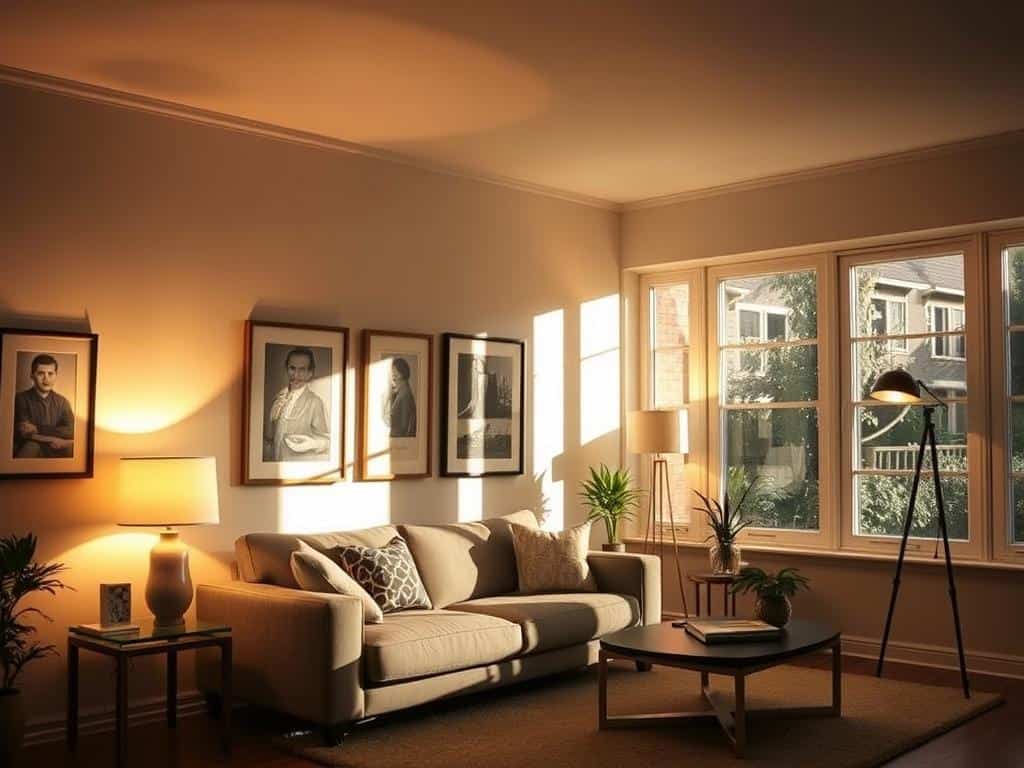

When I entered my friend’s new living room, I felt a sense of gloom. The bright white walls and modern furniture were overshadowed by poor lighting. My friend had only a few lights, which made the room cold and unwelcoming.
This experience showed me how important lighting is in a home. It can change a space from dull to delightful, or from cold to cozy, with a few changes.
As I learned more about home lighting, I found that common mistakes can ruin a space’s beauty. From picking the wrong bulbs to ignoring fixture height, many of us make these errors. But, with the right guide, we can fix these mistakes and make our homes brighter and more welcoming!
Key Takeaways
- Adequate lighting in large spaces is key for a lively atmosphere.
- The right color temperature makes a room feel more welcoming.
- Layered lighting improves both function and beauty.
- Dimmer switches let you change the mood and save energy.
- Fixture height affects room balance and comfort.
- Adding natural light greatly improves the ambiance.
- Avoiding harsh shadows makes a room more inviting.
Common Lighting Blunders You Might Be Making
Lighting is key to our home’s ambiance. Yet, many overlook common mistakes that make our homes less welcoming. Learning to mix different lighting types can greatly improve our spaces.
Relying Solely on One Source of Light
Many of us rely too much on one light source. This can cause uneven lighting, with harsh shadows or too much light in one spot. Using ambient, task, and accent lighting together creates a balanced atmosphere. Ambient lighting adds a general glow, task lighting focuses on specific areas, and accent lighting highlights special features.
Choosing the Wrong Light Bulbs
Choosing the wrong light bulbs is another common mistake. Bulbs with a high color temperature (over 3000K) can make rooms feel cold and harsh. Warm light (2700–3000K) is better for living areas, while cool light (4000–5000K) works well in kitchens. Mixing different temperatures without a plan can disrupt the room’s feel.
Overusing Recessed Lighting
Too many recessed lights can make a room feel cold and uninviting. Experts say it can make a space feel like a cafeteria. Instead, using floor lamps, table lamps, and accent lights can add warmth and character to a room.
Home Lighting Guide: Perfecting Your Ambiance
Creating a welcoming home atmosphere requires careful planning and understanding of lighting. This guide focuses on key elements like color temperature and fixture height. These help improve the ambiance and function of each room.
Understanding Color Temperature for Different Rooms
Different rooms in my home need specific color temperatures for comfort and productivity. Warmer lights, around 2700K to 3000K, are great for bedrooms and living rooms. They promote relaxation and comfort.
Cool light, from 4000K to 5000K, is better for kitchens and workspaces. The right color temperature greatly affects mood and function.
Utilizing Layers of Light for Versatility
Using layers of light adds versatility to my spaces. I mix ambient, task, and accent lighting to adjust the light as needed. Relying on one type of light can make spaces harsh and unbalanced.
It’s important to have enough directional light for reading or working to avoid eye strain. Each layer should work together, making my home lighting guide more effective.
Correct Fixture Height is Essential
Fixture height is key for visual balance. I focus on the fixture height to improve comfort and looks. Fixtures too low can cause glare, while improper placement can disrupt room flow.
Adjusting the height can greatly improve the lighting’s feel and function.
Conclusion
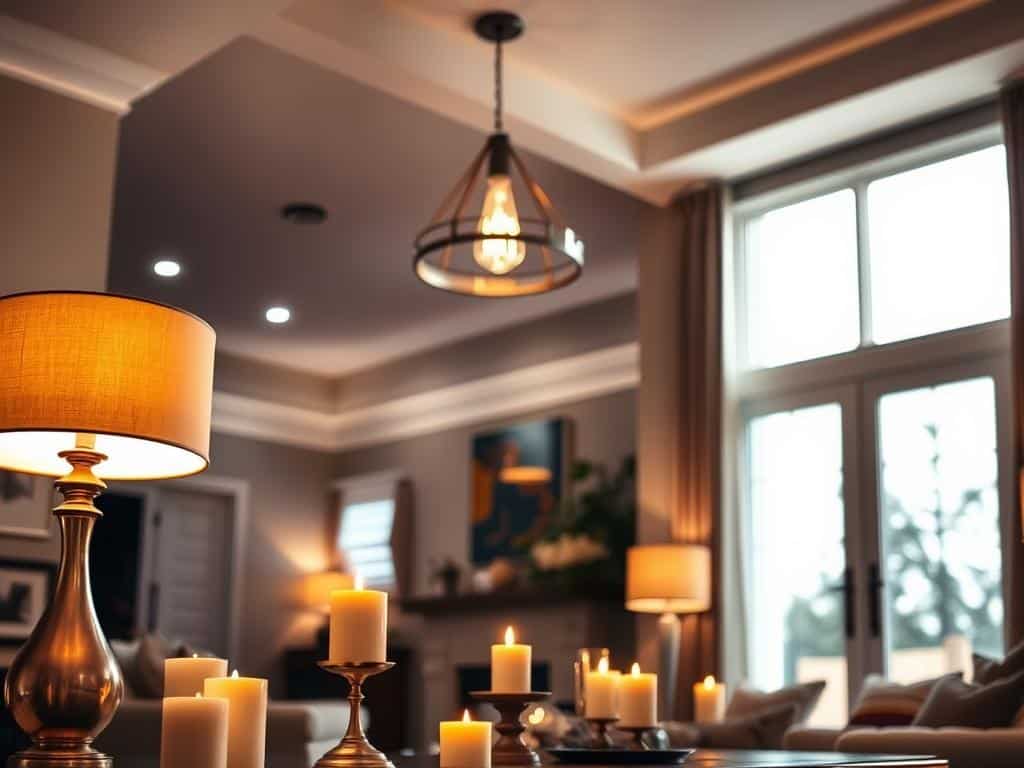
In my quest for the perfect home lighting, I’ve found out about common mistakes. These mistakes can affect both how well a room works and its feel. By using the home lighting guide, I’ve learned to layer light, pick the right colors, and place fixtures correctly.
This approach has made my home look better and work better. It’s not just about looks; it’s about making my home functional too.
Thinking about ceiling height, wall colors, and fixture types has helped me. I make sure my lighting meets standards set by the Illuminating Engineering Society (IES). Using LED lights, pendant lights, and wall lights keeps my home welcoming and safe.
Lighting design is about mixing beauty with usefulness. With smart choices like dimmable lights and balanced light levels, I’ve made my home perfect for everyday life. These tips have made my home a place where I can really enjoy living.