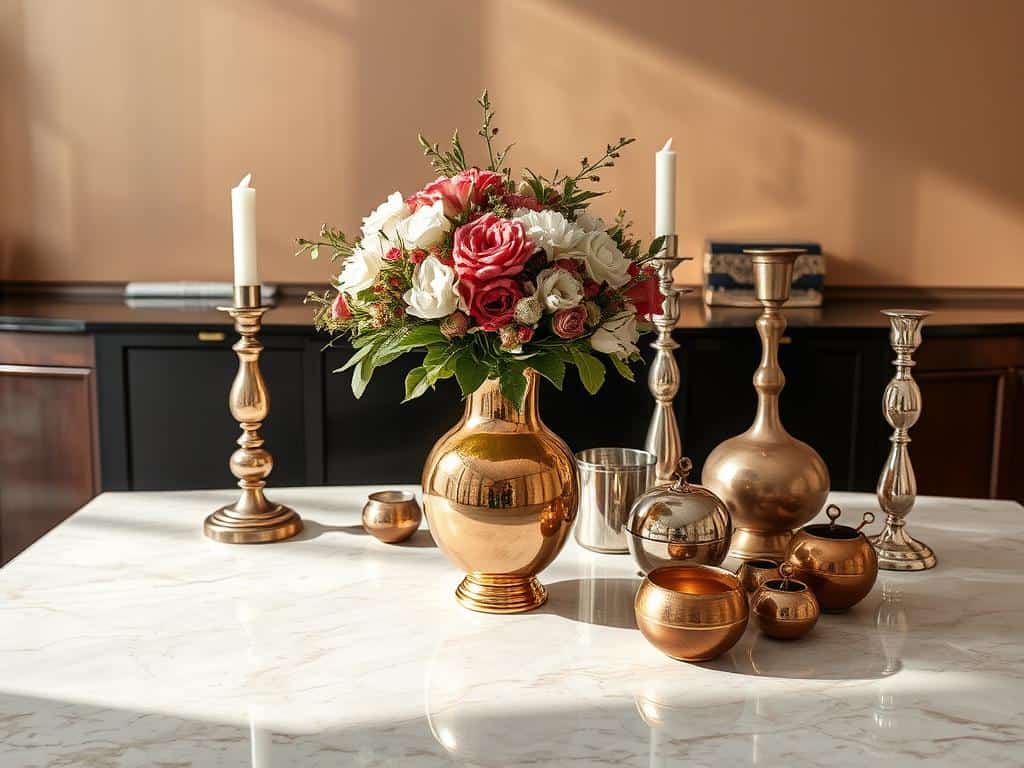

For years, I obsessed over home decor. Standing in my kitchen, I saw the mismatch of shiny silver knobs against my wooden cabinets. I followed the old rule of matching metals, thinking it was safe. But then, I wanted something different.
I decided to mix metals in my design. I added aged brass and matte black to my kitchen. The change was amazing! My kitchen went from plain to stylish, showing off trendy hardware.
This taught me that mixing metals is more than a trend. It’s a powerful design tool when done right.
In this article, I’ll share tips on mixing metals without overwhelming your space. You’ll learn how to pick a dominant metal and mix contrasting textures. Discover how to make your interiors stylish and intentional with these home decor tips. Get ready to take your design to the next level!
Key Takeaways
- Stick to 2-3 metals for a cohesive look.
- Choose a dominant metal to carry the design.
- Pair warm metals with cool metals for effective contrast.
- Incorporate various textures for added interest.
- Avoid too many finishes in one room to prevent chaos.
- Ensure installations are intentional and consistent.
Understanding Metal Finishes in Home Decor
Choosing metal finishes is key in home decor. Each metal has its own look and feel. Knowing these helps me pick the right metals for my space.
Types of Metals and Their Characteristics
Metals in home decor fall into three groups: warm, cool, and neutral. Warm metals like gold and brass make spaces feel cozy. Cool metals, such as chrome and nickel, add a modern vibe.
Copper’s rich color adds warmth to rustic spaces. Black metals, whether matte or glossy, ground designs and add boldness.
Warm vs. Cool Tones
Getting the right mix of warm and cool tones is important. Using two to three metal finishes creates a balanced look. For example, pairing polished nickel with black creates contrast without clashing.
In a coastal bathroom, brushed nickel and champagne gold work well together. Adding decor like vintage pans adds interest while keeping the metal balance. Knowing metal undertones helps me create a space that reflects my style.
Mixing Metals in Design: Tips and Techniques
Mixing metals in design can make any space look better. But, it needs careful thought. First, pick a main metal that fits the room’s color and feel. For example, warm brass works well with cool silver for balance.
Choosing Your Dominant Metal
Choosing a main metal involves looking at tones and finishes. Warm metals like gold and brass add coziness. Cool metals like stainless steel and nickel bring a modern vibe. Polished nickel is great because it goes well with both warm and cool metals.
Sticking to two or three metals helps keep designs unified. This avoids a messy look.
The 60-30-10 Rule for Balanced Design
The 60-30-10 rule helps me design better. It says use 60% of the main metal, 30% of a secondary, and 10% for accents. This rule keeps designs interesting without being too busy.
For example, brass as the main metal, polished nickel as secondary, and silver accents for a perfect balance. Mixing textures like matte and polished adds depth and character.
Creative Pairings and Combinations of Metals
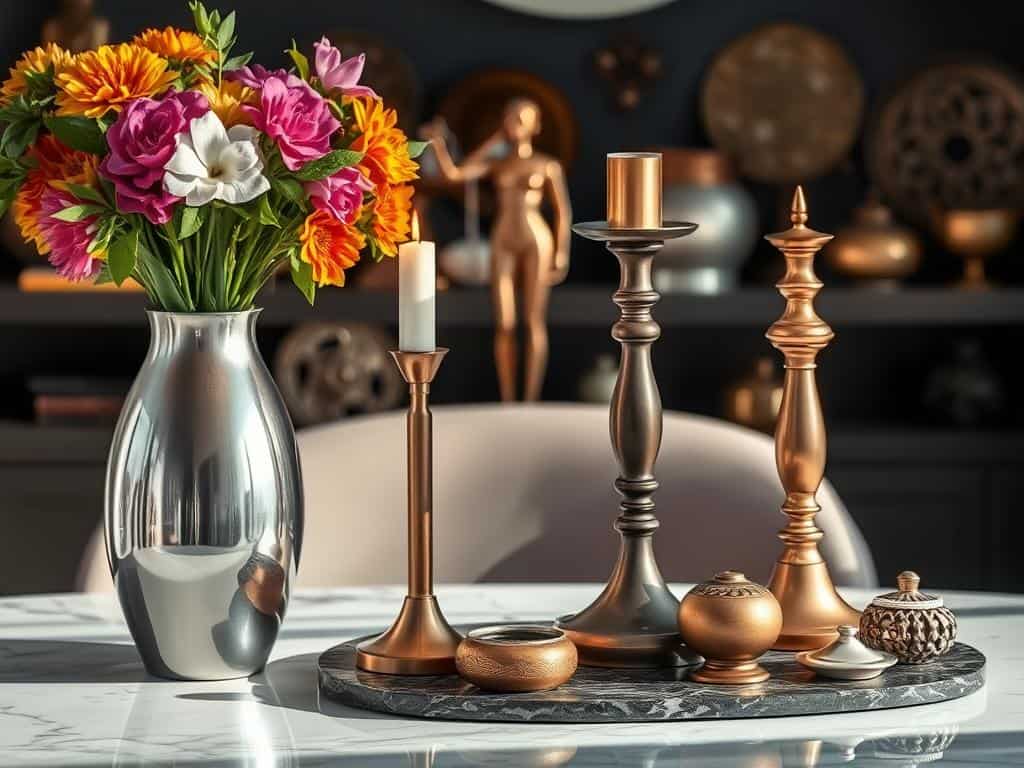
In home decor, mixing metals can change a room’s feel. I love finding creative combinations that show off each metal’s special qualities. Mixing different metals adds interest to a space.
Choosing the right pairings, like bronze with brass or matte black with polished nickel, makes a room stand out. This sets a unique mood that makes any room better.
Foolproof Metal Combos
Some metal pairs are perfect for adding style to a room. For example, polished nickel with matte black brings a modern touch. Brass and oiled rubbed bronze give a vintage vibe.
I start with a main metal to anchor the design. Then, I add secondary metals as accents. This way, the look stays balanced and thoughtful.
Using Contrast and Texture
Adding texture in design makes mixed metals more interesting. Mixing matte and polished finishes adds depth. For instance, brushed nickel with glossy chrome highlights material differences.
By carefully placing these textures, I create a layered look. This invites people to explore the space more. When mixing metals, I focus on matching warm and cool tones for a balanced look.
Conclusion
Mixing metals in home decor can really make your space stand out. Brands like Cafe Appliances offer a range of options, from brushed copper to stainless steel. This lets homeowners get creative with their designs.
Remember, there are no strict rules in design. This means you can have fun mixing different metals and finishes. It’s all about finding the right balance.
Pairing warm metals like brass with cool ones like stainless steel can look amazing. The trick is to use a simple color palette and not too many finishes. For example, a kitchen with gold fixtures and stainless steel appliances can look great.
Start small with your projects. Use the 70/30 rule to keep things balanced. This way, you can avoid overwhelming your space.
Mixing metals not only makes your home look better but also ties different elements together. Share your experiences with mixing metals. Let’s learn from each other and make our homes truly unique.