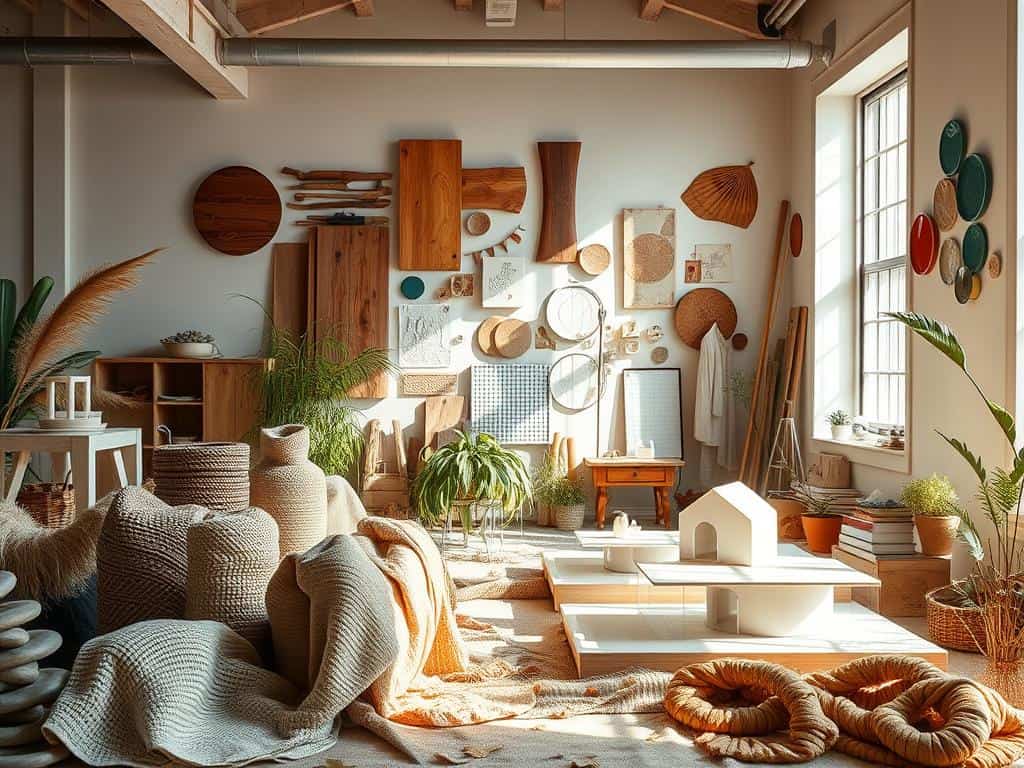

At a local arts and crafts fair, I found a booth with stunning, hand-crafted furniture. Each piece showed a commitment to sustainability. This reflects a growing trend towards using eco-friendly materials in design.
A young artist told me about her tables made from reclaimed wood. She said they were not only beautiful but also ethical. She talked about how more people want sustainable materials for their homes and furniture.
Today, with climate change a big concern, sustainable practices are key. Eco-friendly materials help save our planet and can even save money by using less energy. This shift in design and architecture is exciting, combining style with responsibility.
Key Takeaways
- The demand for eco-friendly materials is driven by a collective awareness of environmental issues.
- Innovative design can harmoniously blend aesthetics with sustainability.
- Materials like reclaimed wood and bamboo exemplify how style can be responsible.
- Sustainable materials often lead to significant cost savings on energy bills.
- Green living is becoming essential to modern design practices.
The Rise of Sustainable Materials in Design
Design is changing to be more sustainable. We’re using materials that harm the environment less. These materials come from renewable sources, which is good for our planet.
They can also be recycled or upcycled. This supports sustainability and makes design greener. It’s a big change in the home goods industry.
Understanding Sustainable Materials
Sustainable materials have a low environmental impact and can be renewed. Examples include reclaimed wood, recycled ceramics, and biodegradable composites. They also have low VOCs and clay plasters.
These materials are good for the environment and our health. They improve indoor air quality. By choosing them, we reduce harmful emissions in our homes.
Market Drivers for Eco-Friendly Design
More people want eco-friendly products. They care about health and the environment. This demand is pushing manufacturers to create greener products.
These products look good and meet high sustainability standards. Generative AI helps designers create more sustainable designs. It makes homes more energy-efficient and eco-friendly.
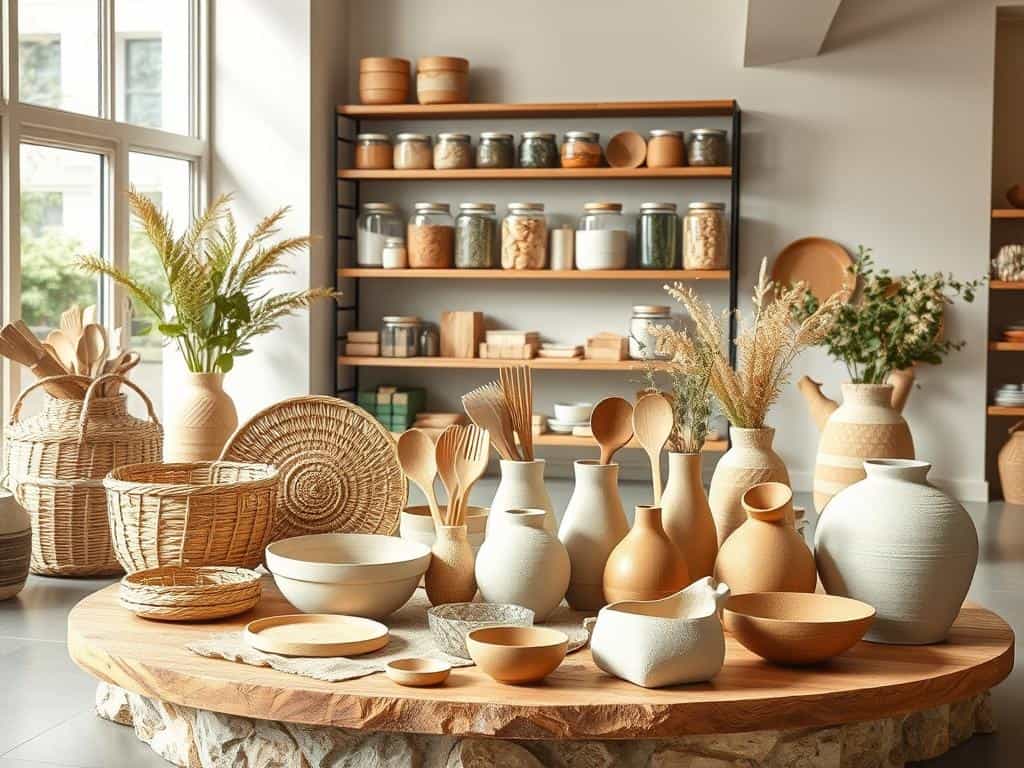
Sustainable Materials Revolutionizing Design Practices
In the world of eco-friendly design, some materials are leading the way. Bamboo, recycled steel, cork, and hemp are changing how we build. They are good for the planet and look great too. Using these materials helps make our future greener and more beautiful.
Bamboo: A Versatile Alternative
Bamboo is a fast-growing, renewable resource. It’s strong and flexible, making it a great choice for building. Bamboo also helps the environment by absorbing carbon and wastewater.
It can be used in many ways, from floors to walls. This shows its big role in eco-friendly design.
Recycled Steel: Strength and Sustainability
Recycled steel is a big win for the environment. It’s made from materials that would have been wasted. This reduces the need for new resources.
Producing recycled steel uses 60% less energy than before. It’s strong and lasts long, perfect for buildings. Using it saves resources and cuts down on carbon emissions.
Cork: The Eco-Friendly Insulator
Cork comes from the bark of cork oak trees. It’s a great insulator that keeps spaces warm and quiet. Cork is also good for the planet because it regrows after it’s harvested.
This makes it a smart choice for building. It helps reduce the harm caused by other insulation materials.
Hemp: A Multi-Faceted Resource
Hemp is very useful, in both textiles and building materials. Hempcrete is a strong, eco-friendly alternative to concrete. It’s made from hemp fibers and lime.
Hempcrete absorbs carbon dioxide as it cures. It also needs very little water and no pesticides. This makes hemp a top pick for green designs.
Conclusion
Choosing sustainable materials is now essential for a better future in design. By making eco-friendly choices, I help our planet and support a culture that cares for the environment. Using recycled metals, bioplastics, and wood from sustainable sources helps save energy and cut down emissions.
Green materials are becoming more common in industries like construction and fashion. This trend helps meet global sustainability goals. It encourages recycling, modular design, and innovation, leading to a circular economy that’s good for the planet and future generations.
Even though some sustainable materials might cost more at first, their long-term benefits are worth it. They last longer and can be recycled, saving money in the long run.
The path we choose with sustainable materials will shape the future of design. By making smart choices, we push manufacturers and consumers towards eco-friendly options. This not only improves our lives but also helps create a healthier, greener world for those who come after us.