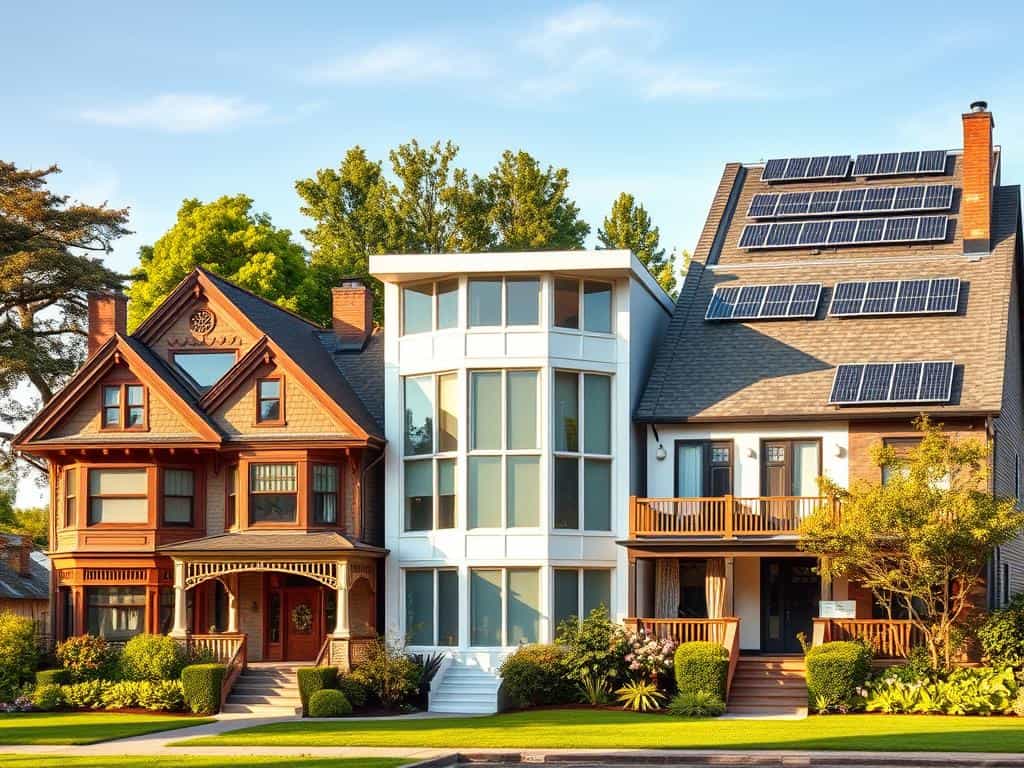

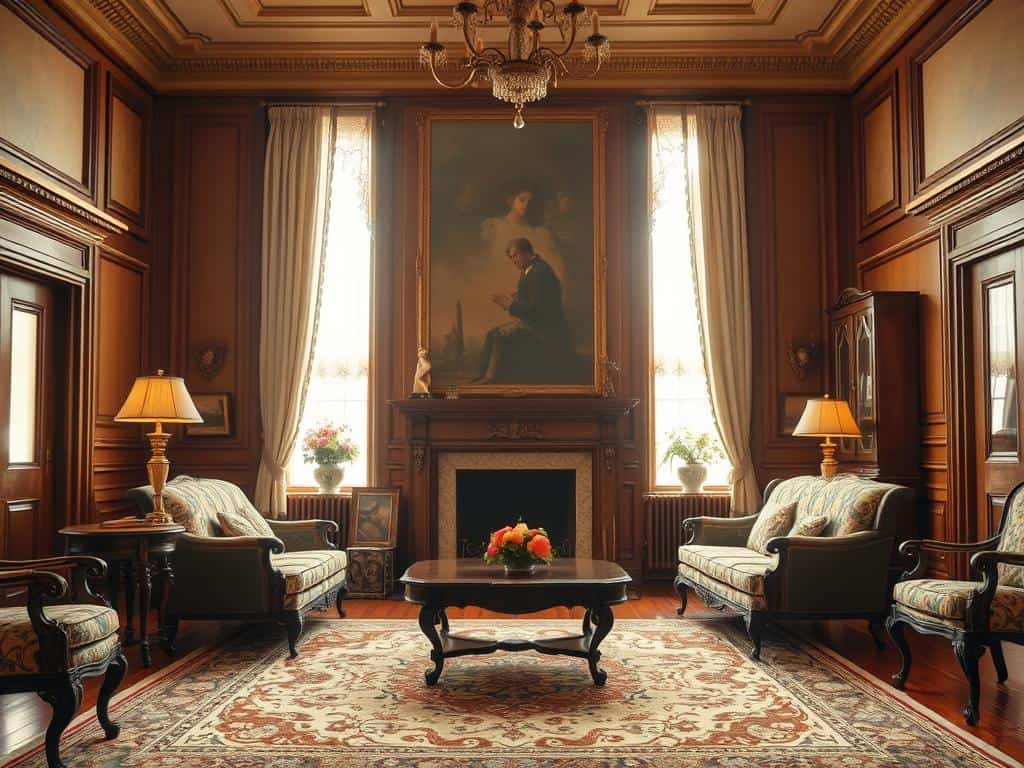
Visiting my grandmother’s Victorian home as a child was a special experience. It had beautiful woodwork, elegant wallpapers, and a grand dining room. These details filled me with nostalgia and warmth. Now, my home is a far cry from that, with an open concept and lots of natural light.
This change shows how our homes have evolved over time. It’s influenced by societal shifts, cultural changes, and new technology. These factors have shaped our living spaces in profound ways.
The journey of architecture is filled with history and progress. Each design phase has responded to the needs of its time. This has led to homes that are both practical and welcoming.
As architectural trends keep changing, let’s explore what makes a house feel like home. It’s not just about looks; it’s about feeling and function.
Key Takeaways
- Home design reflects societal shifts and cultural influences over time.
- Open floor plans are a hallmark of contemporary residential spaces.
- Natural materials and craftsmanship are emphasized in modern design.
- Technological advancements have led to new architectural features and amenities.
- The transition from Victorian charm to minimalist aesthetics showcases the evolution of living.
- Understanding past architectural movements helps shape our current design preferences.
Overview of Home Design Through the Years
Home design has changed a lot, showing how society has evolved. We’ve moved from Victorian homes with lots of details to modern buildings that are simple and clean. This change shows how our tastes and needs have shifted over time.
Architectural styles like Art Deco and Bauhaus have also played a big role. And technology has had a huge impact, changing how we design and live in our homes.
The Transition from Victorian to Modern Styles
The Victorian era was all about fancy details and big, complex buildings. It showed a love for craftsmanship and fine details. But then, modern styles came along, focusing on simplicity and function.
These new designs were all about being clean and practical. They are what we see in many homes today.
Influence of Technology on Home Design
Technology has changed home design a lot over the years. It has affected the materials used and how we use our homes. Now, we have smart homes and energy-saving features that make our homes more comfortable and green.
Key Architectural Movements
Many architectural movements have shaped home design. The Industrial Revolution made stylish homes available to more people. The Arts & Crafts movement valued handcraftsmanship, contrasting with the industrial approach.
Modernism, influenced by Bauhaus, brought minimalist designs. Art Deco added luxury to homes. Each movement has influenced the next, blending history and innovation in design.
Home Design Evolution in the Early 20th Century
The early 20th century was a time of big change in home design. It was influenced by art and history. The World Wars led to a focus on practical and new ideas in building homes.
Designers had to get creative because of material shortages. This led to a new era in home design.
The Impact of World Wars on Design
The World Wars had a huge impact on design. Homes needed to be efficient because of growing populations and labor needs. This led to a move away from fancy styles to more practical ones.
Architects focused on making homes that were functional. They used compact designs to save money and space. This allowed families to live well in smaller homes.
Emergence of New Materials and Styles
New materials like concrete and steel changed design. They allowed for new shapes and functions in homes. The Art Deco movement brought bold shapes and colors to homes.
The Bauhaus school also emerged. It combined function with art. Architects like Le Corbusier and Mies van der Rohe pushed for simple, clean designs. They believed in blending art with technology.
Transformations in Residential Spaces from the 1950s to 1970s
The 1950s to 1970s saw big changes in home design, thanks to the post-war housing boom. Families wanted homes that were cozy and easy on the wallet. So, builders made homes that were both useful and connected to nature.
This time brought new architectural styles, like Ranch style homes. These homes became a big part of American suburban life.
Post-War Housing Boom and Ranch Style Homes
The post-war housing boom led to the rise of Ranch style homes. They had open floor plans and big windows for lots of natural light. Low rooflines and attached garages were common, adding both function and style.
These homes changed how people lived, making it easier to hang out and enjoy the outdoors. Their big spaces were perfect for the big families of the baby boom era.
Color and Material Trends of the 1960s and 1970s
The 1960s and 1970s were all about bold colors and new materials. Split-level homes with sunken living rooms became popular, blending privacy with family time. Townhomes also became more common, giving people smaller, yet private, homes.
These homes focused on being bright and useful, showing a shift towards more relaxed, connected living.
Conclusion
Exploring home design’s evolution is a journey through history, culture, and technology. Each style and trend shows how our needs and values have changed. From ornate to minimalist, we’ve moved towards simplicity and function.
The shift from hand sketches to CAD and 3D modeling has changed home design. Hand sketches spark creativity and connect with clients. CAD brings precision and accuracy for better collaboration. 3D modeling makes visualization immersive, helping clients feel confident in their choices.
Looking ahead, past architectural movements will guide future designs. As needs change and sustainability grows, designs will focus on open spaces and green materials. This evolution will merge function and style, leading to innovative home solutions.