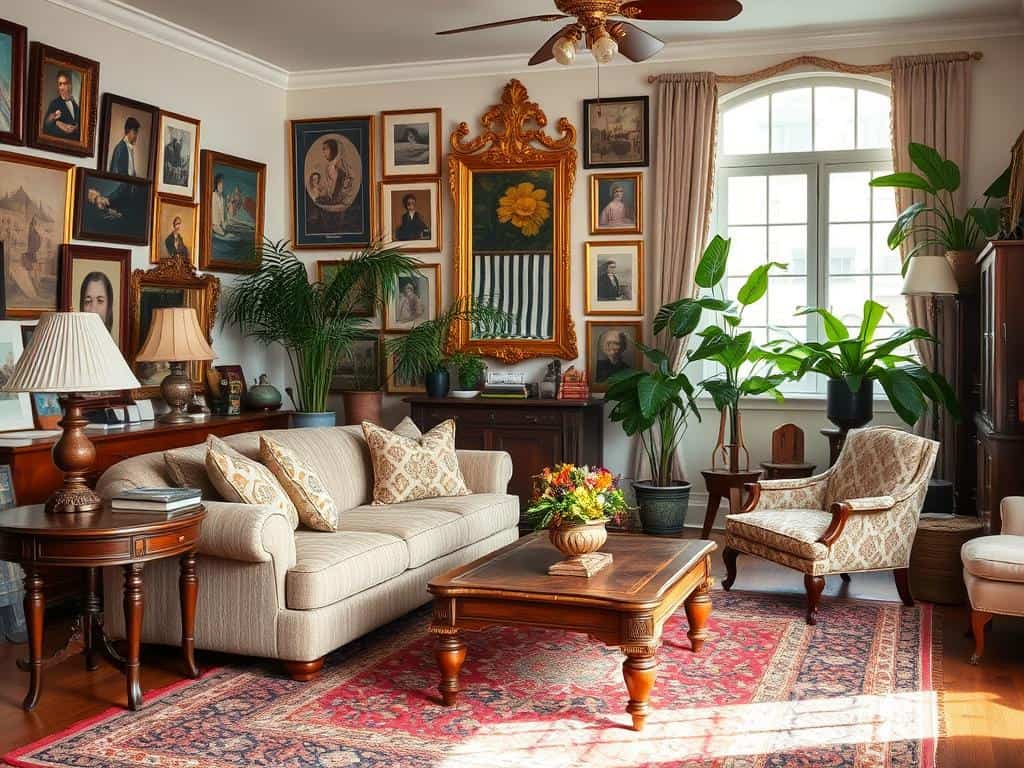

Standing in my living room, I felt proud of my eclectic interiors. It was more than a room; it was a reflection of me. Each piece had a story, from vintage finds to modern decor.
I remember pairing an antique cabinet with a minimalist coffee table. I was worried it would clash. But when sunlight hit it, the textures and colors shone. This showed me the beauty of mixing and matching.
This balance and contrast make eclectic design lively and welcoming. In this article, I’ll share tips to bring this harmony to your home. You can turn every corner into a unique space that shows off your style.
Key Takeaways
- Balance different eras, movements, and cultural influences through thoughtful mixing.
- Layer textures intentionally to create visual interest and dimension.
- Incorporate statement pieces as focal points to anchor your eclectic space.
- Maintain cohesion with a consistent color palette for diverse elements.
- Avoid clutter by prioritizing functionality and grouping similar items.
Understanding Eclectic Interiors
Exploring eclectic interiors shows a mix of influences and choices. This style blends elements from different eras and cultures. It makes for unique and personalized spaces.
Defining Eclectic Design Style
The eclectic design style mixes various pieces to create a cohesive look. It draws from modern, vintage, and international decor. This approach offers a unique blend that suits everyone’s taste.
Using items like a Chinese lacquered cabinet or a Moroccan pouffe adds depth. It makes the design a story of personal history and culture. This thoughtful selection makes eclectic interiors both beautiful and meaningful.
The Appeal of Eclectic Interiors
Eclectic interiors offer freedom of self-expression. They break free from traditional design rules. This allows for creativity in combining different elements.
A rustic antique dining table can work well with sleek modern chairs. This mix creates a space that feels both harmonious and personal. Adding playful colors and statement wallpapers, like “Electric Poppies 02,” adds an artistic touch.
Essential Tips for Mixing Styles
Mixing styles in interior design is a fun way to show off your personality. To get it right, start with a careful plan. Each piece should fit well together, creating a space that feels balanced and harmonious.
Establish a Core Color Palette
Choosing a core color palette is key to any eclectic design. I start with neutral colors like white, beige, or gray. These colors provide a calm background for patterns and unique decor.
Next, I pick a main pattern, like bold floral wallpaper or a geometric rug. Mixing patterns of different sizes adds interest while keeping things balanced. For instance, a big floral design can pair well with a smaller geometric print if they share a color. This way, everything fits together smoothly.
Combining Modern and Vintage Elements
Mixing modern and vintage pieces adds depth to any room. Pairing old rugs with new furniture is a great way to show off both styles. It’s important to understand what each style is about.
I find that key pieces, like an antique chandelier or a modern coffee table, can link the two styles beautifully. Adding items from different eras makes modern spaces more interesting and personal.
Incorporating Art and Statement Pieces
Art is essential for any eclectic space, making it unique and engaging. Creating a gallery wall with different art styles is a great focal point. I like to mix frame styles and materials for texture and depth.
Bold interiors come alive with such elements, adding personality and self-expression. To keep things balanced, I make sure no single piece takes over. Each piece should add to the overall harmony.
Creating Balance and Visual Flow
To achieve balance and visual flow in eclectic interiors, we need a thoughtful design approach. The aim is to create a space that feels welcoming and interesting. Each piece should add to the overall look in a meaningful way.
Utilizing Textures for Contrast
Textures are key in making an eclectic space complete. Mixing materials like soft fabrics with rough woods adds depth and interest. For example, combining metal accents with soft textures not only looks good but also makes the space more engaging.
This mix of textures grabs attention and stimulates the senses. It improves the balance and visual flow of the room.
Prioritizing Scale and Proportion
Getting scale and proportion right is essential in mixing different design elements. Choosing furniture that fits the room’s size is important for a unified look. A big piece, like a plush sofa, should work well with smaller items to create a sense of unity.
By focusing on scale and proportion, we enhance the style and avoid any one item dominating. This approach makes the space more balanced and visually appealing.
Conclusion
Mastering eclectic interiors can turn my living space into a vibrant, bold area that shows off my style. Mixing different elements creates a lively space that tells my story. The key steps include picking a core color palette, blending old with new, and adding various textures.
Choosing the right accessories is essential to bring together different parts of my design. Using a consistent color in accessories helps tie everything together. This makes my space feel welcoming and carefully put together.
As I keep trying new things with textures, layers, and personal touches, I enjoy the process. Every choice I make helps create a space where eclectic design shines. Remember, the journey might have ups and downs, but the joy of making a unique home is worth it.