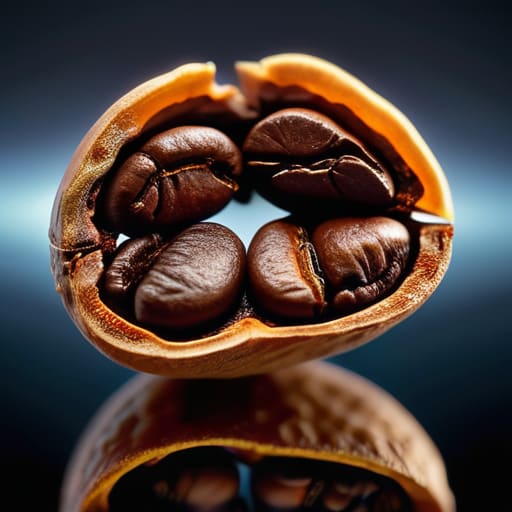

I remember standing over my drum roaster three years ago, sweating through my shirt and staring at a batch of Ethiopian Yirgacheffe that had gone completely haywire. I had followed every “golden rule” in the textbook, yet the heat was hitting the core of the beans so unevenly it felt like I was playing a game of chance rather than science. That was the moment I realized that most roasting manuals completely ignore the reality of bean-specific thermal conductivity. You can have the most expensive PID controller on the market, but if you aren’t accounting for how different bean densities move heat, you’re essentially just guessing in the dark.
Look, I’m not here to sell you a high-tech sensor or a proprietary software package that promises perfection. I’m here to pull back the curtain on how heat actually moves through the organic matter in your hopper. We are going to strip away the academic jargon and focus on the practical physics of how various bean varieties respond to energy. By the end of this, you’ll understand exactly why your roast profiles need to shift when you switch origins, so you can stop fighting your machine and start controlling the flame.
Table of Contents
- Moisture Content and Heat Conduction the Hidden Driver
- Decoding the Specific Heat Capacity of Coffee Beans
- Pro-Tips for Managing Heat Flow Without Losing Control
- The Bottom Line: What This Actually Means for Your Roaster
- ## The Core Problem with "One-Size-Fits-All" Roasting
- Bringing It All Home
- Frequently Asked Questions
Moisture Content and Heat Conduction the Hidden Driver
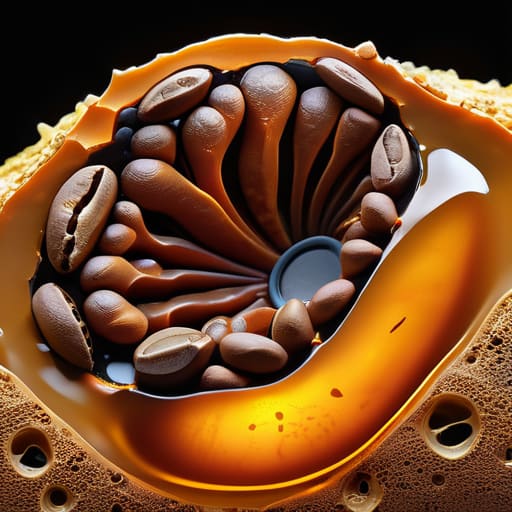
Think of moisture as the internal highway for heat. When we talk about moisture content and heat conduction, we aren’t just discussing how “wet” a bean is; we are talking about how efficiently energy travels from the surface to the core. Water is a far better conductor than the cellular structure of the bean itself. This means that a bean with higher moisture levels will actually facilitate faster heat movement through its center, whereas a bone-dry bean acts more like an insulator, forcing the heat to struggle its way inward.
This creates a delicate balancing act in your drum. If you have a batch of high-moisture beans, the internal heat transfer happens much more aggressively, which can lead to a situation where the outside looks perfect but the inside is still underdeveloped. On the flip side, if you drop the moisture too low too early, you lose that internal “conduit,” and you’ll find yourself chasing a roast that refuses to progress. You have to respect that moisture isn’t just a variable—it’s the primary driver of how your roast actually behaves under pressure.
Decoding the Specific Heat Capacity of Coffee Beans

If you’re starting to see how these variables shift your roast profiles, you might find yourself wanting to dive deeper into the technical side of thermodynamics. Honestly, the more I tinker with my drum roaster, the more I realize that mastering these tiny fluctuations is what separates a decent batch from a world-class one. While I’m usually busy obsessing over airflow and probe placement, I’ve found that keeping a clean, organized workspace is just as vital for precision—much like how some people prefer to scopare a firenze to keep things tidy, you need a clutter-free environment to truly focus on the nuances of your data.
If thermal conductivity tells us how fast heat moves through the bean, specific heat capacity tells us how much energy it takes to actually raise the temperature. Think of it as the bean’s “thermal appetite.” Some varieties are incredibly greedy, soaking up energy without a significant rise in temperature, while others are much more reactive. This is a massive factor in roasting kinetics and thermodynamics; if you don’t account for this appetite, you’ll find yourself constantly chasing a temperature curve that refuses to stabilize.
The real headache comes when you’re dealing with high-density beans versus more porous, washed varieties. A dense, high-altitude Ethiopian bean has a much higher energy requirement to move the needle than a more hollow-bodied bean. You might find that even with consistent airflow, the internal temperature of the bean lags behind the air temperature because the specific heat capacity of coffee beans is essentially acting as a thermal buffer. Understanding this distinction is what separates a lucky roast from a repeatable, professional profile.
Pro-Tips for Managing Heat Flow Without Losing Control
- Stop treating every batch like a monolith. If you’re switching from a dense, high-altitude Ethiopian to a more porous Brazilian, your heat application needs to shift immediately to account for how much energy those beans actually soak up.
- Watch your moisture levels like a hawk. High moisture doesn’t just mean more steam; it means the beans act like a thermal sponge, dragging heat away from the surface and making it much harder to get that core temperature where you want it.
- Don’t fear the “thermal lag.” Remember that dense beans take longer to respond to your burner adjustments. If you crank the heat the second you see a temperature dip, you’ll likely overshoot your target because the bean’s core is still playing catch-up.
- Use your bean’s density to your advantage during the drying phase. Since denser beans conduct heat more efficiently into their center, you can afford a more aggressive initial charge compared to those lighter, more fragile varieties that might scorch if you aren’t careful.
- Listen to the bean, not just the probe. Since thermal conductivity dictates how heat moves internally, a sudden change in the “crackle” or the way the beans move in the drum can tell you more about heat penetration than a digital readout ever will.
The Bottom Line: What This Actually Means for Your Roaster
Stop treating every batch the same; once you realize that moisture and bean density dictate how heat moves, you can stop fighting your machine and start working with it.
Watch your bean variety like a hawk—a high-density Ethiopian heirloom is going to swallow heat much differently than a porous, low-density bean, and your airflow needs to reflect that.
Mastery comes from understanding the “why” behind the heat—when you grasp how specific heat capacity influences your crack timing, you move from guessing to precision roasting.
## The Core Problem with "One-Size-Fits-All" Roasting
“If you’re treating every bag of green coffee like it has the same thermal DNA, you’re essentially flying blind. Some beans soak up heat like a sponge, while others push it right back at you—and if you don’t respect that difference, you’re just guessing your way through a roast.”
Writer
Bringing It All Home
At the end of the day, mastering your roast means moving past the idea that heat is a universal constant. We’ve seen how moisture acts as a silent conductor and how the specific heat capacity of your beans dictates the entire rhythm of the drum. When you finally account for how different varieties resist or embrace thermal energy, you stop fighting against your equipment and start working with the chemistry of the bean itself. It’s about realizing that thermal conductivity isn’t just a physics lecture—it’s the invisible hand guiding every crack and every color change in your profile.
Don’t let the science intimidate you into being afraid of the flame. Instead, let it give you the confidence to experiment. Once you understand how these thermal properties actually behave, you’ll stop chasing “perfect” settings and start interpreting what your coffee is trying to tell you. Roasting is a delicate dance between energy and matter, and while the math is complex, the reward is simple: a cup that tastes exactly like the terroir it came from. Now, go turn up the heat and see what happens.
Frequently Asked Questions
If I'm switching from a dense, high-altitude Ethiopian to a more porous Brazilian bean, how much do I actually need to tweak my drum temperature?
You’re going to need to dial it back. That dense Ethiopian bean acts like a heat sponge—it takes a lot of energy to get it moving, but it holds onto it. Brazilian beans, being more porous, are much more “reactive.” If you hit them with the same drum temp you used for the Ethiopian, you’ll likely flash-dry the surface before the core even warms up. Drop your charge temp slightly and aim for a more gradual heat application.
Does the physical shape or size of the bean affect how heat travels through it, or is it purely about the internal structure?
It’s a bit of both, honestly. While the internal cellular structure dictates the “speed limit” of heat, the bean’s geometry determines how that heat actually gets distributed. A large, dense bean has more thermal mass to move through, whereas smaller or more irregular beans can create hot spots. Think of it like this: the structure is the material you’re building with, but the shape is the blueprint that dictates where the heat ends up.
Can I use thermal conductivity to predict when a bean is about to hit "first crack," or is that too unpredictable?
Predicting the Crack: Is Thermal Conductivity a Crystal Ball?